Kidney Stones

Sugar-sweetened beverages associated with increased kidney stone risk

Twenty percent of American males and 10 percent of American females will experience a kidney stone at some point in their lifetime. Often, these patients will be advised to drink more fluids as a way to prevent future stone ...

Health created May 15, 2013 | popularity not rated yet | comments 0

Study says exercise cuts kidney stone risk in women

Exercise has another benefit: A new study finds that being active may help prevent kidney stones in women.

Diseases, Conditions, Syndromes created May 03, 2013 | popularity not rated yet | comments 0


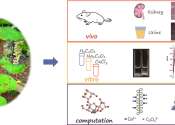
A kidney stone, also known as a renal calculus (from the Latin ren, "kidney" and calculus, "pebble") is a solid concretion or crystal aggregation formed in the kidneys from dietary minerals in the urine. Urinary stones are typically classified by their location in the kidney (nephrolithiasis), ureter (ureterolithiasis), or bladder (cystolithiasis), or by their chemical composition (calcium-containing, struvite, uric acid, or other compounds). Kidney stones are a significant source of morbidity. 80% of those with kidney stones are men. Men most commonly experience their first episode between age 30–40 years, while for women the age at first presentation is somewhat later.

Kidney stones typically leave the body by passage in the urine stream, and many stones are formed and passed without causing symptoms. If stones grow to sufficient size (usually at least 3 millimeters (0.12 in)) they can cause obstruction of the ureter. Ureteral obstruction causes postrenal azotemia and hydronephrosis (distension and dilation of the renal pelvis and calyces), as well as spasm of the ureter. This leads to pain, most commonly felt in the flank (the area between the ribs and hip), lower abdomen and groin (a condition called renal colic). Renal colic can be associated with nausea, vomiting, fever, blood in the urine, pus in the urine, and painful urination. Renal colic typically comes in waves lasting 20 – 60 minutes, beginning in the flank or lower back and often radiating to the groin or genitals. The diagnosis of kidney stones is made on the basis of information obtained from the history, physical examination, urinalysis, and radiographic studies. Ultrasound examination and blood tests may also aid in the diagnosis.

When a stone causes no symptoms, watchful waiting is a valid option. For symptomatic stones, pain control is usually the first measure, using medications such as non-steroidal anti-inflammatory drugs (NSAIDs) or opioids. More severe cases may require surgical intervention. For example, some stones can be shattered into smaller fragments using extracorporeal shock wave lithotripsy (ESWL). Some cases require more invasive forms of surgery. Examples of these are cystoscopic procedures such as laser lithotripsy, or percutaneous techniques such as percutaneous nephrolithotomy. Sometimes, a tube (ureteral stent) may be placed in the ureter to bypass the obstruction and alleviate the symptoms, as well as to prevent ureteral stricture after ureteroscopic stone removal.
This text uses material from Wikipedia and is available under the GNU Free Documentation License.

Latest Spotlight News

If you can remember it, you can remember it wrong

(Medical Xpress)—Native peoples in regions where cameras are uncommon sometimes react with caution when their picture is taken. The fear that something must have been stolen from them to create the photo ...

B vitamins could delay dementia

(Medical Xpress)—Despite spending billions of dollars on research and development, drug companies have been unable to come up with effective treatments for dementia and Alzheimer's Disease (AD). Now, A. ...

Reducing caloric intake delays nerve cell loss

Activating an enzyme known to play a role in the anti-aging benefits of calorie restriction delays the loss of brain cells and preserves cognitive function in mice, according to a study published in the May ...

Insight into the dazzling impact of insulin in cells

Australian scientists have charted the path of insulin action in cells in precise detail like never before. This provides a comprehensive blueprint for understanding what goes wrong in diabetes.

New sleeping pill poised to hit US markets

An experimental sleeping pill from US drug company Merck is effective at helping people fall and stay asleep, according to reviewers at the US Food and Drug Administration, which could soon approve the new drug.

Antidepressant reduces stress-induced heart condition

A drug commonly used to treat depression and anxiety may improve a stress-related heart condition in people with stable coronary heart disease, according to researchers at Duke Medicine.

Drugs found to both prevent and treat Alzheimer's disease in mice

Researchers at USC have found that a class of pharmaceuticals can both prevent and treat Alzheimer's Disease in mice.

Enrichment therapy effective among children with autism, study finds

Children with autism showed significant improvement after six months of simple sensory exercises at home using everyday items such as scents, spoons and sponges, according to UC Irvine neurobiologists.

Study finds vitamin C can kill drug-resistant TB (w/ video)

In a striking, unexpected discovery, researchers at Albert Einstein College of Medicine of Yeshiva University have determined that vitamin C kills drug-resistant tuberculosis (TB) bacteria in laboratory culture. The finding ...

Common food supplement fights degenerative brain disorders

Widely available in pharmacies and health stores, phosphatidylserine is a natural food supplement produced from beef, oysters, and soy. Proven to improve cognition and slow memory loss, it's a popular treatment for older ...