Parkinson's Disease

New animal model gives insights into mechanisms of Parkinson's disease pathogenesis

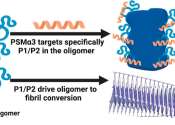
In Parkinson's disease, the protein "alpha-synuclein" aggregates and accumulates within neurons. Specific areas of the brain become progressively affected as the disease develops and advances. The mechanism underlying this ...

Parkinson's & Movement disorders created 22 hours ago | popularity not rated yet | comments 0

Defective cellular waste removal explains why Gaucher patients often develop Parkinson's disease

Gaucher disease causes debilitating and sometimes fatal neurodegeneration in early childhood. Recent studies have uncovered a link between the mutations responsible for Gaucher disease and an increased risk ...

Parkinson's & Movement disorders created May 23, 2013 | popularity 5 / 5 (1) | comments 0 | with audio podcast

Scientists uncover molecular roots of cocaine addiction in the brain

Researchers at Johns Hopkins have unraveled the molecular foundations of cocaine's effects on the brain, and identified a compound that blocks cravings for the drug in cocaine-addicted mice. The compound, already proven safe ...

Neuroscience created May 22, 2013 | popularity not rated yet | comments 0 | with audio podcast

Common food supplement fights degenerative brain disorders

Widely available in pharmacies and health stores, phosphatidylserine is a natural food supplement produced from beef, oysters, and soy. Proven to improve cognition and slow memory loss, it's a popular treatment for older ...

Medical research created May 21, 2013 | popularity 5 / 5 (3) | comments 0 | with audio podcast

Finding a family for a pair of orphan receptors in the brain

Researchers at Emory University have identified a protein that stimulates a pair of "orphan receptors" found in the brain, solving a long-standing biological puzzle and possibly leading to future treatments for neurological ...

Medical research created May 21, 2013 | popularity 5 / 5 (2) | comments 0 | with audio podcast

Merck ends development of Parkinson's disease drug

(AP)—Merck & Co. says it is ending development of an experimental Parkinson's disease drug because the drug wasn't working.

Medications created May 23, 2013 | popularity 1 / 5 (1) | comments 0

Diabetes drug tested in Parkinson's disease patients

Parkinson's disease (PD) is a degenerative neurological disorder marked by a progressive loss of motor control. Despite intensive research, there are currently no approved therapies that have been demonstrated to alter the ...

Parkinson's & Movement disorders created May 20, 2013 | popularity not rated yet | comments 0

Boosting 'cellular garbage disposal' can delay the aging process, research shows

(Medical Xpress)—UCLA life scientists have identified a gene previously implicated in Parkinson's disease that can delay the onset of aging and extend the healthy life span of fruit flies. The research, ...

Genetics created May 06, 2013 | popularity 4.8 / 5 (18) | comments 1 | with audio podcast

Scientists develop drug that slows Alzheimer's in mice

A drug developed by scientists at the Salk Institute for Biological Studies, known as J147, reverses memory deficits and slows Alzheimer's disease in aged mice following short-term treatment. The findings, ...

Alzheimer's disease & dementia created May 13, 2013 | popularity 4.2 / 5 (5) | comments 0 | with audio podcast

Anything you can do I can do better: Neuromolecular foundations of the superiority illusion (Update)

(Medical Xpress)—The existential psychologist Rollo May wrote that "depression is the inability to construct a future"1 while Lionel Tiger stated that "optimism has been central to the process of human e ...

Neuroscience created Apr 02, 2013 | popularity 4.5 / 5 (11) | comments 5 | with audio podcast feature

Deep brain stimulation: A fix when the drugs don't work

Neurological disorders can have a devastating impact on the lives of sufferers and their families.

Neuroscience created May 17, 2013 | popularity 5 / 5 (1) | comments 0 | with audio podcast

Making a window for drug delivery in the blood-brain barrier

(Medical Xpress)—The blood-brain barrier (BBB) prevents most large or hydrophilic (polar) molecules from getting into the brain. For many neurological diseases, like Parkinson's, the presence of the BBB ...

Medical research created Apr 30, 2013 | popularity 5 / 5 (2) | comments 0 | with audio podcast report

Faulty energy production in brain cells leads to disorders ranging from Parkinson's to intellectual disability

Neuroscientist Patrik Verstreken of VIB (Flanders Institute for Biotechnology) and KU Leuven has shown for the first time that dysfunctional mitochondria in brain cells can lead to learning disabilities. The link between ...

Parkinson's & Movement disorders created May 17, 2013 | popularity 4 / 5 (2) | comments 0

Human brain cells developed in lab, grow in mice

A key type of human brain cell developed in the laboratory grows seamlessly when transplanted into the brains of mice, UC San Francisco researchers have discovered, raising hope that these cells might one day be used to treat ...

Medical research created May 08, 2013 | popularity 5 / 5 (2) | comments 0 | with audio podcast

Unleashing the watchdog protein

McGill University researchers have unlocked a new door to developing drugs to slow the progression of Parkinson's disease. Collaborating teams led by Dr. Edward A. Fon at the Montreal Neurological Institute and Hospital -The ...

Parkinson's & Movement disorders created May 09, 2013 | popularity 5 / 5 (1) | comments 0 | with audio podcast


Parkinson's disease (also known as Parkinson disease, Parkinson's, idiopathic parkinsonism, primary parkinsonism, PD, or paralysis agitans) is a degenerative disorder of the central nervous system. The motor symptoms of Parkinson's disease result from the death of dopamine-generating cells in the substantia nigra, a region of the midbrain; the cause of this cell death is unknown. Early in the course of the disease, the most obvious symptoms are movement-related; these include shaking, rigidity, slowness of movement and difficulty with walking and gait. Later, cognitive and behavioural problems may arise, with dementia commonly occurring in the advanced stages of the disease. Other symptoms include sensory, sleep and emotional problems. PD is more common in the elderly, with most cases occurring after the age of 50. The main motor symptoms are collectively called parkinsonism, or a "parkinsonian syndrome". Parkinson's disease is often defined as a parkinsonian syndrome that is idiopathic (having no known cause), although some atypical cases have a genetic origin. Many risk and protective factors have been investigated: the clearest evidence is for an increased risk of PD in people exposed to certain pesticides and a reduced risk in tobacco smokers. The pathology of the disease is characterized by the accumulation of a protein called alpha-synuclein into inclusions called Lewy bodies in neurons, and from insufficient formation and activity of dopamine produced in certain neurons within parts of the midbrain. Lewy bodies are the pathological hallmark of the idiopathic disorder, and the distribution of the Lewy bodies throughout the Parkinsonian brain varies from one individual to another. The anatomical distribution of the Lewy bodies is often directly related to the expression and degree of the clinical symptoms of each individual. Diagnosis of typical cases is mainly based on symptoms, with tests such as neuroimaging being used for confirmation. Modern treatments are effective at managing the early motor symptoms of the disease, mainly through the use of levodopa and dopamine agonists. As the disease progresses and dopaminergic neurons continue to be lost, a point eventually arrives at which these drugs become ineffective at treating the symptoms and at the same time produce a complication called dyskinesia, marked by involuntary writhing movements. Diet and some forms of rehabilitation have shown some effectiveness at alleviating symptoms. Surgery and deep brain stimulation have been used to reduce motor symptoms as a last resort in severe cases where drugs are ineffective. Research directions include investigations into new animal models of the disease and of the potential usefulness of gene therapy, stem cell transplants and neuroprotective agents. Medications to treat non-movement-related symptoms of PD, such as sleep disturbances and emotional problems, also exist. The disease is named after the English doctor James Parkinson, who published the first detailed description in An Essay on the Shaking Palsy in 1817. Several major organizations promote research and improvement of quality of life of those with the disease and their families. Public awareness campaigns include Parkinson's disease day (on the birthday of James Parkinson, April 11) and the use of a red tulip as the symbol of the disease. People with parkinsonism who have enhanced the public's awareness include Michael J. Fox and Muhammad Ali.

This text uses material from Wikipedia and is available under the GNU Free Documentation License.

Latest Spotlight News

Hormone levels may provide key to understanding psychological disorders in women

Women at a particular stage in their monthly menstrual cycle may be more vulnerable to some of the psychological side-effects associated with stressful experiences, according to a study from UCL.

Researchers identify first drug targets in childhood genetic tumor disorder

Two mutations central to the development of infantile myofibromatosis (IM)—a disorder characterized by multiple tumors involving the skin, bone, and soft tissue—may provide new therapeutic targets, according to researchers ...

Going live: Immune cell activation in multiple sclerosis

Biological processes are generally based on events at the molecular and cellular level. To understand what happens in the course of infections, diseases or normal bodily functions, scientists would need to ...

New immune system discovered

(Medical Xpress)—A research team, led by Jeremy Barr, a biology post-doctoral fellow, unveils a new immune system that protects humans and animals from infection.

Controlling mood through the motions of mitochondria

(Medical Xpress)—Regulating the distribution of power in neurons is done by a system that makes the national electric grid look simple by comparison. Each neuron has several thousand mitochondria confined ...

Brain can be trained in compassion, study shows

Until now, little was scientifically known about the human potential to cultivate compassion—the emotional state of caring for people who are suffering in a way that motivates altruistic behavior.

Engineered cytomegalovirus protects monkeys from HIV equivalent

(Medical Xpress)—A new study by researchers in the US has shown that an ancient virus can be modified to help in the fight against the simian immunodeficiency virus SIV, which is the equivalent in monkeys ...

Multiple research teams unable to confirm high-profile Alzheimer's study

Teams of highly respected Alzheimer's researchers failed to replicate what appeared to be breakthrough results for the treatment of this brain disease when they were published last year in the journal Science.

Do salamanders hold the solution to regeneration?

Salamanders' immune systems are key to their remarkable ability to regrow limbs, and could also underpin their ability to regenerate spinal cords, brain tissue and even parts of their hearts, scientists have ...

Motion quotient: IQ predicted by ability to filter motion (w/ video)

A brief visual task can predict IQ, according to a new study. This surprisingly simple exercise measures the brain's unconscious ability to filter out visual movement. The study shows that individuals whose ...