Ulcerative Colitis
Thymus teaches immune cells to ignore vital gut bacteria
The tiny thymus teaches the immune system to ignore the teeming, foreign bacteria in the gut that helps you digest and absorb food, researchers say.
Immunology
Apr 29, 2013 |
4.7 / 5 (3) |
0
|
Biomarkers discovered for inflammatory bowel disease
Using the Department of Defense Serum Repository (DoDSR), University of Cincinnati (UC) researchers have identified a number of biomarkers for inflammatory bowel disease (IBD), which could help with earlier diagnosis and ...
Diseases, Conditions, Syndromes
May 21, 2013 |
5 / 5 (1) |
0
Simponi approved for ulcerative colitis
(HealthDay)—Simponi (golimumab) injection has been approved by the U.S. Food and Drug Administration to treat adults with moderate-to-severe ulcerative colitis.
Medications
May 15, 2013 |
not rated yet |
0
Inflammatory bowel disease raises risk of melanoma
Patients with inflammatory bowel disease (IBD) are at higher risk of melanoma, a form of skin cancer, report researchers at Mayo Clinic. Researchers found that IBD is associated with a 37 percent greater risk for the disease. ...
Inflammatory disorders
May 20, 2013 |
4.5 / 5 (2) |
0
Flu vaccine safe for children with IBD, study shows
Influenza immunization rates in children with inflammatory bowel disease (IBD) are low despite its safety according to a new study by researchers at the Institute for Clinical Evaluative Sciences (ICES), Children's Hospital ...
Pediatrics
May 06, 2013 |
not rated yet |
0
Inflammatory bowel disease detection enhanced with PET/CT
Inflammatory bowel diseases (IBD), such as Crohn's disease and ulcerative colitis, may be detected and monitored more effectively in the future with positron emission tomography/computed tomography (PET/CT), according to ...
Diseases, Conditions, Syndromes
May 01, 2013 |
not rated yet |
0
Frequently used biologic agents might cause acute liver injury
A commonly used class of biologic response modifying drugs can cause acute liver injury with elevated liver enzymes, according to a new study in Clinical Gastroenterology and Hepatology, the official clinical practice journa ...
Diseases, Conditions, Syndromes
Apr 29, 2013 |
not rated yet |
0
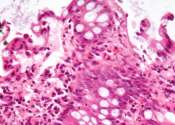
Ulcerative colitis (Colitis ulcerosa, UC) is a form of inflammatory bowel disease (IBD) . Ulcerative colitis is a form of colitis, a disease of the colon (large intestine), that includes characteristic ulcers, or open sores. The main symptom of active disease is usually constant diarrhea mixed with blood, of gradual onset. IBD is often confused with irritable bowel syndrome (IBS), a troublesome, but much less serious, condition. Ulcerative colitis has similarities to Crohn's disease, another form of IBD. Ulcerative colitis is an intermittent disease, with periods of exacerbated symptoms, and periods that are relatively symptom-free. Although the symptoms of ulcerative colitis can sometimes diminish on their own, the disease usually requires treatment to go into remission. Ulcerative colitis occurs in 35–100 people for every 100,000 in the United States, or less than 0.1% of the population. The disease is more prevalent in northern countries of the world, as well as in northern areas of individual countries or other regions. Although ulcerative colitis has no known cause, there is a presumed genetic component to susceptibility. The disease may be triggered in a susceptible person by environmental factors. Although dietary modification may reduce the discomfort of a person with the disease, ulcerative colitis is not thought to be caused by dietary factors. Ulcerative colitis is treated as an autoimmune disease. Treatment is with anti-inflammatory drugs, immunosuppression, and biological therapy targeting specific components of the immune response. Colectomy (partial or total removal of the large bowel through surgery) is occasionally necessary, and is considered to be a cure for the disease.
This text uses material from Wikipedia and is available under the GNU Free Documentation License.
Latest Spotlight News
New immune system discovered
(Medical Xpress)—A research team, led by Jeremy Barr, a biology post-doctoral fellow, unveils a new immune system that protects humans and animals from infection.
Brain can be trained in compassion, study shows
Until now, little was scientifically known about the human potential to cultivate compassion—the emotional state of caring for people who are suffering in a way that motivates altruistic behavior.
Do salamanders hold the solution to regeneration?
Salamanders' immune systems are key to their remarkable ability to regrow limbs, and could also underpin their ability to regenerate spinal cords, brain tissue and even parts of their hearts, scientists have ...
Hormone levels may provide key to understanding psychological disorders in women
Women at a particular stage in their monthly menstrual cycle may be more vulnerable to some of the psychological side-effects associated with stressful experiences, according to a study from UCL.
Multiple research teams unable to confirm high-profile Alzheimer's study
Teams of highly respected Alzheimer's researchers failed to replicate what appeared to be breakthrough results for the treatment of this brain disease when they were published last year in the journal Science.
The compound in the Mediterranean diet that makes cancer cells 'mortal'
New research suggests that a compound abundant in the Mediterranean diet takes away cancer cells' "superpower" to escape death. By altering a very specific step in gene regulation, this compound essentially re-educates cancer ...
Brain uses internal 'average voice' prototype to identify who is talking
(Medical Xpress)—The human brain is able to identify individuals' voices by comparing them against an internal 'average voice' prototype, according to neuroscientists.
Motion quotient: IQ predicted by ability to filter motion (w/ video)
A brief visual task can predict IQ, according to a new study. This surprisingly simple exercise measures the brain's unconscious ability to filter out visual movement. The study shows that individuals whose ...
Controlling mood through the motions of mitochondria
(Medical Xpress)—Regulating the distribution of power in neurons is done by a system that makes the national electric grid look simple by comparison. Each neuron has several thousand mitochondria confined ...
Slowing the aging process—only with antibiotics
Swiss scientists reveal the mechanism responsible for aging hidden deep within mitochondria—and dramatically slow it down in worms by administering antibiotics to the young.