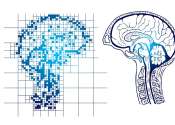
Vascular Dementia
Nonmelanoma skin cancer tied to lower Alzheimer's risk
(HealthDay)—Older individuals with nonmelanoma skin cancer (NMSC) seem to have a significantly reduced risk of developing Alzheimer's disease (AD), according to a study published online May 15 in Neurology.
Alzheimer's disease & dementia
May 16, 2013 |
5 / 5 (1) |
0
Skin cancer may be linked to lower risk of Alzheimer's disease
People who have skin cancer may be less likely to develop Alzheimer's disease, according to new research published in the May 15, 2013, online issue of Neurology®, the medical journal of the American Academy of Neurology. The li ...
Alzheimer's disease & dementia
May 15, 2013 |
5 / 5 (1) |
0
|
Study finds late-life depression associated with increased risk for dementia
(Medical Xpress)—Late-life depression is associated with an increased risk for all-cause dementia, Alzheimer's disease and, most predominantly, vascular dementia, according to the results of a new meta-analysis published ...
Psychology & Psychiatry
May 02, 2013 |
not rated yet |
0
Study suggests reduced risk of dementia
(Medical Xpress)—A new Swedish study published in the journal Neurology shows that the risk of developing dementia may have declined over the past 20 years, in direct contrast to what many previously assumed. The result ...
Neuroscience
Apr 19, 2013 |
5 / 5 (1) |
0
|
Could a common blood pressure drug slow down the progression of Alzheimer's?
A ground-breaking trial that hopes to discover if a drug commonly used to treat high blood pressure could slow down the progression of Alzheimer's disease (AD) will begin shortly.
Alzheimer's disease & dementia
Mar 04, 2013 |
3.8 / 5 (4) |
0
Dementia: Cerebrolysin shows promise
Dementia patients may benefit from a promising new treatment called Cerebrolysin, according to the results of a systematic review published in The Cochrane Library. The authors brought together the most up-to-date eviden ...
Alzheimer's disease & dementia
Jan 30, 2013 |
5 / 5 (1) |
0
Hyperbaric treatment has significantly resuscitated activity in damaged brains
Stroke, traumatic injury, and metabolic disorder are major causes of brain damage and permanent disabilities, including motor dysfunction, psychological disorders, memory loss, and more. Current therapy and rehab programs ...
Neuroscience
Jan 23, 2013 |
5 / 5 (4) |
0
Late-life depression associated with prevalent mild cognitive impairment, increased risk of dementia
Depression in a group of Medicare recipients ages 65 years and older appears to be associated with prevalent mild cognitive impairment and an increased risk of dementia, according to a report published Online First by Archives of ...
Neuroscience
Dec 31, 2012 |
3.7 / 5 (3) |
1
|
Significant relationship between mortality and telomere length discovered
A team of researchers at Kaiser Permanente and the University of California, San Francisco (UCSF) has identified a significant relationship between mortality and the length of telomeres, the stretches of DNA that protect ...
Genetics
Nov 08, 2012 |
4.5 / 5 (2) |
0
|
Regular physical activity reduces risk of dementia in older people
Regular physical activity may help older people reduce their chances of getting dementia.
Alzheimer's disease & dementia
Nov 01, 2012 |
not rated yet |
0
|
Outlining the risk factors to help prevent dementia
(Medical Xpress)—Research shows that managing and treating vascular disease risk factors are not only beneficial to preventing heart disease and stroke, but also common forms of dementia.
Alzheimer's disease & dementia
Oct 16, 2012 |
4.5 / 5 (2) |
0
World's first successful clinical trial to protect the brain from damage caused by stroke
A team of Canadian scientists and clinicians, led by Dr. Michael Hill of the Calgary Stroke Program at Foothills Medical Centre and University of Calgary's Hotchkiss Brain Institute (HBI), have demonstrated that a neuroprotectant ...
Neuroscience
Oct 09, 2012 |
5 / 5 (3) |
1
|
Project highlights growing activism among people living with dementia
A researcher at the University of Southampton in collaboration with an artist at the University of Bradford have developed a brand new educational resource for raising awareness about the 820,000 people in ...
Alzheimer's disease & dementia
Sep 18, 2012 |
not rated yet |
0
Autoantibodies damage blood vessels in the brain -- important factor in development of dementia
The presence of specific autoantibodies of the immune system is associated with blood vessel damage in the brain. These findings were made by Marion Bimmler, a graduate engineer of medical laboratory diagnostics ...
Neuroscience
Jul 31, 2012 |
5 / 5 (1) |
0
Exercising in your 50s, 60s, 70s and beyond
(Medical Xpress) -- A recent study has shown that exercise can add years to a persons life. Still, as we age it can become more tedious and sometimes more difficult to exercise. Many people see aging as a time to slow ...
Health
May 23, 2012 |
5 / 5 (2) |
0
Multi-infarct dementia is one type of vascular dementia. Vascular dementia is the second most common form of dementia after Alzheimer's disease (AD) in older adults. Multi-infarct dementia (MID) is thought to be an irreversible form of dementia, and its onset is caused by a number of small strokes or sometimes, one large stroke preceded or followed by other smaller strokes. The term refers to a group of syndromes caused by different mechanisms all resulting in vascular lesions in the brain. Early detection and accurate diagnosis are important, as vascular dementia is at least partially preventable.
The main subtypes of this disease are: mild cognitive impairment, multi-infarct dementia, vascular dementia due to a strategic single infarct (affecting the thalamus, the anterior cerebral artery, the parietal lobes or the cingulate gyrus), vascular dementia due to hemorrhagic lesions, and mixed Alzheimer's and vascular dementia.
Vascular lesions can be the result of diffuse cerebrovascular disease or focal lesions; usually both. Mixed dementia is diagnosed when patients have evidence of AD and cerebrovascular disease, either clinically or based on neuroimaging evidence of ischemic lesions. In fact vascular dementia and Alzheimer's disease often coexist, especially in older patients with dementia.
MID is sometimes triggered by cerebral amyloid angiopathy, which involves accumulation of beta amyloid plaques in the walls of the cerebral arteries, leading to breakdown and rupture of the vessels. Since amyloid plaques are a characteristic feature of AD, vascular dementia may occur as a side effect of it. However, CAA can also appear in people with no prior dementia condition.
This text uses material from Wikipedia and is available under the GNU Free Documentation License.
Latest Spotlight News
If you can remember it, you can remember it wrong
(Medical Xpress)—Native peoples in regions where cameras are uncommon sometimes react with caution when their picture is taken. The fear that something must have been stolen from them to create the photo ...
B vitamins could delay dementia
(Medical Xpress)—Despite spending billions of dollars on research and development, drug companies have been unable to come up with effective treatments for dementia and Alzheimer's Disease (AD). Now, A. ...
New sleeping pill poised to hit US markets
An experimental sleeping pill from US drug company Merck is effective at helping people fall and stay asleep, according to reviewers at the US Food and Drug Administration, which could soon approve the new drug.
Reducing caloric intake delays nerve cell loss
Activating an enzyme known to play a role in the anti-aging benefits of calorie restriction delays the loss of brain cells and preserves cognitive function in mice, according to a study published in the May ...
Insight into the dazzling impact of insulin in cells
Australian scientists have charted the path of insulin action in cells in precise detail like never before. This provides a comprehensive blueprint for understanding what goes wrong in diabetes.
Antidepressant reduces stress-induced heart condition
A drug commonly used to treat depression and anxiety may improve a stress-related heart condition in people with stable coronary heart disease, according to researchers at Duke Medicine.
Drugs found to both prevent and treat Alzheimer's disease in mice
Researchers at USC have found that a class of pharmaceuticals can both prevent and treat Alzheimer's Disease in mice.
Enrichment therapy effective among children with autism, study finds
Children with autism showed significant improvement after six months of simple sensory exercises at home using everyday items such as scents, spoons and sponges, according to UC Irvine neurobiologists.
Study finds vitamin C can kill drug-resistant TB (w/ video)
In a striking, unexpected discovery, researchers at Albert Einstein College of Medicine of Yeshiva University have determined that vitamin C kills drug-resistant tuberculosis (TB) bacteria in laboratory culture. The finding ...
Common food supplement fights degenerative brain disorders
Widely available in pharmacies and health stores, phosphatidylserine is a natural food supplement produced from beef, oysters, and soy. Proven to improve cognition and slow memory loss, it's a popular treatment for older ...