Something to smile about
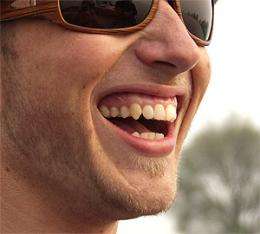
Oral specialists at the University of Sydney's Faculty of Dentistry believe they have developed a program which will stop tooth decay in its tracks.
Associate Professor Wendell Evans, who led the research, says his team developed the non-invasive Caries Management System as part of a National Health and Medical Research Council (NHMRC) trial program. Now at its half way mark, the trial is already witnessing the first signs of the positive outcome of this prevention strategy.
The world-first study, which is being conducted by dentists across NSW, is following the progress of 920 patients. It has found a significant decline in the need for invasive treatment of tooth decay when patients combined twice daily brushing using a fluoride toothpaste with regular dental visits for professional strength topical fluoride application. Early results show there may be a decline in the need to drill and fill.
"After three years, 31 percent fewer decayed teeth were in need of fillings in the study group, the progression of decay was stopped, fillings were avoided or in other words, fillings were not necessary," says Professor Evans.
"We know, for most people, tooth decay progresses slowly. On average, it takes several years for early decay to progress to the point where the tooth surface breaks up to form a cavity.
"However, progression is faster in high-risk patients, therefore the frequency of recall visits for monitoring purposes must be tied to patient risk. Hence, the Caries Management System has a built-in risk assessment policy."
Standard dental practice for tooth decay is to drill and fill decaying teeth before cavities develop. Just as you might replace a rusty corrugated iron roof before holes and leaks occur, states Professor Evans.
But the professor of dentistry and his team are advocating a different approach:
"Our research shows conclusively that not only can expensive fillings be avoided by this combination of twice a day brushing with a fluoride toothpaste and intensive professional non-invasive preventive care, but this simple non-invasive practise can halt the decay process completely. Also the tooth's mineral loss can be restored so the affected tooth surface hardens up.
"Imaging fewer fillings, which means less needles, less drilling, less need to replace old fillings, not having teeth that are weakened by decay and therefore liable to fracture. Less likelihood of losing teeth and need for expensive replacements - bridges, implants, dentures. That's something to smile about."
The program being implemented also involves training of practitioners to coach their patients.
"We trained dentists in how to coach their patients on removal of the daily plaque build-up. We also guided them on how to apply professional strength topical fluoride systemicatically on tooth surfaces to promote the restoration of lost mineral and tooth hardening, and how to monitor the outcome.
"Brushing around 32 teeth - their front, top, and back sides and along the gum margins - is a complex operation that takes time to learn to do properly.
"Patients also need to learn how to monitor their own brushing performance, because home care is the key to good oral health. Good plaque control is a life-long necessity - it prevents both tooth decay and gum disease.
"Without it, the results of other dental care will come undone all too soon."
Statistics show that 10 percent of GP visits are for dental problems and more than 30,000 Australians are hospitalised each year because of a dental condition.


