Journalists suffer depression, PTSD as other first responders, says book
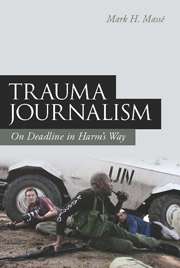
Journalists routinely report on conflicts, disasters and tragedies, but a new book by Ball State University's Mark Massé reveals that news media workers may suffer from stress, burnout and mental anguish as a result of being brutally close to the action.
In "Trauma Journalism: On Deadline in Harm's Way," Massé, a journalism professor, has chronicled journalists worldwide who covered several significant crises and catastrophes, including the Oklahoma City bombing, Columbine school tragedy, 9/11, Iraq War, South Asian tsunami and Hurricane Katrina.
The book, which will be released worldwide in October by Continuum Books, presents stories of journalists from around the globe often suffering in silence after spending extended periods witnessing death and destruction.
"As a society, we've become very concerned about the mental well-being of our soldiers, firefighters, police officers and other first responders," Massé said. "Yet, it's only been in the last decade or so that the news media and trauma experts have addressed the safety and welfare of reporters who are on the frontlines.
"If you were a reporter at ground zero on 9/11 or in Oklahoma City, you confronted unbelievable tragedy first hand," he said. "Not every journalist who covers critical (fatal) incidents will have emotional problems, but trauma research shows there are consequences for being in harm's way. A recent study found that about a quarter of longtime war correspondents suffered from post-traumatic stress disorder symptoms at a rate comparable to military veterans."
Massé's first book-length work of literary journalism was "Inspired to Serve: Today's Faith Activists," published in 2004. A decade earlier, he researched trauma effects when writing his master's project at the University of Oregon, profiling a community crisis intervention team.
Former hostage weighs in
One of Massés early research papers on trauma and the media attracted the interest of former journalist and current college professor Terry Anderson, who was held captive in Beirut from 1985 to 1991 by a group of militants during the Lebanese civil war.
"Terry later invited me to the University of Kentucky to discuss the project and then offered to write the forward to the book because he believed that the public should know about journalists' emotional issues and the effects of trauma coverage on reporters and their sources ," Massé said. "Terry's support opened the door to many reporters who wanted to talk about what they had experienced."
The book personalizes the lives of reporters, allowing the public, educators, students and working journalists to gain insights into the critical components of contemporary journalism practices affecting news judgment, news gathering techniques, as well as legal and ethical issues, he said.
Traditionally Detached Culture
Massé blames journalism's traditionally "detached" culture for allowing news media workers to suffer without the debriefings or counseling provided to police officers, soldiers and others.
"I think every reporter knows a co-worker who was really hurting after coming back from a certain incident," Massé said. "The typical response often has been for reporters to go out for a few drinks and try to work through it. Journalists tend to suck it up, and most are very resilient. That is the nature of the business. But reporters aren't superheroes. They need the same access to intervention given to first responders."
In his research for the book, Massé found that most American media corporations lag behind their British and Australian counterparts in providing pro-active and post-event programs for journalists. He also discovered that broadcast organizations tend to be more progressive than print media firms.
While looking at how reporters react to tragic incidents, the book also examines how trauma reporting affects victims, families and friends, even entire communities.
"People may think that reporters are only out for a good story and don't feel anything when they're covering a tragedy," Massé said. "The outdated newsroom view is that if you show any empathy, you aren't a good reporter. That's wrong because understanding what a victim is going through actually makes you a better reporter. And it makes you a better person."
In the end, he hopes his work enlightens views about trauma journalists and promotes a more progressive culture in the news industry.


