Nursing care in a virtual world
“Fishermen on boats, they eat all kinds of stuff,” says Nursing Professor Antonia Arnaert. She is voluble in her excitement about her most recent research project, which involved teaching patients with uncontrolled diabetes to use smart phones and the Internet to communicate with the nurses responsible for monitoring their health.
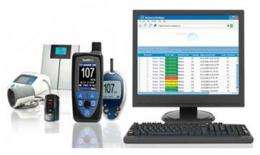
In a pilot project for the Public Health Agency of Canada, diabetic patients in four regions of Quebec – the Lower North Shore, the Îles de la Madeleine, and in two different areas in Montreal – submitted their blood sugar readings to the nurse on a daily basis, using a secure website. Patients also answered a series of questions daily about their exercise, diet, and food care practices.
The nurses monitored patient responses from a distance and provided the appropriate follow-up as needed. If the patient’s readings were outside predetermined parameters, the values appeared in red in the system and an alarm was triggered. Nurses also sent patients appropriate educational material to support behaviour modification and self-management.
”Patients with chronic diseases like diabetes, or who have gone through surgery, often have lots of questions and the doctors and nurses don’t always have the time to answer them,” Arnaert said. ”My work is about trying to develop a new method of providing nursing care and telenursing has a big role to play there.”
Tele-monitoring is an avenue for health care delivery that is getting increasing attention as an effective means of delivering care to patients who are in remote locations, or whose health needs long-term monitoring.
“With tele-nursing, whether using video-conferencing or text-messaging, patients say they feel they get lots of attention from their nurses, because they know that they have their full attention for an hour – some of them even dress up for it. They said that tele-monitoring provided them with a sense of confidence in their ability to manage their diabetic condition themselves,” Arnaert explained.
Arnaert has over 20 years of experience in designing, developing and delivering telehealth nursing services to the elderly and chronically ill persons living at home. Dr. Hélène Ezer, Director of the School of Nursing, is enthusiastic about the research. “Dr. Arnaert’s research projects in monitoring patients with diabetes, hypertension, chronic obstructive pulmonary disease and at the end-of-life serve as a springboard for the delivering of care to more acutely ill persons in the post-hospital phases of their illness. At a time when we face shortages among all health professionals, the implementation of telehealth monitoring is an innovative solution in the delivery of care. The incorporation of a visual and interactive component between a nurse and patient maintains the critically important personalized relationship required for healthcare.”
Dr. Arnaert’s latest research was funded by the Public Health Agency of Canada and managed by the Italian-Canadian Community Services of Quebec, Inc. and East Island Network for English Language Services.
For more information: www.phac-aspc.gc.ca
RESEARCH GENERATES SPINOFF
McGill University recently joined Magellan Global Health, Inc., co-founded by Arnaert, in commercializing proprietary software developed at McGill in the fields of telemedicine and mobile health (mHealth). Magellan uses an interactive telemedicine platform to provide health care services and medical care to remote patients, such as Indigenous people, off-shore oil-and-gas workers, seafarers and miners who live and work in remote regions, as well as to the chronically ill whose health needs long-term monitoring.
Dr. Rose Goldstein, Vice-Principal (Research and International Relations), is pleased about this development. “Telemedicine and mobile health are creative, innovative and fundamentally practical approaches to the challenge of providing all people – no matter where they are – with access to affordable and effective health care,” said Golstein. “The partnership between McGill and Magellan Global Health (MGH) demonstrates how, by working more closely together, universities and industry can move transformational tools like mHealth out of the lab and into practical applications that improve health care. I would like to thank Dr. Arnaert for her leadership, as well as the Public Health Agency of Canada, the Italian-Canadian Community Services of Quebec, Inc., and the East Island Network for English Language Services for their vision, support and funding. I believe the partnership between McGill and MGH will ultimately result in new means of delivering health care that will better serve our community and are better suited to our interconnected world.”
For more information about Magellan Global Health: www.magellangh.com/index.html


