Cardiovascular disease linked to evolutionary changes that may have protected early mammals from trauma
(Medical Xpress) -- Can a bird have a heart attack? A recent paper published by researchers at the Perelman School of Medicine at the University of Pennsylvania suggests that cardiovascular disease may be an unfortunate consequence of mammalian evolution. The study, published in a recent issue of the journal Blood demonstrates that the same features of blood platelets that may have provided an evolutionary advantage to early mammals now predispose humans to cardiovascular disease.
"The biology of platelets has been studied in great detail in the context of human disease, but almost nothing is known about why mammals have platelets, whereas no other species do," said lead study author Alec A. Schmaier, PhD, an MD/PhD student in the lab of Mark Kahn, MD, professor of Medicine at Penn. "This new line of research suggests that platelets could have allowed mammals to better survive traumatic injury by being able to form cellular clots in arterial blood vessels. The price for this evolutionary change may be modern cardiovascular diseases."
Platelets are small circulating cells that have no nucleus and form clots at sites of vessel injury. Platelets are required to prevent excessive bleeding following traumatic injury, but they also form clots at sites of atherosclerotic plaques in the blood vessels that lead to stroke and heart attack. Drugs that inhibit the function of platelets, including aspirin and clopidogrel, are the main weapons for treating heart attack and stroke.
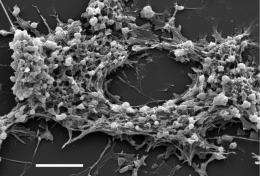
Despite being a vital element of the blood clotting system, platelets are only found in mammals, whereas all non-mammalian vertebrates, including birds, have thrombocytes. About twice the diameter of platelets, thrombocytes contain a nucleus. Studies performed in the 1970s suggested they have a clotting function similar to platelets, but extensive studies of thrombocytes using modern experimental techniques have not been performed.
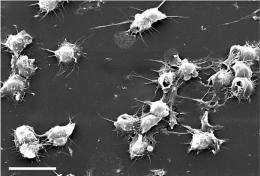
The research team focused their study on birds (compared to fish or reptiles for example) because birds and mammals both have a high pressure arterial system. Birds in fact have higher cardiac output and blood pressures than mammals do. Therefore, the challenge for hemostasis, i.e. blood clotting after vessel injury or trauma, should be similar between a mammal and a bird. However, in the present study, using molecular and physiologic techniques, the Penn researchers discovered that avian thrombocytes express most of the same proteins as platelets, with two key exceptions: thrombocytes express a significantly lower level of one essential platelet protein (the fibrinogen receptor) and are completely deficient in another (the adenosine diphosphate receptor) that function in a pathway required to form occlusive clots in the arterial system and are the primary targets of anti-platelet medications. In collagen flow-chamber experiments, the research team found that thrombocytes could not form 3-dimensional aggregates under high-flow conditions, a key step in the pathogenesis of stroke and heart attack.
Collaborative studies with colleagues at Penn's School of Veterinary Medicine, Karen Rosenthal, DVM, MS, and Jeff Runge, DVM, and Tim Stalker, in Department of Medicine –Hematology/Oncology, at the Perelman School of Medicine, next compared the ability of platelets and thrombocytes to form intra-vascular clots in mice and similarly sized parakeets. The mice, but not the birds, developed clots that prevented blood flow after arterial injury due to the ability of platelets, but not thrombocytes, to stick to each other under high flow conditions.
Although the researchers caution that this prediction cannot be tested in all contexts, the finding that equivalent degrees of arterial vessel wall injury in vessels of similar size and equal hemodynamic forces result in the occlusion in mammals but not in birds is consistent with the hypothesis that platelets mediate a more efficient clotting response than thrombocytes.
Dr. Kahn, the study’s senior author, concluded, “Although the reason for platelet evolution in mammals can never be known with certainty, it is tempting to speculate that platelets may have allowed early mammals to better survive trauma and thereby provided a survival advantage.”
More information: bloodjournal.hematologylibrary … 8a-a1a0-496b5c02af89


