Research project on psychopaths finds there is hope for treatment
October 21, 2011 By Ishmael Daro in Psychology & Psychiatry

Research project on psychopaths finds there is hope for treatment

Enlarge

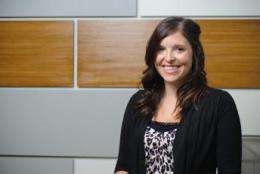
U of S student Lindsay Sewell is exploring whether psychopaths can be effectively treated. Credit: Scott Bell for the U of S.

Lindsay Sewall has spent the last three years studying a feared and misunderstood segment of the population: Psychopaths.

The University of Saskatchewan researcher is in the first stages of her PhD in psychology, looking into whether psychopathy can be treated in violent offenders to reduce their risk of reoffending.

Her project is funded in part through a Frederick Banting and Charles Best Canada Graduate scholarship through the Canadian Institutes of Health Research.

Psychopaths make up less than one per cent of the general population, yet they comprise about 15 per cent of people in prisons and commit roughly half of all .

Successful treatment could reduce the risk for everyone when psychopaths re-enter the community.

"Psychopaths are difficult clients to have in treatment," Sewall says. "They're manipulative. They don't take responsibility for their actions and they lack remorse and empathy, so they're not exactly easy clients to treat.

"For a long time, people believed you couldn't treat them."

But recent research shows that, given the proper , psychopaths can curb their destructive behaviour. They might still be psychopaths, but as long as they stay out of trouble, society will be safer, Sewall says.

"We're concerned with, 'Are they engaging in criminal behaviour or not?' We can't hold them in jail because they're kind of a jerk."

Indeed, psychopathy does not always lead to . Canadian psychologist Robert Hare, a pioneer in the study of psychopathy and co-author of the book Snakes in Suits, argues the cutthroat corporate world often rewards psychopaths for ruthlessness.

Hare developed the Psychopathy Checklist, which has been used for decades. It looks for traits such as pathological lying, impulsiveness and sexual promiscuity. A person receives a score of zero, one or two for each of the traits they exhibit; a score higher than 25 means the person is probably a psychopath.

Sewall will use the checklist to rate more than 300 case files from the Regional Psychiatric Centre in Saskatoon, where since 1981, sex offenders have been treated as part of the Clearwater Program.

Since enough time has gone by for follow-ups, Sewall's research will show if those who qualified as psychopathic and received treatment were better able to rejoin society and less likely to end up back in prison.

Sewall's PhD supervisor, Mark Olver, is a clinical forensic psychologist whose main area of research has been sex offenders. He says treatment provides offenders with an "emotional toolbox" to help stop them from acting on their impulses.

"By focusing on changing and violent tendencies, but not necessarily transforming this person into a model human being, the (treatment) approaches are a lot more effective," Olver says. The aim is to give offenders "positive lifestyle skills and constructive coping strategies."

Sewall also hopes to answer two other questions about psychopathy. One is whether there are different subtypes of this personality disorder with varying levels of success in treatment. The other question is whether psychopathy is an evolutionary adaptation.

In the animal world, there are often "cheaters" who pass their genes on even when they don't contribute to the wellbeing of the herd.

"There's a small number in the population who cheat and they take advantage of the fact most of the others are co-operators. So it has been proposed that psychopaths could potentially be the cheaters of the human population," Sewall says.

Even if psychopaths are a byproduct of human evolution, they remain a destructive force in society when they become violent. Sewall's research will help show if these "cheaters" can be rehabilitated.

"By rehabilitated, it doesn't necessarily mean that they don't reoffend ever again," Sewall says. "It's just that you reduce their risk to do so."

Provided by University of Saskatchewan

4 /5 (4 votes)  

Filter


Move the slider to adjust rank threshold, so that you can hide some of the comments.


Display comments: newest first

hush1
Oct 22, 2011

Rank: not rated yet
Everyone has a favorite book. The Psychopathy Checklist is no exception.

Seriously, the scripts are difficult. Puts any professional actors' performance to shame.
Beard
Oct 23, 2011

Rank: 1 / 5 (1)
Sterilize every single one of them.
Nerdyguy
Oct 23, 2011

Rank: not rated yet
Sterilize every single one of them.


OK, internet tough guy. Did you even read the article? It states, "...psychopathy does not always lead to criminality."

So, you would condone sterilization of an individual who has committed no crime, broken no law, but who has a specific personality type?
Rank 4 /5 (4 votes)
Relevant PhysicsForums posts

More news stories

Motion quotient: IQ predicted by ability to filter motion (w/ video)

A brief visual task can predict IQ, according to a new study. This surprisingly simple exercise measures the brain's unconscious ability to filter out visual movement. The study shows that individuals whose ...

Psychology & Psychiatry created 18 hours ago | popularity 4.5 / 5 (10) | comments 1 | with audio podcast

Anxious men fare worse during job interviews, study finds

Nervous about that upcoming job interview? You might want to take steps to reduce your jitters, especially if you are a man.

Psychology & Psychiatry created 18 hours ago | popularity 5 / 5 (1) | comments 0

Are kids who take music lessons different from other kids?

(Medical Xpress)—Research by U of T Mississauga psychology professor Glenn Schellenberg reveals that two key personality traits – openness-to-experience and conscientiousness—predict better than IQ ...

Psychology & Psychiatry created 20 hours ago | popularity 3 / 5 (2) | comments 1 | with audio podcast

Parents can help preteens with abduction concerns

Parents naturally are concerned for their children's safety, particularly when there is news of a child abduction that happens close to home. Finding the balance between emotions and the "teachable moment" as parents talk ...

Psychology & Psychiatry created 21 hours ago | popularity not rated yet | comments 0

Ireland needs real-time database for teen and young adult suicides

A new report on suicide in Ireland shows that suicide cases experienced a significant number (and intensity) of life events in the 6 months prior to their death.

Psychology & Psychiatry created 21 hours ago | popularity not rated yet | comments 0


Controlling mood through the motions of mitochondria

(Medical Xpress)—Regulating the distribution of power in neurons is done by a system that makes the national electric grid look simple by comparison. Each neuron has several thousand mitochondria confined ...

Multiple research teams unable to confirm high-profile Alzheimer's study

Teams of highly respected Alzheimer's researchers failed to replicate what appeared to be breakthrough results for the treatment of this brain disease when they were published last year in the journal Science.

Hormone replacement therapy—clarity at last

The British Menopause Society and Women's Health Concern have today released updated guidelines on Hormone Replacement Therapy (HRT) to provide clarity around the role of HRT, the benefits and the risks. The new guidelines ...

Scientists discover molecule triggers sensation of itch

Scientists at the National Institutes of Health report they have discovered in mouse studies that a small molecule released in the spinal cord triggers a process that is later experienced in the brain as ...

Researchers find common childhood asthma unconnected to allergens or inflammation

Little is known about why asthma develops, how it constricts the airway or why response to treatments varies between patients. Now, a team of researchers at Weill Cornell Medical College, Columbia University Medical Center ...

Diabetes' genetic underpinnings can vary based on ethnic background, studies say

Ethnic background plays a surprisingly large role in how diabetes develops on a cellular level, according to two new studies led by researchers at the Stanford University School of Medicine.