Recognition of anger, fear, disgust most affected in dementia
October 4, 2011 in Neuroscience
Recognition of anger, fear, disgust most affected in dementia

Enlarge

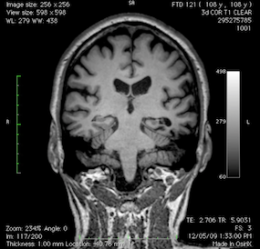
(Medical Xpress) -- A new study on emotion recognition has shown that people with frontotemporal dementia are more likely to lose the ability to recognise negative emotions, such as anger, fear and disgust, than positive emotions such as happiness.

"All patients continue to recognise happiness, at least in the initial stages of the disease, even when recognition of other emotions is heavily impaired," says Dr Olivier Piguet, one of the study's authors. "There is something about a happy face that is different from the way other emotions are expressed."

Frontotemporal (FTD) is one of the most common types of dementia in younger adults. The age of onset of FTD is typically in the 50s or 60s but can be as young as 30.

Along with various other symptoms affecting behaviour and language, all people with FTD experience difficulty in recognising emotions ().

Up until now, however, it was not known whether the three subtypes of FTD (semantic dementia, progressive non-fluent aphasia and behavioural-variant FTD) have the same deficits, and whether certain techniques could help overcome these deficits.

Dr Piguet's team tested the ability of 41 people with FTD to recognise six basic facial emotions (anger, , fear, happiness, sadness and surprise).

The team also performed a second test, using faces with exaggerated emotions, to determine whether more intensely expressed emotions would help with recognition.

Of the three FTD subtypes, Dr Piguet's team found that those people with the semantic dementia subtype were the most impaired when it came to recognising emotions.

"Semantic were impaired across the board," says Dr Piguet. "Even when we increased the intensity of the emotions, it didn't make any difference to their ability to recognise them. These patients probably have a disturbance in their core emotion recognition pathways."

Patients with the progressive non-fluent aphasia and behavioural-variant FTD subtypes also had emotion-recognition deficits, particularly for angry and sad faces, but tended to improve if the emotions were made more obvious.

"Problems with emotion recognition had not been observed in patients with progressive non-fluent aphasia before, so this is a new finding," says Dr Piguet.

"In both these types of patients, part of the problem is probably due to a deficit in attention, so perhaps they are not paying attention to the right places when looking at faces," he says.

Dr Piguet says these results suggest there may be ways to address the problem of emotion recognition deficits in these patients, at least early on in the disease process. For example, exaggerating facial expressions may aid in communicating certain emotions.

A better understanding of emotion recognition deficits in FTD will help with predicting the progression of the disease, says Dr Piguet.

"When patients come to see us, it's important for them to know what's going to happen to them. Unfortunately, we're still not great at predicting disease progression. This research, however, will help us better understand what symptoms will develop over time, what they can expect for the future, and hopefully will help with developing some strategies for coping with their disease."

The study was published in the journal Social Neuroscience.

Provided by Neuroscience Research Australia

5 /5 (1 vote)  

Filter


Move the slider to adjust rank threshold, so that you can hide some of the comments.


Display comments: newest first

Basic Knowledge_
Oct 06, 2011

Rank: not rated yet
everything that you have explained, I have a lot of these traits?
what does this mean?.. I'm only 21, but I have another opinion on your subject if you would like to her my opinion? add my e-mail adamMaclennan@hotmil.com
Basic Knowledge_
Oct 06, 2011

Rank: not rated yet
hear** haha oops... man oh man all these rules!! I have to wait 3 min! b4 I have to post another comment? why? I don't understand , this makes me angry? uh oh am I getting worse? haha no I am not, the only reason things progress in the first place is because you pay attention to it!???


Rank 5 /5 (1 vote)
Relevant PhysicsForums posts
  • Potential Breakthrough in Seizure Control
    created8 hours ago
  • Popping/Cracked sternum.
    created13 hours ago
  • Which Mental Illness Encompasses This Problem?
    created13 hours ago
  • A question about drug tolerance
    createdMay 23, 2012
  • Poor nutrition leading to overeating?
    createdMay 23, 2012
  • Math and dyslexia?
    createdMay 21, 2012
  • More from Physics Forums - Medical Sciences

More news stories

Of mice and mental models: Neuroscientific implications of risk-optimized behavior in the mouse

(Medical Xpress) -- Regardless of an organism’s biological complexity, every encephalized animal continuously makes under-informed behavioral choices that can have serious consequences. Despite its ubiquity, ...

Neuroscience created May 25, 2012 | popularity not rated yet | comments 0 | with audio podcast feature

Persistent sensory experience is good for aging brain

Despite a long-held scientific belief that much of the wiring of the brain is fixed by the time of adolescence, a new study shows that changes in sensory experience can cause massive rewiring of the brain, even as one ages. ...

Neuroscience created May 24, 2012 | popularity not rated yet | comments 0

Boundary stops molecule right where it needs to be

A molecule responsible for the proper formation of a key portion of the nervous system finds its way to the proper place not because it is actively recruited, but instead because it can't go anywhere else.

Neuroscience created May 24, 2012 | popularity not rated yet | comments 0 | with audio podcast

Locating ground zero: How the brain's emergency workers find the disaster area

Like emergency workers rushing to a disaster scene, cells called microglia speed to places where the brain has been injured, to contain the damage by 'eating up' any cellular debris and dead or dying neurons. ...

Neuroscience created May 24, 2012 | popularity 5 / 5 (2) | comments 0 | with audio podcast

Genetic 'reset switch' enables signaling pathway to induce multiple developmental outcomes for olfactory neurons

Within the nervous system, a handful of signaling pathways modulate development of a cornucopia of different neuronal subtypes. “Even small alterations in neuron differentiation pathways can disrupt subsequent ...

Neuroscience created May 24, 2012 | popularity not rated yet | comments 0


Travel to high altitudes tied to Crohn's, colitis flare-ups

(HealthDay) -- People with inflammatory bowel disease, which includes Crohn's disease and colitis, may be at increased risk for flare-ups when they fly or travel to high altitudes for skiing or mountain climbing, ...

Family history of Alzheimer's affects functional connectivity

(HealthDay) -- Cognitively normal individuals with a family history of late-onset Alzheimer's disease (AD) may display lower resting state functional connectivity in the default mode network (DMN) of the brain, ...

Transvaginal mesh op restores pelvic organ prolapse at price

(HealthDay) -- Transvaginal mesh (TVM) procedures are effective for anatomical restoration of pelvic organ prolapse (POP), but patients report a worsening of sexual function following surgery, according to ...

Tongue analysis software uses ancient Chinese medicine to warn of disease

For 5,000 years, the Chinese have used a system of medicine based on the flow and balance of positive and negative energies in the body. In this system, the appearance of the tongue is one of the measures used to classify ...

Skp2 activates cancer-promoting, glucose-processing Akt

HER2 and its epidermal growth factor receptor cousins mobilize a specialized protein to activate a major player in cancer development and sugar metabolism, scientists report in the May 25 issue of Cell.

Early physical therapist treatment associated with reduced risk of healthcare utilization and reduced overall healthcare

A new study published in Spine shows that early treatment by a physical therapist for low back pain (LBP), as compared to delayed treatment, was associated with reduced risk of subsequent healthcare utilization and lower ...