Study shows left side of brain more active in immoral thinking
November 16, 2011
by Bob Yirka
in Neuroscience
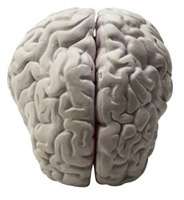
(Medical Xpress) -- Because the brain is so complex, researchers are forced to devise all manner of different types of tests in trying to understand not just how it works, but which parts of it do what. To that end, a diverse group of scientists from several universities across the U.S. got together to work on the problem of which parts of the brain, if any specifically, are involved in analyzing and making moral judgments. To find out, or at least learn more, they devised three experiments meant to test the busyness of the brain, measured by blood flow, to certain regions, when presented with immoral situations. They have published the results of what they found in the journal Frontiers in Evolutionary Neuroscience.
The idea behind all three experiments was to present volunteers with material that is generally believed to be immoral while watching blood flow patterns in their brains using fMRI, as compared to what happens when moral or neutral material is viewed.
In the first study, volunteers were told that they would be engaging in a memory test. They were then shown a series of statements, followed by another series of statements after that. During the second series they were asked to press a button to indicate if the statement they were being shown had been among those shown in the first series. The statements shown were divided into four classes: pathogen related (non-sexually gross stuff), incestuous acts, nonsexual immoral acts and neutral acts.
In the second study, volunteers were shown three types of statements in random order: 50 examples describing acts that most people think of as immoral, 50 statements that most think of as pro-moral (morally good) and 50 statements that most people think of as neutral.
And finally, in the third study, volunteers were shown three types of pictures in random order: immoral, non-moral (negative without morality), and neutral.
After analyzing and normalizing the data, the researchers found that the left hemisphere of the brain showed increased blood flow in response to immoral stimuli throughout all three studies, while the right did not. No such pattern was found for the neutral or pro-moral tests. They also found that while each of the three tests tended to light up specific areas of the left hemisphere in the scanned images, there was also quite a bit of overlap between those participating in the three different studies.
The research team isnt making any declarations regarding their results other than suggesting that it appears the left side of the brain appears to be more involved in immoral processing than the right. They also suggest the brain might have evolved to work this way to avoid duplication in processing and to increase efficiency.
More information: Cope LM, Schaich Borg J, Harenski CL, Sinnott-Armstrong W, Lieberman D, Nyalakanti PK, Calhoun VD and Kiehl KA (2010) Hemispheric asymmetries during processing of immoral stimuli. Front. Evol. Neurosci. 2:110. doi: 10.3389/fnevo.2010.00110 (full text available here)
Abstract
Evolutionary approaches to dissecting our psychological architecture underscore the importance of both function and structure. Here we focus on both the function and structure of our neural circuitry and report a functional bilateral asymmetry associated with the processing of immoral stimuli. Many processes in the human brain are associated with functional specialization unique to one hemisphere. With respect to emotions, most research points to right-hemispheric lateralization. Here we provide evidence that not all emotional stimuli share right-hemispheric lateralization. Across three studies employing different paradigms, the processing of negative morally laden stimuli was found to be highly left-lateralized. Regions of engagement common to the three studies include the left medial prefrontal cortex, left temporoparietal junction, and left posterior cingulate. These data support the hypothesis that processing of immoral stimuli preferentially engages left hemispheric processes and sheds light on our evolved neural architecture.
© 2011 Medical Xpress
-
True or false? How our brain processes negative statements
Feb 11, 2009 |
not rated yet |
0
-
Cleansing the soul by hurting the flesh: The guilt-reducing effect of pain
Mar 08, 2011 |
not rated yet |
0
-
Psychologists shed light on origins of morality
Feb 26, 2009 |
not rated yet |
0
-
Why Saints Sin and Sinners Get Saintly
Jun 26, 2009 |
not rated yet |
0
-
Moral judgments can be altered by disrupting specific brain region
Mar 29, 2010 |
not rated yet |
0
-
Motion perception revisited: High Phi effect challenges established motion perception assumptions
Apr 23, 2013 |
3 / 5 (2) |
2
-
Anything you can do I can do better: Neuromolecular foundations of the superiority illusion (Update)
Apr 02, 2013 |
4.5 / 5 (11) |
5
-
The visual system as economist: Neural resource allocation in visual adaptation
Mar 30, 2013 |
5 / 5 (2) |
9
-
Separate lives: Neuronal and organismal lifespans decoupled
Mar 27, 2013 |
4.9 / 5 (8) |
0
-
Sizing things up: The evolutionary neurobiology of scale invariance
Feb 28, 2013 |
4.8 / 5 (10) |
14
-
Why is zone 1 in liver more prone to ischemic injury?
9 hours ago
-
How can there be villous adenoma in colon, if there are no villi there
May 22, 2013
-
How can there be a term called "intestinal metaplasia" of stomach
May 21, 2013
-
Pressure-volume curve: Elastic Recoil Pressure don't make sense
May 18, 2013
-
If you became brain-dead, would you want them to pull the plug?
May 17, 2013
-
MRI bill question
May 15, 2013
- More from Physics Forums - Medical Sciences
More news stories
The secret lives, and deaths, of neurons
As the human body fine-tunes its neurological wiring, nerve cells often must fix a faulty connection by amputating an axon—the "business end" of the neuron that sends electrical impulses to tissues or other ...
Neuroscience
1 hour ago |
5 / 5 (1) |
0
|
Regenerating spinal cord fibers may be treatment for stroke-related disabilities
A study by researchers at Henry Ford Hospital found "substantial evidence" that a regenerative process involving damaged nerve fibers in the spinal cord could hold the key to better functional recovery by most stroke victims.
Neuroscience
1 hour ago |
not rated yet |
0
|
Breakthrough on Huntington's disease
Researchers at Lund University have succeeded in preventing very early symptoms of Huntington's disease, depression and anxiety, by deactivating the mutated huntingtin protein in the brains of mice.
Neuroscience
1 hour ago |
not rated yet |
0
Researchers identify networks of neurons in the brain that are disrupted in psychiatric disease
Studying the networks of connections in the brains of people affected by schizophrenia, bipolar disease or depression has allowed Dr. Peter Williamson, from Western University, to gain a better understanding of the biological ...
Neuroscience
3 hours ago |
not rated yet |
0
Pay attention: How we focus and concentrate
Scientists at Newcastle University have shed new light on how the brain tunes in to relevant information.
Neuroscience
3 hours ago |
5 / 5 (1) |
0
|
Motion quotient: IQ predicted by ability to filter motion (w/ video)
A brief visual task can predict IQ, according to a new study. This surprisingly simple exercise measures the brain's unconscious ability to filter out visual movement. The study shows that individuals whose ...
Defective cellular waste removal explains why Gaucher patients often develop Parkinson's disease
Gaucher disease causes debilitating and sometimes fatal neurodegeneration in early childhood. Recent studies have uncovered a link between the mutations responsible for Gaucher disease and an increased risk ...
Discarded immune cells induce the relocation of stem cells
Spanish researchers have discovered that the daily clearance of neutrophils from the body stimulates the release of hematopoietic stem cells from the bone marrow into the bloodstream, according to a report published today ...
Improved chemo regimen for childhood leukemia may offer high survival, no added heart toxicity
Treating pediatric leukemia patients with a liposomal formulation of anthracycline-based chemotherapy at a more intense-than-standard dose during initial treatment may result in high survival rates without causing any added ...
Adult day services for dementia patients provide stress relief to family caregivers
Family caregivers of older adults with dementia are less stressed and their moods are improved on days when dementia patients receive adult day services (ADS), according to Penn State researchers.
UN reports 22 deaths worldwide from coronavirus
A new coronavirus has now claimed 22 lives worldwide out of 44 lab-confirmed cases, mostly in Saudi Arabia, World Health Organization officials said Thursday.
Nov 16, 2011
Rank: not rated yet
The readers are dumbfounded and bewildered. Asking themselves what selection criteria was used to select the stimuli used here to explore the mechanisms by which associations 'find' their 'place' in the brain.
Do the same test. On non human primates. Of course this reduces the study to the third test only. And forces you to find any stimuli at all having left hemispheric lateralization. That stimuli is the origin of morality in humans.
Nov 16, 2011
Rank: not rated yet
Nov 16, 2011
Rank: not rated yet
? - Bahnhof.
Nov 18, 2011
Rank: not rated yet
Nov 18, 2011
Rank: not rated yet
Nov 23, 2011
Rank: 5 / 5 (1)
Nov 23, 2011
Rank: not rated yet
For example if the experimental subject is actually titillated by the immoral material then they probably have to work internally, and mostly unconsciously at that, to suppress their intrinsic attraction to it, and so restore their own self definition of being a 'good' person.
Nov 25, 2011
Rank: not rated yet
Funnily in other European languages, besides english, the term for "right" often denotes the idea of correctness. So we have e.g the dutch "recht" (related to the word used for "justice"), finnish "oikea" (also means "correct"), estonian "parem" (maybe related to the finnish "parempi": better) and perhaps also the swedish "högre" (also means "higher").
Not sure if this is because so many may have been predominantly right-handed or if it has something to do with Christianity (eg well you know how Jesus said that he would place the sheep on his right and goats on his left during a specific judgement moment).
Examples of this language: