Children from lower-socioeconomic area more likely to be exposed to smoke in cars
December 8, 2011 in Health
Children from lower-socioeconomic area more likely to be exposed to smoke in cars

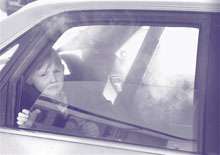
(Medical Xpress) -- Children from a lower socio-economic area in Wellington, Wainuiomata, are 11 times more likely to be exposed to cigarette smoking in cars than in the wealthier suburb of Karori, according to recent research.

Researchers from the University of Otago, Wellington, observed almost 150,000 cars in Karori and Wainuiomata, during February to April this year. They compared the prevalence of smoking and exposure to smoking between the two suburbs.

The results have been published in the journal Tobacco Control, and are the first ever to show the differences between two areas for smoking in cars with children.

The study found that the overall prevalence of smoking in cars, and the exposure to smoking, for both adults and children were much greater in Wainuiomata than Karori.

The study also found that differences between the two areas have widened since 2005, when a similar study was conducted. Smoking in cars with other passengers reduced at double the rate in Kaori compared to in Wainuiomata.

“While there’s been some reduction in smoking in cars in both areas, the reduction has been much faster in Karori,” says one of the study authors, Dr George Thomson.

“The results suggest that the current educational approach to smoking in cars isn’t working well for children in poorer areas. It raises the question whether New Zealand should catch up with other jurisdictions in Australia, Canada and the USA by requiring vehicles, particularly those with children, to be smokefree,” he says.

Both the public and New Zealand smokers strongly support protecting children from smoking in cars. Tobacco smoke pollution is significantly increased inside vehicles, even when the windows are down. Because of the confined space, and because children are particularly susceptible to the pollution effects, there can be a significant health risk.

Recent survey evidence indicates that over 80% of smokers agree with the statement, ‘that should not be allowed in cars with under the age of 14 in them.’

The research was funded by the Cancer Society of New Zealand.

Provided by University of Otago

not rated yet  

Rank not rated yet
Related Stories
Relevant PhysicsForums posts

More news stories

Keep food safety in mind this memorial day weekend

(HealthDay) -- Picnics, parades and cookouts are as much a part of Memorial Day weekend as tributes to the United States' war veterans.

Health created 6 minutes ago | popularity not rated yet | comments 0

Most occupational injury and illness costs are paid by the government and private payers

UC Davis researchers have found that workers' compensation insurance is not used nearly as much as it should be to cover the nation's multi-billion dollar price tag for workplace illnesses and injuries. Instead, almost 80 ...

Health created May 25, 2012 | popularity not rated yet | comments 0

Early physical therapist treatment associated with reduced risk of healthcare utilization and reduced overall healthcare

A new study published in Spine shows that early treatment by a physical therapist for low back pain (LBP), as compared to delayed treatment, was associated with reduced risk of subsequent healthcare utilization and lower ...

Health created May 25, 2012 | popularity not rated yet | comments 0 | with audio podcast

Cancer patients share web info with docs for insight, advice

(HealthDay) -- Cancer patients' primary goal in talking with their doctors about information they've found on the Internet is to get more insight and advice on the online information, new research indicates.

Health created May 25, 2012 | popularity not rated yet | comments 0

P&G to add latches to make detergent packs safer

(AP) -- Procter & Gamble says it will change the design of packaging for its miniature laundry detergent product to deter children from eating the brightly colored packets that look like candy.

Health created May 25, 2012 | popularity not rated yet | comments 0


Travel to high altitudes tied to Crohn's, colitis flare-ups

(HealthDay) -- People with inflammatory bowel disease, which includes Crohn's disease and colitis, may be at increased risk for flare-ups when they fly or travel to high altitudes for skiing or mountain climbing, ...

Family history of Alzheimer's affects functional connectivity

(HealthDay) -- Cognitively normal individuals with a family history of late-onset Alzheimer's disease (AD) may display lower resting state functional connectivity in the default mode network (DMN) of the brain, ...

Transvaginal mesh op restores pelvic organ prolapse at price

(HealthDay) -- Transvaginal mesh (TVM) procedures are effective for anatomical restoration of pelvic organ prolapse (POP), but patients report a worsening of sexual function following surgery, according to ...

Of mice and mental models: Neuroscientific implications of risk-optimized behavior in the mouse

(Medical Xpress) -- Regardless of an organism’s biological complexity, every encephalized animal continuously makes under-informed behavioral choices that can have serious consequences. Despite its ubiquity, ...

Weight struggles? Blame new neurons in your hypothalamus

New nerve cells formed in a select part of the brain could hold considerable sway over how much you eat and consequently weigh, new animal research by Johns Hopkins scientists suggests in a study published in the May issue ...

Thioridazine kills cancer stem cells in human while avoiding toxic side-effects of conventional cancer treatments

A team of scientists at McMaster University has discovered a drug, thioridazine, successfully kills cancer stem cells in the human while avoiding the toxic side-effects of conventional cancer treatments.