Black tea reduces blood pressure: study
January 24, 2012 in Health

Black tea reduces blood pressure: study

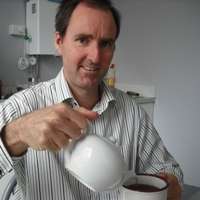
(Medical Xpress) -- Drinking a cup of black tea three times a day may significantly reduce your blood pressure.

In a world first, scientists at The University of Western Australia and Unilever discovered that lowers systolic and diastolic blood pressure.* Their research is published this week in the Archives of Internal Medicine.

Lead author Research Professor Jonathan Hodgson of UWA's School of Medicine and Pharmacology said high blood pressure could significantly increase people's risk of disease.

"There is already mounting evidence that tea is good for your heart health, but this is an important discovery because it demonstrates a link between tea and a major risk factor for heart disease," he said.

In the study, 95 Australian participants aged between 35 and 75 were recruited to drink either three cups of  black tea or a placebo with the same flavour and caffeine content, but not derived from tea.

After six months, the researchers found that compared with the placebo, participants who drank black tea had a lower 24-hour systolic and diastolic blood pressure of between 2 and 3 mmHg.

Professor Hodgson said more research is required to better understand how tea may reduce blood pressure, although earlier studies reported a link between tea drinking and the improved health of people's blood vessels.

Tea is the world's second-most consumed drink, after water.

* Blood pressure measurement consists of two numbers.  The first is the systolic and measures when the heart beats, or contracts to push blood through the body.  The second number is the diastolic and measures the amount of pressure in between beats, when the heart is at rest.

Journal reference: JAMA Internal Medicine search and more info website

Provided by University of Western Australia

not rated yet  

Rank not rated yet
Relevant PhysicsForums posts

More news stories

Consumers largely underestimating calorie content of fast food

People eating at fast food restaurants largely underestimate the calorie content of meals, especially large ones, according to a paper published today in BMJ.

Health created 6 hours ago | popularity not rated yet | comments 0

It's not your imagination: Memory gets muddled at menopause

Don't doubt it when a woman harried by hot flashes says she's having a hard time remembering things. A new study published online in Menopause, the journal of The North American Menopause Society (NAMS), helps confirm with o ...

Health created 7 hours ago | popularity not rated yet | comments 0

Farm bill: Senate rejects GMO labeling amendment

The Senate has overwhelmingly rejected an amendment allowing states to require labeling of genetically modified foods.

Health created 7 hours ago | popularity not rated yet | comments 1

McDonald's can't shake criticism about nutrition

(AP)—McDonald's once again faced criticism that it's a purveyor of junk food that markets to children at its annual shareholder meeting Thursday.

Health created 8 hours ago | popularity not rated yet | comments 0

Economic incentives increase blood donation without negative consequences

Can economic incentives such as gift cards, T-shirts, and time off from work motivate members of the public to increase their donations of blood?

Health created 10 hours ago | popularity not rated yet | comments 0 | with audio podcast


ACP issues recommendations for management of high blood glucose in hospitalized patients

High blood glucose is associated with poor outcomes in hospitalized patients, and use of intensive insulin therapy (IIT) to control hyperglycemia is a common practice in hospitals. But the recent evidence does not show a ...

Controlling mood through the motions of mitochondria

(Medical Xpress)—Regulating the distribution of power in neurons is done by a system that makes the national electric grid look simple by comparison. Each neuron has several thousand mitochondria confined ...

Motion quotient: IQ predicted by ability to filter motion (w/ video)

A brief visual task can predict IQ, according to a new study. This surprisingly simple exercise measures the brain's unconscious ability to filter out visual movement. The study shows that individuals whose ...

Multiple research teams unable to confirm high-profile Alzheimer's study

Teams of highly respected Alzheimer's researchers failed to replicate what appeared to be breakthrough results for the treatment of this brain disease when they were published last year in the journal Science.

Scientists discover molecule triggers sensation of itch

Scientists at the National Institutes of Health report they have discovered in mouse studies that a small molecule released in the spinal cord triggers a process that is later experienced in the brain as ...

Researchers find common childhood asthma unconnected to allergens or inflammation

Little is known about why asthma develops, how it constricts the airway or why response to treatments varies between patients. Now, a team of researchers at Weill Cornell Medical College, Columbia University Medical Center ...