Peer passengers are bad news for teen drivers
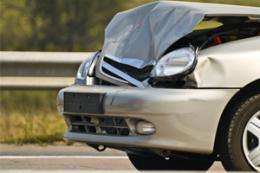
Research shows that teens who drive with peers as passengers have increased risks of crashing. Many states have responded by creating graduated driver licensing laws which include limits on the number of passengers teen drivers can have.
Two new studies in the latest Journal of Adolescent Health reviewed key factors shown to influence teen driving behaviors: perception of driving risks, parental monitoring and the presence of peer passengers. Both studies have results that support the role of teen driver licensing restrictions and parental oversight as effective methods to prevent teen driver accidents.
Teen drivers with a stronger awareness of risks and with parents who monitor their whereabouts and set rules engage in less risky driving behavior, according to the first study. A second study showed that teen passengers distract both male and female teen drivers, and are linked to aggressive or illegal driving by male teen drivers. Researchers at the Center for Injury Research and Prevention at the Children's Hospital of Philadelphia led both studies.
The first study researched how sensation seeking or risk taking, risk perception and parental monitoring and rule setting affected a teen’s likelihood of risky driving and driving with multiple peer passengers. The researchers surveyed 198 teens aged 15 to 17 in two states with graduated driver license laws. They found that higher sensation seeking, lower risk perception and less parental monitoring predicted teens’ risky driving, and having multiple peer passengers increased that risk.
"The good news is that most of the teens in the study reported being aware of the risks of driving dangerously," said lead author Jessica Mirman, Ph.D.
The second study analyzed a nationally representative sample of 677 drivers aged 16 to 18 who were involved in serious crashes. Findings from on-scene crash investigations revealed that both male and female teen drivers were more susceptible to distractions with passengers in the car. In addition, boys with multiple passengers were more likely to drive aggressively or perform illegal maneuvers in the moments before a crash when they had passengers than they were when driving alone.
"Distraction from peer passengers appears to play a prominent role for both male and female drivers," said Allison E. Curry, Ph.D., MPH, director of the Epidemiology and Biostatistics Core at the Center and lead author on this study. "One in five females and one in four males who were driving with friends were distracted by something inside the vehicle just before they crashed."
Passengers affected boys and girls in different ways. Boys were more prone to crash due to speeding or reckless driving while girls were more apt to crash because of distractions such as looking at their friends, eating, texting or using their cell phones, said Jeffrey Weiss, M.D., pediatric hospitalist at Phoenix Children's Hospital, and a spokesman for the American Academy of Pediatrics on teen driving issues.
Graduated driver licensing laws vary by state, Weiss said. Forty-eight states and the District of Columbia restrict young drivers from driving at night, according to the Governors Highway Safety Association. Forty-five states and D.C. restrict the number of their passengers. These laws have reduced the incidence of crashes among teen drivers, said Weiss.
"The $64,000 question about graduated driver's licensing rules is, ‘Why do they work?’” Weiss noted. "We've shown that they work, but is it because of the passenger restriction or the night restriction or a combination of both? Is it because of parental education?" Some of the beneficial effect might be because some teens wait to drive until they can get a full license without restrictions, he added.
More information: Curry A.E., et al. (2012). Peer Passengers: How Do They Affect Teen Crashes? Journal of Adolescent Health.


