Training grant targets behavioral and social factors linked to health
It is estimated that half of all deaths in the United States are linked to behavioral and social factors such as smoking, diet and physical inactivity. Despite these causal links, of the $2 trillion spent annually on health care in the U.S., only 5 percent of that is devoted to addressing behavioral and social risk factors.
The MU School of Medicine will enhance training in behavioral and social sciences with a new $500,000 grant from the National Institutes of Health. The awardwill help medical students learn how to provide culturally competent care, address public health issues and become lifelong learners who are committed to professional development.
"When I went to medical school, I was trained that my job as a physician was to understand my patient's illness, determine a diagnosis and recommend a treatment," said Linda Headrick, MD, senior associate dean for education and faculty development at MU's medical school. "Now, my job doesn't stop there. In order to be an effective physician, I need to understand all factors as determinants of health."
The Institute of Medicine reviewed curricula at U.S. medical schools and developed recommendations for better training in behavioral and social sciences. While MU has implemented many of the recommendations, the new NIH grant will help students further interact with patients of different backgrounds and address social and behavioral factors that are linked to health outcomes.
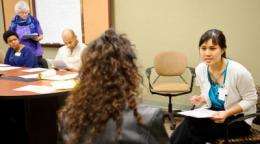
For example, MU medical students are already exposed to clinical simulations that use bilingual actors who pretend to be patients. The actors simulate various health conditions, share cultural beliefs and sometimes communicate with students via an interpreter. The exercise builds communication skills so students can adapt better to patients with different languages and backgrounds. The new NIH grant will help MU's medical school make similar learningopportunities available more often during the four years that medical students train to become physicians.
The NIH grant will also expand MU's use of narrative-based learning. By writing about their experiences as physicians in training, medical students gain a better understanding of the needs of patients and families. Physicians also are encouraged to write about their interactions with patients, families and colleagues as a way to identify opportunities for improvement throughout their career.
"Narrative-based reflection encourages students to think critically about things that are important in their medical training experiences," said Headrick, leader of the grant project at MU. "Helping students develop habits of reflection using writing allows them to process experiences in a healthy way. The students learn from those experiences, and it helps them develop into the highly competent and compassionate doctors they want to become."
MU students currently record narratives during their first three years of medical school. MU's medical school also created a unique Legacy Teachers Program to recognize that patients are among the best and most memorable teachers for physicians. Each year, MU medical students participate in the Legacy Teachers Program by submitting essays, artwork or poetry that describe how patients contributed to their lifelong development. Participating patients, patient's families and students are recognized at an annual luncheon that attracts hundreds of supporters.
Indiana University School of Medicine is a collaborative partner in the new NIH grant project. Medical education leaders from both institutions will share expertise and training methods with each other. MU and Indiana University also have joined several other institutions in forming a nationwide consortium to improve behavioral and social science training in medicine.
"An exciting part of this effort is that the emphasis on behavior and social science aligns so well with the values of our school and the key characteristics of our graduates," Headrick said. "We have an opportunity with this grant to strengthen learning processes, share best practices with our partners, and help our future physicians deliver effective patient-centered care."


