Straight from the gut: Microbes can cause obesity
February 5, 2012 By Helen Dodson in Medical research
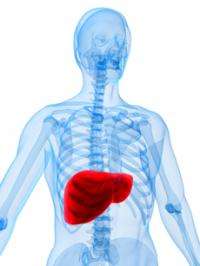
(Medical Xpress) -- Obesity and chronic liver disease can be triggered by a family of proteins that alter populations of microbes in the stomach, a discovery that suggests the condition may be infectious, Yale scientists report. The study, in the advance online publication of Nature, expands on earlier Yale research that showed how similar microbial imbalances caused by the same family of proteins increases the risk of intestinal diseases such as colitis.
The Yale scientists most extraordinary finding, they said, was that the altered intestinal environment that led to obesity and liver disease was infectious among the community of mice. When healthy mice were co-housed with mice that had altered gut microbes, the healthy mice also developed a susceptibility for development of liver disease and obesity, said senior author Richard A. Flavell, professor of immunobiology at Yale School of Medicine and a Howard Hughes Medical Institute investigator.
The proteins in question are called inflammasomes. They are responsible for launching the immune systems inflammatory response. Inflammasomes act as sensors and regulators of the microbial environment of the intestines.
The Yale team found that a deficiency in components of two particular inflammasomes in mice resulted in the development of an altered microbial community associated with increased bacteria. This determined the severity of non-alcoholic fatty liver disease (NAFLD) and obesity in the mice.
NAFLD is the result of metabolic syndrome, a collection of disorders that includes obesity and diabetes, and is the leading cause of chronic liver disease in the western world. It is estimated that up to 30 million people suffer from NAFLD in the United States alone. Twenty percent of people with NAFLD develop chronic liver inflammation, placing them at risk for cirrhosis and liver cancer, but the causes have been unclear.
The next step, Flavell said, is extending this research to humans and to identify more precisely the bacteria involved in the progression to liver disease. We found, in mice, that targeted antibiotic treatment brought the microbial composition back to normal, and thus eased the liver disease. Our hope is that our findings may eventually lead to a treatment for humans.
The researchers who led this project in Flavells laboratory are Jorge Henao-Mejia, Eran Elinav, and Chengcheng Jin. Other participating researchers were Liming Hao, Wajahat Z. Mehal, Till Strowig, Christoph A. Thaiss, Stephanie C. Eisenbarth, Michael J. Jurczak, Joao-Paulo Camporez, and Gerald I. Shulman of Yale; Andrew L. Kau and Jeffrey I. Gordon of Washington University School of Medicine; and Hal M. Hoffman of the University of California at San Diego.
Provided by
Yale University
-
Immune system malfunction may trigger inflammatory bowel disease
May 13, 2011 |
not rated yet |
0
-
New data show non-alcoholic fatty liver disease will reach epidemic status in the US
Apr 02, 2011 |
not rated yet |
0
-
Aspirin can prevent liver damage that afflicts millions
Jan 26, 2009 |
not rated yet |
0
-
Fatty liver disease can lead to heart attack
Apr 19, 2011 |
not rated yet |
0
-
Researchers Identify Genetic Variants Linked to Risk of Nonalcoholic Fatty Liver Disease, Type 2 Diabetes
Mar 25, 2010 |
not rated yet |
0
-
Of mice and mental models: Neuroscientific implications of risk-optimized behavior in the mouse
May 25, 2012 |
not rated yet |
0
-
Limits to growth: Scientists identify key metastasis-enabling enzyme
May 22, 2012 |
5 / 5 (4) |
0
-
Seeing is as seeing does: Spatially-structured retinal input in early development of cortical maps
Apr 26, 2012 |
5 / 5 (4) |
1
-
Dreamless nights: Brain activity during nonrapid eye movement sleep
Apr 09, 2012 |
4.4 / 5 (12) |
0
-
Take your time: Neurobiology sheds light on the superiority of spaced vs. massed learning
Mar 28, 2012 |
4.5 / 5 (21) |
3
-
Potential Breakthrough in Seizure Control
20 hours ago
-
Popping/Cracked sternum.
May 25, 2012
-
Which Mental Illness Encompasses This Problem?
May 25, 2012
-
A question about drug tolerance
May 23, 2012
-
Poor nutrition leading to overeating?
May 23, 2012
-
Math and dyslexia?
May 21, 2012
- More from Physics Forums - Medical Sciences
More news stories
Implantable pain disk may help those with cancer
An estimated 3.5 million cancer patients around the globe are in severe pain from their disease, but many get no relief.
Medical research
May 25, 2012 |
5 / 5 (1) |
0
|
Energy levels link sleep control mechanisms
Sleep, or lack of it, can determine level of cognitive performance which is linked with accidents as well as increased risk of serious health problems. Links between cell energy levels, gene transcription ...
Medical research
May 25, 2012 |
not rated yet |
0
Researchers identify key brain cell in antidepressant action
(Medical Xpress) -- Antidepressant medications such as Prozac have helped improve mood and lessen anxiety in millions of people with major depression. But scientists know surprisingly little about how these drugs work.
Medical research
May 25, 2012 |
4.7 / 5 (3) |
0
|
Rockefeller scientists pioneer new method to determine mechanisms of drug action
(Medical Xpress) -- Knowing that a drug works is great. Knowing how it works is a luxury. And until now, determining a drugs mechanism of action has been a tedious and difficult process for scientists.
Medical research
May 25, 2012 |
not rated yet |
0
|
Like curry? New biological role identified for compound used in ancient medicine
Scientists have just identified a new reason why some curry dishes, made with spices humans have used for thousands of years, might be good for you.
Medical research
May 25, 2012 |
4.5 / 5 (12) |
2
|
Keep food safety in mind this memorial day weekend
(HealthDay) -- Picnics, parades and cookouts are as much a part of Memorial Day weekend as tributes to the United States' war veterans.
Travel to high altitudes tied to Crohn's, colitis flare-ups
(HealthDay) -- People with inflammatory bowel disease, which includes Crohn's disease and colitis, may be at increased risk for flare-ups when they fly or travel to high altitudes for skiing or mountain climbing, ...
Family history of Alzheimer's affects functional connectivity
(HealthDay) -- Cognitively normal individuals with a family history of late-onset Alzheimer's disease (AD) may display lower resting state functional connectivity in the default mode network (DMN) of the brain, ...
Transvaginal mesh op restores pelvic organ prolapse at price
(HealthDay) -- Transvaginal mesh (TVM) procedures are effective for anatomical restoration of pelvic organ prolapse (POP), but patients report a worsening of sexual function following surgery, according to ...
Of mice and mental models: Neuroscientific implications of risk-optimized behavior in the mouse
(Medical Xpress) -- Regardless of an organism’s biological complexity, every encephalized animal continuously makes under-informed behavioral choices that can have serious consequences. Despite its ubiquity, ...
Weight struggles? Blame new neurons in your hypothalamus
New nerve cells formed in a select part of the brain could hold considerable sway over how much you eat and consequently weigh, new animal research by Johns Hopkins scientists suggests in a study published in the May issue ...