Root cause of dental phobia
March 12, 2012 in Dentistry

Root cause of dental phobia

Enlarge

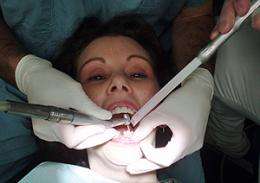
Does this scene fill you with terror?

(Medical Xpress) -- Women in their forties are more likely to have dental anxiety than any other age group according to a University of Sydney study into dental anxiety and phobia.

The case-control study, now entering its fifth year, aims to help improve dental management for patients with dental fear, dental anxiety and dental phobia. It has found women in this age group are most likely to have perceived a traumatic dental experience, abuse, trauma and oro-facial trauma. They are also more likely to have higher levels of depression, general anxiety or suffer from stress. Character traits of perceiving pain in alarmist ways (catastrophising responses) and poor coping with pain have strong correlation with dental anxiety.

University of Sydney Faculty of Dentistry Special Needs Dentist, Dr. Avanti Karve, who is co-ordinator of the study, admits that for some the very mention of the word 'dentist' can evoke an instantaneous response of dread.

"Dental anxiety is very real and complex and it should never be downplayed," says Dr. Avanti Karve.

"To date despite all the advances in the dental field, dental fear is reported in up to 40 percent of the western population. A recent national telephone survey found that a person with severe dental anxiety waits on average 17 days to make an appointment when in severe pain, as opposed to three days in the remaining population."

According to Dr. Karve the key to alleviating and managing this fear is to take the focus away from our teeth, and review the whole person.

For the last five years, Dr. Karve has been coordinator of the Dental Phobia Clinic at the Westmead Centre for Oral Health where the clinical team's approach includes a dietician, psychologist, sedationist and .

"At the centre we work with each patient to explore the history of their anxiety, identify specific triggers, and attempt to provide each individual with coping skills to manage their fear. We also look at underlying factors of dental disease and poor general health, and aim to improve diet and lifestyle factors. In fact our first consultations at the Phobia Clinic are not even conducted in a dental chair," Dr. Karve says.

Dean of the Faculty of Dentistry Professor Chris Peck says regular visits to your dentist are part of a good oral health strategy where the focus can be on prevention rather than surgical intervention.

This will of course help allay any fear related to visiting your dentist, Professor Peck says.

"More and more, medical research is linking poor with conditions such as diabetes, heart disease, nutritional deficiencies and obesity so it is important that we feel comfortable visiting our dentists. Going forward, we want to investigate the relationship between pain perception, pain coping and anxiety, and measure the success of pharmacological and non-pharmacological treatment approaches" Professor Peck says.

Provided by University of Sydney

not rated yet  

Filter


Move the slider to adjust rank threshold, so that you can hide some of the comments.


Display comments: newest first

dweeb
Mar 12, 2012

Rank: not rated yet
its not a 'phobia' to a kid with a dentist that drills cavities without enough anesthetic .
pharmacists aren't the only ones to skim medication
Woodge
Mar 12, 2012

Rank: not rated yet
A visit to the dentist does not have to involve anxiety. I avoided dentists for 30 years (how ironic; I'm a behavioral therapist!) I spent the past 2 years developing & testing a behavioral approach, similar to phobia therapy. I trained a colleague to use the therapy on MY FEAR, and she worked with me for 2 weeks. I am now able to have exams, needles, drilling and extractions without much difficulty. Read my personal story at LearnNot.2Fear.com
Rank not rated yet
Related Stories
Relevant PhysicsForums posts

More news stories

Primary care docs should play role in kids' dental health, experts say

(HealthDay)—When it comes to the care of your children's teeth, dentists aren't the only experts who can help.

Dentistry created 17 hours ago | popularity not rated yet | comments 0

Guidelines issued to prevent infection with dental work

(HealthDay)—Practitioners might consider discontinuing prophylactic antibiotics for patients with prosthetic implants undergoing dental procedures, and these patients should be encouraged to maintain appropriate ...

Dentistry created May 14, 2013 | popularity not rated yet | comments 0

First analysis of dental therapists finds increase in access for children, low-income adults

A new report assessing the economic viability of services provided by practicing midlevel dental providers in the U.S. shows that they are expanding preventive dental care to people who need it most: children and those who ...

Dentistry created May 14, 2013 | popularity not rated yet | comments 0

Excessive soda can mimic illicit drug use effects on teeth

(HealthDay)—Manifestation of dental erosion caused by illicit drug use or excessive soda consumption needs to be distinguished from dental caries, according to case studies published in the March/April ...

Dentistry created May 13, 2013 | popularity 5 / 5 (1) | comments 0

Common habits that harm your teeth

Are you wrecking your teeth without even knowing it? For instance, chewing on ice or opening stuff with your teeth may be convenient but using your teeth as tools can cause them to crack or chip.

Dentistry created May 03, 2013 | popularity 3 / 5 (1) | comments 1


If you can remember it, you can remember it wrong

(Medical Xpress)—Native peoples in regions where cameras are uncommon sometimes react with caution when their picture is taken. The fear that something must have been stolen from them to create the photo ...

B vitamins could delay dementia

(Medical Xpress)—Despite spending billions of dollars on research and development, drug companies have been unable to come up with effective treatments for dementia and Alzheimer's Disease (AD). Now, A. ...

New sleeping pill poised to hit US markets

An experimental sleeping pill from US drug company Merck is effective at helping people fall and stay asleep, according to reviewers at the US Food and Drug Administration, which could soon approve the new drug.

Reducing caloric intake delays nerve cell loss

Activating an enzyme known to play a role in the anti-aging benefits of calorie restriction delays the loss of brain cells and preserves cognitive function in mice, according to a study published in the May ...

Insight into the dazzling impact of insulin in cells

Australian scientists have charted the path of insulin action in cells in precise detail like never before. This provides a comprehensive blueprint for understanding what goes wrong in diabetes.

Antidepressant reduces stress-induced heart condition

A drug commonly used to treat depression and anxiety may improve a stress-related heart condition in people with stable coronary heart disease, according to researchers at Duke Medicine.