How your eyes deceive you
April 24, 2012 in Neuroscience

How your eyes deceive you

Enlarge

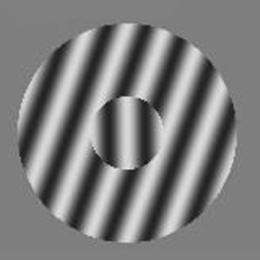
In this tilt illusion, the lines in the centre of the image appear tilted counterclockwise, but they are actually vertical.

(Medical Xpress) -- Researchers at the University of Sydney have thrown new light on the tricks the brain plays as it struggles to make sense of the visual and other sensory signals it constantly receives.

The research has implications for understanding how the brain interprets the world visually and how the brain itself works.

People rely on their eyes for most tasks - yet the information provided by our visual sensing system is often distorted, unreliable and subject to illusion.

In a just published article in , Dr Isabelle Mareschal and Professor Colin Clifford, from the University's School of Psychology and The , report a series of groundbreaking experiments tracing the origins of the tilt illusion to the cells of the primary visual cortex. This is where the first stage of vision processing takes place before the takes over.

"We tend to regard what we see as the real world," said Dr Mareschal.

"In fact a lot of it is distortion, and it is occurring in the early processing of the brain, before takes over. Our work shows that the cells of the create small , which then pass on to the higher levels of the brain, to interpret as best it can."

A common example of this that is often exploited by artists and designers is known as the tilt illusion where perfectly vertical lines appear tilted because they are placed on an oriented background.

"We wanted to test at what level the illusion occurs in the brain, unconscious or conscious - and also to see if the higher brain is aware of the it is receiving and how it tries to correct for them," she explains.

"The answer is that the brain seeks more contextual information from the background to try to work out the alignment of the object it is seeing."

The team subjected volunteers to a complex test in which they indicated the orientation of a , perceived as constantly tilting from side to side, against a fuzzy background that was also changing.

"These illusions happen very fast, perhaps in milliseconds," Dr Mareschal says. "And we found that even the higher brain cannot always correct for them, as it doesn't in fact know they are illusions."

This is one reason why people's eyes sometimes mislead them when looking at objects in their visual landscape.

Normally, Dr Mareschal explains, it doesn't matter all that much - but in the case of a person driving a car fast in traffic, an athlete performing complex acrobatic feats, a pilot landing an aircraft or other high-speed uses of sight, the illusion may be of vital importance by causing them to misinterpret the objects they 'see'.

The brain uses context, or background, to interpret a host of other visual signals besides the orientation of objects. For example, it uses context to tell colour, motion, texture and contrast. The research will help study how the brain understands these visual cues adding to our overall understanding of brain function.

More information: Research paper: www.pnas.org/conte… ull.pdf+html

Provided by University of Sydney

4.5 /5 (2 votes)  

Rank 4.5 /5 (2 votes)
Related Stories
Relevant PhysicsForums posts

More news stories

Having both migraines, depression may mean smaller brain

(HealthDay)—Migraines and depression can each cause a great deal of suffering, but new research indicates the combination of the two may be linked to something else entirely—a smaller brain.

Neuroscience created 4 hours ago | popularity 5 / 5 (1) | comments 0 | with audio podcast

Researchers analyse hunting behaviour of fish larvae in virtual reality

Moving objects attract greater attention – a fact exploited by video screens in public spaces and animated advertising banners on the Internet. For most animal species, moving objects also play a major ...

Neuroscience created 7 hours ago | popularity not rated yet | comments 0 | with audio podcast

Signs of motor disorders can appear years before disease manifestation

It is known that signs of neurological disorders such as Alzheimer's and Huntington's disease can appear years before the disease becomes manifest; these signs take the form of subtle changes in the brain and behavior of ...

Neuroscience created 7 hours ago | popularity not rated yet | comments 0

Taming suspect gene reverses schizophrenia-like abnormalities in mice

Scientists have reversed behavioral and brain abnormalities in adult mice that resemble some features of schizophrenia by restoring normal expression to a suspect gene that is over-expressed in humans with ...

Neuroscience created 9 hours ago | popularity 5 / 5 (1) | comments 0 | with audio podcast

Scientists uncover molecular roots of cocaine addiction in the brain

Researchers at Johns Hopkins have unraveled the molecular foundations of cocaine's effects on the brain, and identified a compound that blocks cravings for the drug in cocaine-addicted mice. The compound, already proven safe ...

Neuroscience created 9 hours ago | popularity not rated yet | comments 0 | with audio podcast


Slowing the aging process—only with antibiotics

Swiss scientists reveal the mechanism responsible for aging hidden deep within mitochondria—and dramatically slow it down in worms by administering antibiotics to the young.

Researchers complete largest genetic sequencing study of human disease

Researchers from Queen Mary, University of London have led the largest sequencing study of human disease to date, investigating the genetic basis of six autoimmune diseases.

Brain can be trained in compassion, study shows

Until now, little was scientifically known about the human potential to cultivate compassion—the emotional state of caring for people who are suffering in a way that motivates altruistic behavior.

Novel approach for influenza vaccination shows promise in early animal testing

A new approach for immunizing against influenza elicited a more potent immune response and broader protection than the currently licensed seasonal influenza vaccines when tested in mice and ferrets. The vaccine ...

Systematic screening of med adherence will ID barriers

(HealthDay)—Implementation of systematic monitoring for medication adherence will allow for identification of barriers to adherence and tailoring of interventions, according to a viewpoint piece published ...

Enzyme-activating antibodies revealed as marker for most severe form of rheumatoid arthritis

In a series of lab experiments designed to unravel the workings of a key enzyme widely considered a possible trigger of rheumatoid arthritis, researchers at Johns Hopkins have found that in the most severe ...