U.S. gives green light to publish controversial bird flu research
April 23, 2012 in Medical research

U.S. gives green light to publish controversial bird flu research

After expert panel review, officials say H5N1 findings are of benefit, with little risk to national security.

(HealthDay) -- The U.S. government is giving the go-ahead for publication of two controversial studies into the H5N1 avian (bird) flu virus, a top federal health official announced Friday.

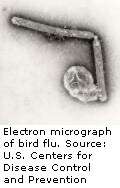
The research, led by two scientists -- Yoshihiro Kawaoka of the University of Wisconsin and Ron Fouchier of Erasmus Medical Center in Rotterdam, the Netherlands -- involved the manipulation of the potentially until it was transmissible between ferrets, thought to be a close model for humans. As yet, is not easily transmitted between humans.

In December, the Department of Health and Human Services (HHS) requested that two leading journals, Science and Nature, censor some of the data from this research for national security reasons. The concern was that terrorists might use the information to create a biological weapon.

However, on Friday, Dr. Francis Collins, director of the U.S. National Institutes of Health, announced in a statement that full publication could go forward. The decision was based on a March 29-30 meeting of the National Science Advisory Board for (NSABB), an independent panel of experts that advises the federal government on such matters.

According to Collins, "After careful deliberation, the NSABB unanimously recommended the revised manuscript by Dr. Yoshihiro Kawaoka be communicated in full. The NSABB also recommended, in a 12-to-6 decision, that the data, methods, and conclusions presented in the revised manuscript by Dr. Ron Fouchier be communicated fully after a number of further scientific clarifications are made in the manuscript."

Collins added that the research has "direct applicability to ongoing and future efforts and does not appear to enable direct misuse of the research in ways that would endanger public health or national security."

He said that HHS Secretary agreed with the decision. "The information in the two manuscripts should be communicated fully and we have conveyed our concurrence to the journals considering publication of the manuscripts," Collins said.

Kathy Wren, a spokeswoman for Science, which is withholding the Fouchier study, said the journal is still waiting for a decision by Dutch regulators next week before deciding when it will publish the research, Bloomberg News reported.

More information: Find out more about H5N1 avian influenza at the U.S. Centers for Disease Control and Prevention.

Copyright © 2012 HealthDay. All rights reserved.

5 /5 (1 vote)  

Rank 5 /5 (1 vote)
Related Stories
Relevant PhysicsForums posts

More news stories

Now we know why old scizophrenia medicine works on antibiotics-resistant bacteria

In 2008 researchers from the University of Southern Denmark showed that the drug thioridazine, which has previously been used to treat schizophrenia, is also a powerful weapon against antibiotic-resistant bacteria such as ...

Medical research created May 17, 2013 | popularity 3.7 / 5 (3) | comments 0 | with audio podcast

SUMO wrestling cells reveal new protective mechanism target for stroke

Scientists investigating the interaction of a group of proteins in the brain responsible for protecting nerve cells from damage have identified a new target that could increase cell survival.

Medical research created May 17, 2013 | popularity 5 / 5 (1) | comments 0

How serotonin receptors can shape drug effects, from LSD to migraine medication

New findings by researchers carrying out experiments at the U.S. Department of Energy Office of Science's Advanced Photon Source (APS) help explain why some drugs that interact with two kinds of human serotonin ...

Medical research created May 17, 2013 | popularity not rated yet | comments 0 | with audio podcast

Preventing blood poisoning

Peptide molecules derived from the body's natural immune system can help boost the body's defence against life-threatening blood poisoning, joint University research has uncovered.

Medical research created May 17, 2013 | popularity 4 / 5 (1) | comments 0 | with audio podcast

New mechanism to prevent type 2 diabetes in obese individuals

A new Montréal study conducted by Dr. May Faraj, associate research professor at the Université de Montréal and invited scientist at the IRCM, along with her research team and medical collaborators, shows ...

Medical research created May 17, 2013 | popularity not rated yet | comments 0 | with audio podcast


Ketamine shows significant therapeutic benefit in people with treatment-resistant depression

Patients with treatment-resistant major depression saw dramatic improvement in their illness after treatment with ketamine, an anesthetic, according to the largest ketamine clinical trial to-date led by researchers from the ...

Consuming coffee linked to lower risk of detrimental liver disease, study finds

Regular consumption of coffee is associated with a reduced risk of primary sclerosing cholangitis (PSC), an autoimmune liver disease, Mayo Clinic research shows. The findings were being presented at the Digestive Disease ...

Research examines new methods for managing digestive health

Research presented at Digestive Disease Week (DDW) explores new methods for managing digestive health through diet and lifestyle.

New smartphone application improves colonoscopy preparation

The use of a smartphone application significantly improves patients' preparation for a colonoscopy, according to new research presented today at Digestive Disease Week (DDW). The preparation process, which begins days in ...

New research identifies practice changes to improve value and quality of GI procedures

There are significant cost and risk factors associated with two procedures commonly used to diagnose or treat gastrointestinal problems, according to research presented at Digestive Disease Week (DDW).

New research identifies risks, interventions for children's GI health

An increasing number of U.S. children are experiencing gastrointestinal issues that require interventions to resolve, according to research presented at Digestive Disease Week (DDW).