Steroid nasal sprays show small benefit for sinusitis: study
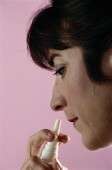
(HealthDay) -- Corticosteroid nasal sprays apparently are not a silver bullet when it comes to symptom relief for acute sinusitis patients, a new review suggests.
The British analysis of six prior studies found that the sprays confer only a small degree of benefit, and only after being taken for three weeks at relatively high doses.
The disappointing observation comes amid growing public health concerns that the more common use of antibiotics for short-term sinusitis symptoms is both ineffective and potentially dangerous because the drugs contribute to bacterial resistance.
"Looking at all the trials together, we found that nasal steroids seem to give a small benefit for patients with acute sinusitis," said study co-author Matthew Thompson, a senior clinical scientist in the department of primary care health sciences at the University of Oxford, in England. "In fact, they work about as well as antibiotics do."
"When we compared patients who were given steroid nasal spray with those who were given an [inactive] spray, we found that patients given the steroid spray got better faster," he added. "However, although we see this effect after taking the spray for 14 days, the big difference only occurs at 21 days. We also found that a larger dose of the nasal steroids worked better than a lower dose."
Thompson and his colleagues discuss their observations in the May/June issue of the journal Annals of Family Medicine.
Although chronic sinusitis cases (driven by fungal exposure, bacterial infection, or anatomical complications such as polyps or a deviated nasal septum) can endure well beyond the three-month mark, short-term (acute) sinusitis typically lasts just a few weeks.
Thompson pointed out, however, that such acute cases (typified by cold-like symptoms such as a congested or runny nose, accompanied by face pain) send about 31 million Americans to the doctor every year.
Although the condition usually resolves itself without serious complications, doctors have few tools to address the pain and misery that can afflict patients while the sinusitis runs its course.
Antibiotics are the standard first-line treatment, given to almost 90 percent of patients. But the study authors pointed out that only one in 15 patients seem to get any benefit from the approach.
On the other hand, steroid sprays have been cited as helpful in the treatment of a range of respiratory illnesses among both children and adults.
Enter the Oxford team, which set out to analyze the findings of six acute sinusitis studies conducted through early 2011 in the United States, the United Kingdom and Turkey.
In all, the studies involved nearly 2,500 acute sinusitis patients, both children and adults. No chronic sinusitis patients were included, and all studies explored the potential benefit of three types of corticosteroid nasal sprays: budesonide (Rhinocort), fluticasone propionate (Flonase, Flovent) and mometasone furoate (Nasonex). In five of the studies, antibiotics also were prescribed.
The bottom-line: The analysis revealed that the nasal sprays appeared to provide a "small but significant benefit" within two to three weeks of treatment.
Facial pain and nasal congestion were the two symptoms cited as being most responsive to spray treatment. And, in that respect, more was more: Higher doses and longer treatment plans (those lasting three weeks) seemed to provide the greatest relief.
The team was somewhat tepid on the degree of benefit, however, noting that two-thirds of the patients saw their symptoms improve or disappear altogether within two to three weeks after taking "dummy" sprays with no corticosteroid in them. Taking the actual nasal spray appeared to help only 7 percent more patients, the researchers noted.
Thompson said the findings suggest that, although nasal sprays are "not a game changer," they may offer a treatment alternative.
But Dr. John Hickner, chairman of the department of family medicine at the Cleveland Clinic Lerner College of Medicine at Case Western Reserve University School of Medicine in Cleveland, was not impressed.
In an editorial accompanying the study, Hickner said such sprays are of "minimal value" for sinusitis patients.
"Nasal steroids are great for nasal allergies," he noted. "For hay fever, for example, but not for acute sinusitis. The study of previous studies shows that they work a little but not that much and not right away, which is what patients want. And they cost about $60 for a bottle, so you just don't get a lot of bang for your buck."
"I would say the best thing for these patients to do is to take zinc," Hickner said. "Zinc studies are pretty reliable, and they suggest that taking zinc lozenges for five days might reduce symptoms for one to two days, and they might not get so severe. And perhaps take some ibuprofen and Sudafed (pseudoephedrine) as a decongestant. All of that is much cheaper and probably just as effective."
More information: For more on sinusitis, visit the U.S. National Library of Medicine.
Copyright © 2012 HealthDay. All rights reserved.


