Moderate coffee consumption offers protection against heart failure
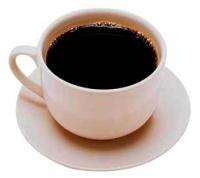
While current American Heart Association heart failure prevention guidelines warn against habitual coffee consumption, some studies propose a protective benefit, and still others find no association at all. Amidst this conflicting information, research from Beth Israel Deaconess Medical Center attempts to shift the conversation from a definitive yes or no, to a question of how much.
"Our results did show a possible benefit, but like with so many other things we consume, it really depends on how much coffee you drink," says lead author Elizabeth Mostofsky, MPH, ScD, a post-doctoral fellow in the cardiovascular epidemiological unit at BIDMC. "And compared with no consumption, the strongest protection we observed was at about four European, or two eight-ounce American, servings of coffee per day."
The study published June 26 online in the Journal Circulation: Heart Failure, found that these moderate coffee drinkers were at 11 percent lower risk of heart failure.
Data was analyzed from five previous studies four conducted in Sweden, one in Finland that examined the association between coffee consumption and heart failure. The self-reported data came from 140,220 participants and involved 6,522 heart failure events.
In a summary of the published literature, the authors found a "statistically significant J-shaped relationship" between habitual coffee consumption and heart failure, where protective benefits begin to increase with consumption maxing out at two eight-ounce American servings a day. Protection slowly decreases the more coffee is consumed until at five cups, there is no benefit and at more than five cups a day, there may be potential for harm.
It's unclear why moderate coffee consumption provides protection from heart failure, but the researchers say part of the answer may lie in the intersection between regular coffee drinking and two of the strongest risk factors for heart failure diabetes and elevated blood pressure.
"There is a good deal of research showing that drinking coffee lowers the risk for type 2 diabetes, says senior author Murray Mittleman, MD, DrPH, a physician in the Cardiovascular Institute at Beth Israel Deaconess Medical Center, an Associate Professor of Medicine at Harvard Medical School and director of BIDMC's cardiovascular epidemiological research program. "It stands to reason that if you lower the risk of diabetes, you also lower the risk of heart failure."
There may also be a blood pressure benefit. Studies have consistently shown that light coffee and caffeine consumption are known to raise blood pressure. "But at that moderate range of consumption, people tend to develop a tolerance where drinking coffee does not pose a risk and may even be protective against elevated blood pressure," says Mittleman.
This study was not able to assess the strength of the coffee, nor did it look at caffeinated versus non-caffeinated coffee.
"There is clearly more research to be done," says Mostofsky. "But in the short run, this data may warrant a change to the guidelines to reflect that coffee consumption, in moderation, may provide some protection from heart failure."
Provided by
Beth Israel Deaconess Medical Center
-
Coffee or tea: Enjoy both in moderation for heart benefits
Jun 18, 2010 |
not rated yet |
0
-
Coffee may protect against endometrial cancer
Nov 22, 2011 |
not rated yet |
0
-
Coffee does not increase the risk of hypertension: new study says
Apr 25, 2011 |
not rated yet |
0
-
Coffee may cause a heart attack danger
Aug 16, 2006 |
not rated yet |
0
-
Coffee seen to protect against cirrhosis
Jun 13, 2006 |
not rated yet |
0
-
Motion perception revisited: High Phi effect challenges established motion perception assumptions
Apr 23, 2013 |
3 / 5 (2) |
2
-
Anything you can do I can do better: Neuromolecular foundations of the superiority illusion (Update)
Apr 02, 2013 |
4.5 / 5 (11) |
5
-
The visual system as economist: Neural resource allocation in visual adaptation
Mar 30, 2013 |
5 / 5 (2) |
9
-
Separate lives: Neuronal and organismal lifespans decoupled
Mar 27, 2013 |
4.9 / 5 (8) |
0
-
Sizing things up: The evolutionary neurobiology of scale invariance
Feb 28, 2013 |
4.8 / 5 (10) |
14
-
The idea behind a reverse shock
2 hours ago
-
Guass's Law for a charge distribution
3 hours ago
-
Noise dependence
3 hours ago
-
siphon and bernouli theorum
5 hours ago
-
Hot gas expansion rate into outer space
5 hours ago
-
Magnetic field lines through copper
10 hours ago
- More from Physics Forums - Classical Physics
More news stories
Heart failure accelerates male 'menopause'
Heart failure accelerates the aging process and brings on early andropausal syndrome (AS), according to research presented today at the Heart Failure Congress 2013. AS, also referred to as male 'menopause', was four times ...
Cardiology
8 hours ago |
not rated yet |
1
Death highest in heart failure patients admitted in January, on Friday, and overnight
Mortality and length of stay are highest in heart failure patients admitted in January, on Friday, and overnight, according to research presented today at the Heart Failure Congress 2013. The analysis of nearly 1 million ...
Cardiology
8 hours ago |
not rated yet |
0
First drug to improve heart failure mortality in over a decade
Coenzyme Q10 decreases all cause mortality by half, according to the results of a multicentre randomised double blind trial presented today at Heart Failure 2013 congress. It is the first drug to improve heart failure mortality ...
Cardiology
9 hours ago |
5 / 5 (2) |
5
Registry confirms TAVI efficacy and safety in Asian patients
Transcatheter aortic valve implantation (TAVI) is effective and safe in Asian patients, according to early experience based on first results from a multicentre Asian registry reported at EuroPCR 2013.
Cardiology
May 24, 2013 |
not rated yet |
0
Diagnostic coronary angiography: Functional flow reserve changes decisions in 25 percent of cases
Routinely measuring fractional flow reserve (FFR) using pressure wire assessment during coronary angiography for diagnosis of chest pain leads to significant changes in the management of one in four patients, according to ...
Cardiology
May 24, 2013 |
not rated yet |
0
Seniors more likely to crash when driving with pet, study finds
(HealthDay)—Animals make great companions for senior citizens, but elderly people who always drive with a pet in the car are far more likely to crash than those who never drive with a pet, researchers have ...
Feds fight morning-after pill age ruling in NY
(AP)—Department of Justice lawyers have again asked a federal appeals court in New York to delay lifting age restrictions and prescription requirements on an emergency contraceptive popularly known as the morning-after ...
New immune system discovered
(Medical Xpress)—A research team, led by Jeremy Barr, a biology post-doctoral fellow, unveils a new immune system that protects humans and animals from infection.
Brain can be trained in compassion, study shows
Until now, little was scientifically known about the human potential to cultivate compassion—the emotional state of caring for people who are suffering in a way that motivates altruistic behavior.
Hormone levels may provide key to understanding psychological disorders in women
Women at a particular stage in their monthly menstrual cycle may be more vulnerable to some of the psychological side-effects associated with stressful experiences, according to a study from UCL.
Do salamanders hold the solution to regeneration?
Salamanders' immune systems are key to their remarkable ability to regrow limbs, and could also underpin their ability to regenerate spinal cords, brain tissue and even parts of their hearts, scientists have ...
Jun 26, 2012
Rank: not rated yet
Jun 26, 2012
Rank: not rated yet
"Kedas: Doesn't evolution make us require some coffee just like any other drug. Even if not taken coffee to begin with was the better evolution path."
Jun 27, 2012
Rank: not rated yet
Obviously the same would be true for alcohol.
Jun 27, 2012
Rank: not rated yet
One can see the combination of caffeine use by early man in respect of increasing focus for issues such as planning and alertness along with waste use to repel insects of value to health as some insects carry pathogens...
ie. A little coffee grounds in various places turns ants away, better to do that than kill any ants as ants and termites are natural enemies and in urban & rural areas the encouragement of ants is a damn good thing to help reduce termite ingress,
Cheers
Jun 27, 2012
Rank: not rated yet
Someone who would tend to drink a lot of coffee is also more likely to not be taking care of themselves in other ways as well. A heavy coffee drinker is more likely to smoke a lot, not exercise, etc.
A non coffee drinker is also more likely to have other lifestyle habits that would influence their health for the positive or negative.
Then moderate coffee drinkers (my group) would most likely also have a lifestyle that would affect the study outcome. Coffee can be a help in getting up and being active physically which would benefit the health for the positive.
As for me, all things in moderation is my motto, except of course hard core drugs or big pharma crap unless I have carefully studied all the risks and benefits for myself.
You cannot isolate one factor in a system like this.
Jun 27, 2012
Rank: not rated yet
Why not give them a simple multiple choice survey to fill out that would be anonymous, i.e. their name is not attached.
Ask them to answer a lot of multiple choice questions about what they eat, smoke, drugs they use, exercise, etc. in the simplest possible way. It could be done on paper or even online at home. In fact anyone could do it online. Get as much data as possible from as many people as possible.
Then all of this data could be easily compiled in a way that would show how those with the life factors most like you are doing. We wouldn't need all these isolated studies which can be meaningless without the other lifestyle factors considered.
I would find this comprehensive study very informative.