FDA approves use of electronic chips in medications
August 1, 2012 by Bob Yirka in Medications report

FDA approves use of electronic chips in medications

Enlarge

Image: Proteus Digital Health

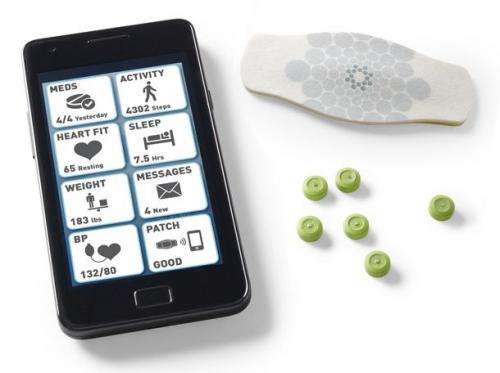
(Medical Xpress) -- The Food and Drug Administration in the United States has approved a request by Proteus Digital Health to allow for the inclusion of tiny digestible microchips into medicines to assist health care workers in monitoring intake of medicines by patients. Previously, the FDA had allowed such microchips only in placebo products. Proteus, the maker of the chips, plans to market them to drug manufactures who can then imbed them in individual pills that allow for electronic reporting to doctors letting them know if and when patients take their medicines.

The microchip, which is described as about the size of a grain of sand, is made of copper, and silicon, reacts with stomach juices when swallowed along with a pill. Upon reaction, it sends a signal to a patch the patient has applied to their skin where it is relayed to a smartphone. The then relays the information to the doctor’s office, allowing physicians to track how well a patient adheres to instructions on when and how often they are to take their meds. Proteus insists the aim is not to prod doctors and nurses into becoming nagging nannies, but to provide information that allows doctors to modify the types of medications they prescribe and the schedules to which the patients are asked to follow. Once the has done its job, it dissolves and passes out of the body along with other digested food.

The new technology is being pushed forward by recent reports that have found that just half of all patients take their medicines the way they are supposed to, which of course can reduce their effectiveness. Proteus believes some patients can benefit more than others from the microchips, such as those that take medicines to ward off tuberculosis, diabetics and elderly patients who have difficulty remembering to take their pills or if they’ve already taken them. Making things even more difficult, some have a whole list of with different schedules for each. The next logical step would of course be to allow the patient access to the data or to have it routed to a device set near where they keep their medicine, which would both alert them when it’s time to take their meds and to let them know if they can’t remember if they took them or not.

Some suggest this move by the FDA is the first of many likely to come over the next few years, as other technology is waiting in the wings. Coming soon may be swallowed or implanted devices that dose us automatically, sensors that report on other bodily activities, or devices that swim around in our bloodstream monitoring conditions and cleaning out plaque deposits.

More information: proteusdigitalhealth.com/

© 2012 Medical Xpress

3.8 /5 (5 votes)  

Filter


Move the slider to adjust rank threshold, so that you can hide some of the comments.


Display comments: newest first

dogbert
Aug 01, 2012

Rank: 1 / 5 (1)
Do we really need to be monitored externally and internally?
IronhorseA
Aug 01, 2012

Rank: not rated yet
Do we really need to be monitored externally and internally?

That's a question only your proctologist can answer. ;P
DarkHorse66
Aug 06, 2012

Rank: not rated yet
Big Brother is watching You ;]

This is definitely getting closer to George Orwell's dystopia, '1984'

Cheers DH66
Rank 3.8 /5 (5 votes)
Relevant PhysicsForums posts

More news stories

Succesful results in developing oral vaccine against diarrhea

The University of Gothenburg Vaccine Research Institute (GUVAX) announces successful results in a placebo controlled phase I study of an oral, inactivated Escherichia coli diarrhea vaccine.

Medications created 39 minutes ago | popularity not rated yet | comments 0

New sleeping pill poised to hit US markets

An experimental sleeping pill from US drug company Merck is effective at helping people fall and stay asleep, according to reviewers at the US Food and Drug Administration, which could soon approve the new drug.

Medications created 15 hours ago | popularity 4 / 5 (4) | comments 0

Global recommendations on child medicine

Transparent information on the evidence supporting global recommendations on paediatric medicines should be easily accessible in order to help policy makers decides on what drugs to include in their national drug lists, according ...

Medications created 15 hours ago | popularity not rated yet | comments 0

Analgesics prescribed more heavily to women than to men, study finds

Regardless of pain, social class or age, a woman is more likely to be prescribed pain-relieving drugs. A study published in Gaceta Sanitaria (Spanish health scientific journal) affirms that this phenomenon is inf ...

Medications created 23 hours ago | popularity not rated yet | comments 0

Breakup of physician, drug company relationship could improve health care, cut cost

A new report suggests that improved health care and significant reductions in drug costs might be attained by breaking up the age-old relationship between physicians and drug company representatives who promote the newest, ...

Medications created May 20, 2013 | popularity 5 / 5 (1) | comments 0


A molecular explanation for age-related fertility decline in women

(Medical Xpress)—Scientists supported by the National Institutes of Health have a new theory as to why a woman's fertility declines after her mid-30s. They also suggest an approach that might help slow ...

Medical researchers discover new ways to target, develop and design drugs to prevent and treat viral infection

Researchers at the University of Alberta have discovered a new drug target, developed a new drug and identified a new way to design drugs—all of which could be a winning combination in the battle against viruses.

Cancer survivors need more support to stop smoking and drinking

Cancer survivors are no more likely to stop smoking, cut down on alcohol, or exercise more often than the general population, according to new research published in the British Journal of Cancer today (Wednesday)

Alcohol sales fall due to ban on multi-buy promotions

(Medical Xpress)—A report published today shows a 2.6% decrease in the amount of alcohol sold per adult in Scotland in the year following the introduction of the Alcohol etc. (Scotland) Act in October 2011.

Facing the chill wind of blood pressure

(Medical Xpress)—High blood pressure is something that has traditionally been a problem in Scotland, but might there be a link to our climate?

Ethicists' behavior not more moral, study finds

(Medical Xpress)—Do ethicists engage in better moral behavior than other professors? The answer is no. Nor are they more likely than nonethicists to act according to values they espouse, according to researchers from the ...