Prevalence of TB, hepatitis C, HIV high among homeless
August 20, 2012 in Diseases, Conditions, Syndromes
The global prevalence of tuberculosis, hepatitis C virus infection, and HIV is high among homeless people, although significant heterogeneity is seen in prevalence estimates, according to a study published online Aug. 20 in The Lancet Infectious Diseases.
(HealthDay) -- The global prevalence of tuberculosis, hepatitis C virus infection, and HIV is high among homeless people, although significant heterogeneity is seen in prevalence estimates, according to a study published online Aug. 20 in The Lancet Infectious Diseases.
In an effort to estimate the prevalence of tuberculosis, hepatitis C virus infection, and HIV among homeless people, Ulla Beijer, Ph.D., from the Karolinska Institutet in Stockholm, and colleagues conducted a systematic review and identified 43 surveys involving a population of 59,736 homeless individuals.
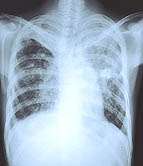
The researchers found that there was significant heterogeneity in prevalence estimates, with prevalences ranging from 0.2 to 7.7 percent for tuberculosis, 3.9 to 36.2 percent for hepatitis C virus infection, and 0.3 to 21.1 percent for HIV infection; prevalence ratios ranged from 34 to 452, 4 to 70, and 1 to 77, respectively. The prevalence of tuberculosis was higher for studies that used chest radiography for diagnosis, compared with other methods, and in countries with a higher general population prevalence. Newer studies had lower HIV prevalence than older studies, and HIV infection prevalence was higher in the United States versus the rest of the world.
"The risks of epidemics of infectious diseases in homeless populations remain significantly higher than those in the general population in the same country," writes the author of an accompanying editorial. "These increased risks are a public health challenge for the population as a whole. Implementation of specific strategies to [reduce] these risks is crucial."
More information: Abstract
Full Text (subscription or payment may be required)
Editorial (subscription or payment may be required)
Journal reference:
Lancet Infectious Diseases
Copyright © 2012 HealthDay. All rights reserved.
-
The prevalence and drug sensitivity of tuberculosis among patients dying in hospital in South Africa
Jun 22, 2010 |
not rated yet |
0
-
Erectile dysfunction prevalence higher in HIV-infected men
Jul 12, 2012 |
not rated yet |
0
-
More than 27 percent of L.A homeless adults have hepatitis C, and nearly half don't know it
Jun 11, 2012 |
not rated yet |
0
-
HIV patients at greater risk for bone fractures
Aug 28, 2008 |
not rated yet |
0
-
Earlier male circumcision may help to slow rates of HIV, HPV transmission in South Africa
Oct 06, 2011 |
not rated yet |
0
-
Motion perception revisited: High Phi effect challenges established motion perception assumptions
Apr 23, 2013 |
3 / 5 (2) |
2
-
Anything you can do I can do better: Neuromolecular foundations of the superiority illusion (Update)
Apr 02, 2013 |
4.5 / 5 (11) |
5
-
The visual system as economist: Neural resource allocation in visual adaptation
Mar 30, 2013 |
5 / 5 (2) |
9
-
Separate lives: Neuronal and organismal lifespans decoupled
Mar 27, 2013 |
4.9 / 5 (8) |
0
-
Sizing things up: The evolutionary neurobiology of scale invariance
Feb 28, 2013 |
4.8 / 5 (10) |
14
-
Classical and Quantum Mechanics via Lie algebras
Apr 15, 2011
- More from Physics Forums - Independent Research
More news stories
FDA warns of infections tied to Tennessee pharmacy
(AP)—Government health officials are investigating several health problems reported with potentially contaminated medications made by a Tennessee specialty pharmacy.
Diseases, Conditions, Syndromes
8 hours ago |
not rated yet |
0
Comorbidities common with alopecia areata
(HealthDay)—Comorbid conditions often accompany alopecia areata, according to a study published online May 22 in JAMA Dermatology.
Diseases, Conditions, Syndromes
9 hours ago |
not rated yet |
0
Top-ranked golfer beats scoliosis
(HealthDay)—As a world-class golfer, Stacy Lewis' accomplishments are remarkable. But it was a physical challenge in her childhood that defined her ascent to the top of her sport.
Diseases, Conditions, Syndromes
10 hours ago |
not rated yet |
0
Saudi to send animal samples to US in coronavirus probe (Update)
Saudi Arabia said Friday it would send samples taken from animals possibly infected with a deadly SARS-like virus to the United States for testing in a bid to find the source of disease.
Diseases, Conditions, Syndromes
13 hours ago |
not rated yet |
0
WHO voices deep concern over spread of SARS-like virus
The World Health Organization voiced deep concern Thursday over the SARS-like virus that has killed 22 people in less than a year, saying it might potentially spread more widely between humans.
Diseases, Conditions, Syndromes
17 hours ago |
5 / 5 (1) |
0
Engineered cytomegalovirus protects monkeys from HIV equivalent
(Medical Xpress)—A new study by researchers in the US has shown that an ancient virus can be modified to help in the fight against the simian immunodeficiency virus SIV, which is the equivalent in monkeys ...
Researchers identify first drug targets in childhood genetic tumor disorder
Two mutations central to the development of infantile myofibromatosis (IM)—a disorder characterized by multiple tumors involving the skin, bone, and soft tissue—may provide new therapeutic targets, according to researchers ...
Hormone levels may provide key to understanding psychological disorders in women
Women at a particular stage in their monthly menstrual cycle may be more vulnerable to some of the psychological side-effects associated with stressful experiences, according to a study from UCL.
Going live: Immune cell activation in multiple sclerosis
Biological processes are generally based on events at the molecular and cellular level. To understand what happens in the course of infections, diseases or normal bodily functions, scientists would need to ...
Driving and hands-free talking lead to spike in errors, study shows
Talking on a hands-free device while behind the wheel can lead to a sharp increase in errors that could imperil other drivers on the road, according to new research from the University of Alberta.
Depression raises diabetics' risk of severe low blood sugar episodes
(Medical Xpress)—Patients with diabetes who are depressed are much more likely to develop episodes of dangerously low blood sugars, or hypoglycemia, than are those who are not depressed, a new study has ...