Many more U.S. households ready for disasters: CDC
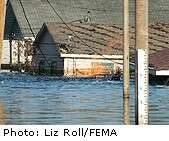
September 13, 2012 by Steven Reinberg, Healthday Reporter in Health
But most don't have a written evacuation plan, researchers find.
(HealthDay)—Many households in the United States are ready should a disaster—such as a hurricane or earthquake—strike, federal officials said Thursday.
Almost 90 percent of those surveyed said they had a three-day supply of medications, nearly 83 percent had enough food for three days and 54 percent had a three-day supply of water, according to the U.S. Centers for Disease Control and Prevention.
"However, the majority of American citizens don't have an evacuation plan, which is critical," said CDC health scientist and lead author, Summer DeBastiani.
Only 21 percent said they had a written evacuation plan, according to the findings published in the Sept. 14 issue of the Morbidity and Mortality Weekly Report (MMWR).
Most of those who were prepared were English-speaking and better educated, the researchers found.
The study, conducted in 14 states over five years, is part of CDC's Behavioral Risk Factor Surveillance System, which is an ongoing telephone health survey that tracks health conditions and risk behaviors in the United States.
In another report in the same issue of the MMWR, the Tennessee Department of Health found only about one-third of households in two counties in that state were "well-prepared" for a disaster.
Moreover, in one Tennessee county, only 11 percent of households had a written evacuation plan.
The reasons for the disparity in the number of those prepared for a disaster between the CDC and the Tennessee reports aren't clear and the CDC could give no explanation for the differences.
To be prepared for a disaster, one should have a written evacuation plan that shows the best routes to take when conditions call for leaving the area, according to the U.S. Federal Emergency Management Agency (FEMA).
In addition, FEMA recommends maintaining a disaster kit that includes:
- Water: 1 gallon per person per day for at least three days.
- Food: at least a three-day supply.
- Battery-powered or hand-crank radio and a National Oceanic and Atmospheric Administration (NOAA) Weather Radio.
- Flashlight and extra batteries.
- First-aid kit.
- Whistle to signal for help.
- Dust mask to filter contaminated air and plastic sheeting and duct tape.
- Moist towelettes, garbage bags and plastic ties for personal sanitation.
- Wrench or pliers to turn off utilities.
- Manual can opener.
- Local maps.
- Cellphone with chargers, or solar charger.
More information: For more details on disaster preparedness, visit the U.S. Federal Emergency Management Agency.
Copyright © 2012 HealthDay. All rights reserved.
-
Are you medically prepared for a natural disaster?
Jan 11, 2011 |
not rated yet |
0
-
Personal disaster preparedness
Jan 22, 2009 |
not rated yet |
0
-
Big gaps found in nursing homes' disaster plans
Apr 16, 2012 |
not rated yet |
0
-
Most U.S. schools unprepared for pandemics: study
Aug 30, 2012 |
not rated yet |
0
-
Study: Most kidney dialysis patients not prepared for emergency evacuation
Jun 03, 2010 |
not rated yet |
0
-
Motion perception revisited: High Phi effect challenges established motion perception assumptions
Apr 23, 2013 |
3 / 5 (2) |
2
-
Anything you can do I can do better: Neuromolecular foundations of the superiority illusion (Update)
Apr 02, 2013 |
4.5 / 5 (11) |
5
-
The visual system as economist: Neural resource allocation in visual adaptation
Mar 30, 2013 |
5 / 5 (2) |
9
-
Separate lives: Neuronal and organismal lifespans decoupled
Mar 27, 2013 |
4.9 / 5 (8) |
0
-
Sizing things up: The evolutionary neurobiology of scale invariance
Feb 28, 2013 |
4.8 / 5 (10) |
14
-
Classical and Quantum Mechanics via Lie algebras
Apr 15, 2011
- More from Physics Forums - Independent Research
More news stories
About one in four uninsured could be excluded from ACA
(HealthDay)—More than one in four of those eligible for new premium assistance tax credits under the Affordable Care Act (ACA) do not have a checking account and will not be able to receive premiums from ...
Health
5 minutes ago |
not rated yet |
0
Audiologists recommend smart phone apps to monitor noise levels
After studying noise in one French Quarter neighborhood of New Orleans to determine whether or not noise levels exceeded municipal ordinances, Annette Hurley, PhD, Assistant Professor of Audiology at LSU Health Sciences Center ...
Health
1 hour ago |
not rated yet |
0
Young children who miss well-child visits are more likely to be hospitalized
Young children who missed more than half of recommended well-child visits had up to twice the risk of hospitalization compared to children who attended most of their visits, according to a study published today in the American Jo ...
Health
1 hour ago |
not rated yet |
0
Do doctors understand the individualisation of treatments?
The individualisation of drug treatments to support patients to self-manage their conditions is a concept that sits at the heart of policy, but a recent study in BMJ Open shows that there is no concrete defini ...
Health
4 hours ago |
3 / 5 (1) |
0
Keep summer water fun safe with training and supervision
Fun in the summer often means kids spending time in the water, whether at a pool, the beach, a lake or river. A pediatric safety expert at the University of Alabama at Birmingham (UAB) stresses proper training ...
Health
4 hours ago |
not rated yet |
0
Storm chasers: born to be wild?
(HealthDay)—We've all seen them: the surfers who race to the beach when a hurricane hits, the guy who decides to ride out the storm in his overmatched boat, the tornado chasers who fearlessly steer their ...
Bulletin provides guidelines for second-trimester abortion
(HealthDay)—New evidence-based guidelines provide guidance on medical and surgical methods for second-trimester abortion and management of associated complications, according to a practice bulletin published ...
Modulating the immune system to combat metastatic cancer
Cancer cells spread and grow by avoiding detection and destruction by the immune system. Stimulation of the immune system can help to eliminate cancer cells; however, there are many factors that cause the immune system to ...
New fluorescent tools for cancer diagnosis
In recent years, microRNAs (miRNAs) and other non-coding RNAs are small molecules that help control the expression of specific proteins. In recent years they have emerged as disease biomarkers. miRNA profiles have been used ...
Top-ranked golfer beats scoliosis
(HealthDay)—As a world-class golfer, Stacy Lewis' accomplishments are remarkable. But it was a physical challenge in her childhood that defined her ascent to the top of her sport.
Hormone levels may provide key to understanding psychological disorders in women
Women at a particular stage in their monthly menstrual cycle may be more vulnerable to some of the psychological side-effects associated with stressful experiences, according to a study from UCL.