How 'science of consciousness' explains our desire for knowledge
September 11, 2012 by Jacqui Bealing in Neuroscience

How 'science of consciousness' explains our desire for knowledge

Enlarge

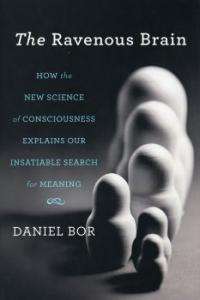
The Ravenous Brain.

(Medical Xpress)—A University of Sussex neuroscientist has come up with a radical new approach in the pursuit of our understanding of consciousness.

In his new book The Ravenous Brain, Dr Daniel Bor, a research fellow at the University's Sackler Centre for Science, examines how consciousness has been explained in the past – and how his new theory of it being an "accelerated knowledge-gathering tool"  could illuminate the mystery that has puzzled philosophers and scientists for centuries.

"Our consciousness is the essence of who we perceive ourselves to be,'" he says. "It is the citadel for our senses, the melting pot of thoughts, the welcoming home for every emotion that pricks or placates us. For us, consciousness simply is the currency of life."

What sets humans apart in the animal kingdom is our ravenous appetite for knowledge, even when all our biological needs are met. But it's not just random information.  Bor's new theory postulates that we are looking for structures and patterns, something he calls "chunking", in which we combine primitive pieces of information we have previously gathered and create something meaningful out of them.  

Many of these activities, such as and sudoku, don't  seem to serve an obvious biological purpose. But Bor argues that it is this puzzle-solving that generates innovation and can lead an animal out of danger, thus saving species from extinction. "In this way, evolution and conscious thought mirror one another," he says.

However, the advantages of human consciousness also carry the risk of mental fragility. In candid and lucid prose, Dr Bor writes about the consequences of his father's stroke and his wife's struggles with a form of bi-polar disorder.

He goes on to challenge about mental illness, describing conditions such as attention-deficit disorder, schizophrenia and autism as "disorders of consciousness". For example, he observes that disrupted sleep, which can quickly cause disorientation and poor memory function, is likely to be a cause rather than a symptom of some conditions. Methods of treatment for these sufferers could focus more on therapies that tackle underlying sleep abnormalities as well as enhancing states of consciousness.

He concludes with the advice that, although chunking can be enormously advantageous for us, it is also beneficial to practise meditation and to temporarily reject some of the strategies and habits we have developed over the years. "Without the myriad mental obstacles of those chunks invading our thoughts, we can reacquaint ourselves with how beautiful much of the world really is, and how very easy it is to find intense pleasure and joy within it,' he says.

Provided by University of Sussex search and more info website

3.8 /5 (4 votes)  

Filter


Move the slider to adjust rank threshold, so that you can hide some of the comments.


Display comments: newest first

mrtea
Sep 11, 2012

Rank: 5 / 5 (2)
"Our consciousness is the essence of who we perceive ourselves to be,'" he says. "It is the citadel for our senses, the melting pot of thoughts, the welcoming home for every emotion that pricks or placates us. For us, consciousness simply is the currency of life."

Is this guy a poet or a scientist? What he really means to say is, "I have no idea what consciousness is, but I'm going to try to sound impressive". I'm always amazed at the sloppy language used whenever I read about "scientific studies" like this. Consciousness is a multi-layered expression of our imagination, reason, language, emotion and senses. They are all giving input to our thoughts all the time, even when we dream - except for reason, which seems to need lots of rest. Reason enables us to have free will - maybe that takes a lot of energy. Who knows?
taka
Sep 11, 2012

Rank: 3.2 / 5 (5)
Consciousness is nothing else then just running a model of our surroundings AND body. It is nothing especial, all animals had it and even some robots had it. The only difference is quantitative.
PeterKinnon
Sep 12, 2012

Rank: 3 / 5 (2)
taka writes:

"Consciousness is nothing else then just running a model of our surroundings AND body. It is nothing especial, all animals had it and even some robots had it. The only difference is quantitative."

You are one of the very few who appreciate what, in the light of modern science, should now be rather obvious. A point which for some time now, in my writings, I have been at pains to underline.

it is it incredible that some of those who claim to be representatives of science still wallow in antiquated notions of "The mystery of consciousness" when it is certainly a mystery no more.

We have at our disposal today conceptual tools that provide a full empirical understanding of the general nature of consciousness.

Firstly, and most importantly, from our understanding of biological evolution by natural selection it becomes quite clear that the provision of a navigational feature that involves some degree of self awareness
Rank 3.8 /5 (4 votes)
Relevant PhysicsForums posts

More news stories

New neuron formation could increase capacity for new learning, at the expense of old memories

New research presented today shows that formation of new neurons in the hippocampus - a brain region known for its importance in learning and remembering - could cause forgetting of old memories by causing a reorganization ...

Neuroscience created 7 hours ago | popularity 3.7 / 5 (3) | comments 0

Help at hand for people with schizophrenia

How can healthy people who hear voices help schizophrenics? Finding the answer for this is at the centre of research conducted at the University of Bergen.

Neuroscience created 8 hours ago | popularity 4 / 5 (2) | comments 2

Japanese research organizations contribute to Human Brain Project

One of the major frontiers of modern science is a comprehensive understanding of the human brain and its functions to guide the development of new technologies in information and communication. In a major announcement for ...

Neuroscience created 8 hours ago | popularity 1 / 5 (1) | comments 0

Controlling mood through the motions of mitochondria

(Medical Xpress)—Regulating the distribution of power in neurons is done by a system that makes the national electric grid look simple by comparison. Each neuron has several thousand mitochondria confined ...

Neuroscience created 23 hours ago | popularity 4.9 / 5 (9) | comments 0 | with audio podcast report

Brain uses internal 'average voice' prototype to identify who is talking

(Medical Xpress)—The human brain is able to identify individuals' voices by comparing them against an internal 'average voice' prototype, according to neuroscientists.

Neuroscience created May 23, 2013 | popularity 3 / 5 (2) | comments 3 | with audio podcast


Engineered cytomegalovirus protects monkeys from HIV equivalent

(Medical Xpress)—A new study by researchers in the US has shown that an ancient virus can be modified to help in the fight against the simian immunodeficiency virus SIV, which is the equivalent in monkeys ...

Researchers identify first drug targets in childhood genetic tumor disorder

Two mutations central to the development of infantile myofibromatosis (IM)—a disorder characterized by multiple tumors involving the skin, bone, and soft tissue—may provide new therapeutic targets, according to researchers ...

Hormone levels may provide key to understanding psychological disorders in women

Women at a particular stage in their monthly menstrual cycle may be more vulnerable to some of the psychological side-effects associated with stressful experiences, according to a study from UCL.

Going live: Immune cell activation in multiple sclerosis

Biological processes are generally based on events at the molecular and cellular level. To understand what happens in the course of infections, diseases or normal bodily functions, scientists would need to ...

Driving and hands-free talking lead to spike in errors, study shows

Talking on a hands-free device while behind the wheel can lead to a sharp increase in errors that could imperil other drivers on the road, according to new research from the University of Alberta.

Depression raises diabetics' risk of severe low blood sugar episodes

(Medical Xpress)—Patients with diabetes who are depressed are much more likely to develop episodes of dangerously low blood sugars, or hypoglycemia, than are those who are not depressed, a new study has ...