Every third child incorrectly restrained in cars, says European study
October 8, 2012 in Health

Every third child incorrectly restrained in cars

Enlarge

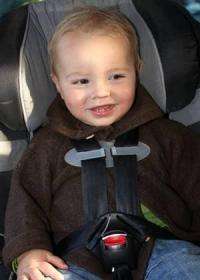
Correct child restraint in the car. Copyright Marianne Skjerven-Martinsen, NIPH

Car accidents are the main cause of serious injury and death among children in Norway. A new study from the Norwegian Institute of Public Health shows that 37 per cent of all children under 16 years are incorrectly restrained in the car. 23 per cent of children are so poorly restrained that a collision would have very serious consequences. The study results were presented at a seminar on traffic accidents in Oslo on 8th October.

"With the correct use of safety equipment, fewer children will be injured and killed in traffic," says Dr Marianne Skjerven-Martinsen from the research project "Barn i Bil" (Children in the ) at the Institute's Division of and Drug Abuse Research.

Incorrect use of seat belts most prevalent

From April to August in 2011, Skjerven-Martinsen and her project team members completed a total of six roadside studies where they stopped cars in weekend traffic and examined how children were secured. The studies were carried out in collaboration with police along high-speed roads in south-east Norway. A total of 1260 children under 16 years were included in the study. The results show that:

  • 37 per cent of all children under16 years were incorrectly restrained in the car.
  • 23 per cent were incorrectly restrained in such a way that severe or fatal injury would have been caused by a on a high-speed road.
  • Safety errors are highest in children aged 4-7 years.
  • The five most common mistakes, irrespective of age, are; misplaced , twisted belts, loose straps, belt under the arm instead of over the shoulder and young children (<135 cm) sitting in a seat without side support.
  • Booster cushions are the safety equipment most likely to be used incorrectly. Over half of the children who sat on them were incorrectly restrained.
"We see that adults want to use the equipment to protect their children, but they may lack knowledge of what can go wrong if they do not use the equipment properly. The aim of this study was to evaluate the use of incorrect child restraint in the car, according to the child's height, age and type of equipment. Thus we can give advice to parents, authorities and especially to industry on how to avoid incorrect restraint," says Marianne Skjerven-Martinsen.

Studied car accidents to learn about injury risk

In a previous study that included the "Children in the Car" project, the researchers studied in south-east Norway between 2007 and 2009 in which someone in the car was seriously injured or killed, and where children were present in the car. Studies of the accident scene, the involved vehicles and child restraint systems were performed within 24 hours of the accident. Response personnel and potential witnesses were interviewed, and clinical examinations of the injured children and autopsies of the deceased children were performed.
 
"In this study we found that 52 per cent of the children who were injured or killed were not well enough restrained. Belts out of position or loose belts were the most common mistake, and were involved in several cases of serious injury or death. We also saw examples of loose objects in the car that could cause serious physical injury in an accident by hitting the children directly or through seat movement," concludes Skjerven Martinsen.
 
In the ongoing main study in the "Children in the Car" project, all serious in south-east Norway where are in the car are being investigated. To date, over 100 accidents are included. The results of this study will be published in spring 2013.

Provided by Norwegian Institute of Public Health search and more info website

not rated yet  

Rank not rated yet
Relevant PhysicsForums posts

More news stories

Consumers largely underestimating calorie content of fast food

People eating at fast food restaurants largely underestimate the calorie content of meals, especially large ones, according to a paper published today in BMJ.

Health created 1 hour ago | popularity not rated yet | comments 0

It's not your imagination: Memory gets muddled at menopause

Don't doubt it when a woman harried by hot flashes says she's having a hard time remembering things. A new study published online in Menopause, the journal of The North American Menopause Society (NAMS), helps confirm with o ...

Health created 2 hours ago | popularity not rated yet | comments 0

Farm bill: Senate rejects GMO labeling amendment

The Senate has overwhelmingly rejected an amendment allowing states to require labeling of genetically modified foods.

Health created 3 hours ago | popularity not rated yet | comments 1

McDonald's can't shake criticism about nutrition

(AP)—McDonald's once again faced criticism that it's a purveyor of junk food that markets to children at its annual shareholder meeting Thursday.

Health created 4 hours ago | popularity not rated yet | comments 0

Economic incentives increase blood donation without negative consequences

Can economic incentives such as gift cards, T-shirts, and time off from work motivate members of the public to increase their donations of blood?

Health created 6 hours ago | popularity not rated yet | comments 0 | with audio podcast


Glucosamine supplements tied to risk of eye condition

(HealthDay)—Glucosamine supplements that millions of Americans take to help treat hip and knee osteoarthritis may have an unexpected side effect: They may increase risk for developing glaucoma, a small ...

Controlling mood through the motions of mitochondria

(Medical Xpress)—Regulating the distribution of power in neurons is done by a system that makes the national electric grid look simple by comparison. Each neuron has several thousand mitochondria confined ...

Scientists discover molecule triggers sensation of itch

Scientists at the National Institutes of Health report they have discovered in mouse studies that a small molecule released in the spinal cord triggers a process that is later experienced in the brain as ...

Multiple research teams unable to confirm high-profile Alzheimer's study

Teams of highly respected Alzheimer's researchers failed to replicate what appeared to be breakthrough results for the treatment of this brain disease when they were published last year in the journal Science.

Researchers find common childhood asthma unconnected to allergens or inflammation

Little is known about why asthma develops, how it constricts the airway or why response to treatments varies between patients. Now, a team of researchers at Weill Cornell Medical College, Columbia University Medical Center ...

Motion quotient: IQ predicted by ability to filter motion (w/ video)

A brief visual task can predict IQ, according to a new study. This surprisingly simple exercise measures the brain's unconscious ability to filter out visual movement. The study shows that individuals whose ...