Emerging vector-borne diseases create new public health challenge
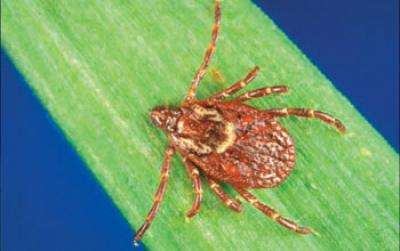
Human activities are advancing the spread of vector-borne, zoonotic diseases such as West Nile virus, Lyme disease and dengue fever, report scientists publishing a series of papers today in the journal The Lancet.
Vector-borne zoonotic diseases result from disease-causing agents or pathogens that naturally infect wildlife, and are transmitted to humans by carriers such as mosquitoes and ticks. In short, they're diseases transmitted between animals and humans.
Widespread land-use change, globalization of trade and travel, and social upheaval are driving the emergence of zoonotic diseases around the world, said biologist Marm Kilpatrick, who studies the ecology of infectious diseases at the University of California, Santa Cruz.
Kilpatrick co-authored one of several papers in The Lancet, along with Sarah Randolph of the University of Oxford. The Lancet papers are part of a special series in the journal focused on emerging zoonotic diseases.
"Increasing human population, and the urbanization and agricultural intensification of landscapes, put strong selective pressure on vector-borne pathogens to infect humans—and to be transmitted by vectors and hosts that live around humans," Kilpatrick said.
"Humans are altering the environment and moving ourselves and other organisms around the globe at an ever-increasing pace," said Sam Scheiner, a program director for the Ecology and Evolution of Infectious Diseases (EEID) program at the National Science Foundation. "Our fast-track has led to a growing disease threat."
EEID is a joint effort with NSF and the National Institutes of Health. At NSF, the Directorate for Biological Sciences and Directorate for Geosciences fund the program.
EEID funded much of the research discussed in The Lancet papers. "These papers show how and why zoonotic diseases are emerging, and what we need to know to ease the disease burden," said Scheiner.
The papers "offer a bridge between ecologists and clinicians whose combined efforts are needed to address the ongoing challenges of emerging zoonotic diseases," said Kilpatrick.
Added scientist Peter Daszak, president of the EcoHealth Alliance in New York City and author of a paper in the series, "Pandemic zoonoses such as SARS, Ebola and HIV/AIDS are devastating when they emerge. What this series shows is that we have new ways of predicting their origins, of discovering them even before they reach our population—truly a brave new world for pandemic prevention."
There are roughly two types of emerging infectious diseases: introduced and locally emerging.
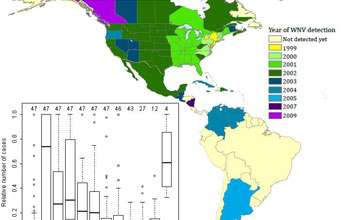
Introduced diseases arise from the spread of a pathogen to a new location, as when West Nile virus arrived in New York in 1999 and subsequently spread across North America.
Locally emerging diseases increase in importance in areas where they are endemic, as with Lyme disease in the United States during the past three decades.
These two types of emerging diseases can differ markedly with respect to infection dynamics or the number of cases over time, Kilpatrick said.
"Introduced diseases often cause a big spike in infections, and then decrease substantially. Locally emerging diseases often show a steady, sustained rise."

The movement of pathogens by global trade and travel results in the emergence of diseases in new regions.
Once established, introduced pathogens often evolve to take advantage of their new environments, including new hosts and vectors.
With much of the landscape shaped by human activities, pathogens may thrive by infecting hosts and vectors that do well in man-made environments.
Emergence of endemic vector-borne diseases can result from changes in land use, such as movement of people into new habitats, or environmental changes that affect wild animals that serve as natural hosts—and the insect vectors that spread the disease to humans.
Although vector-borne diseases are sensitive to climate, climate change does not appear to be a major driving force behind emerging diseases.
"So far, climate change has been a relatively minor player compared to land use and socioeconomic factors in the emergence of vector-borne disease," Kilpatrick said.
Social and economic changes, ranging from economic downturns to displacement of populations by armed conflict, frequently precipitate disease outbreaks through their effects on public health systems, sanitation systems, behavioral patterns and uses of natural environmental resources.
The incidence of any vector-borne disease involves a complex interplay of multiple factors affecting animal hosts, vectors and people.
Kilpatrick and Randolph emphasize that control of these diseases requires combined efforts by clinicians and public health officials to treat patients; promote behavior likely to minimize the risk of infection; and advise on efforts to reverse the ecological drivers of transmission through vector control, urban planning and ecological restoration.


