Food allergies can make kids targets for bullies
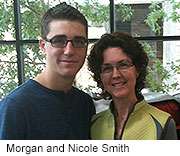
(HealthDay)—As the mother of a child with a severe peanut allergy, Nicole Smith was vigilant about reading labels and making sure teachers and school administrators understood that ingesting even a trace amount of peanuts could kill her son.
Dealing with the allergy was challenging—and got more so when she heard an alarming story. When her son, Morgan, was in first grade, another student chased him around the playground with a peanut butter cracker, shouting, "I'm going to kill you!"
"We were shocked," recalled Nicole, whose son is now a 16-year-old high school junior in Colorado Springs, Colo. "We really weren't prepared that anyone would bully him for his food allergies."
Yet research shows that many kids with food allergies report being bullied or teased about the condition.
About 8 percent of U.S. children are allergic to at least one food, and many of them have multiple food allergies, studies show. The foods most likely to cause reactions in kids include peanuts, tree nuts (such as cashews and walnuts), milk, shellfish and eggs.
A 2010 survey of more than 350 parents of food-allergic kids found that 35 percent of children aged 5 and older were bullied, teased or harassed because of the food allergy, and 86 percent of those reported it happening more than once.
Most of the bullying occurred at school. Although nearly 80 percent of the bullying was done by classmates, more than 20 percent reported that adults, including teachers and school staff, were the perpetrators.
Chillingly, some of the bullying went beyond taunts and teasing, according to the survey. More than half—57 percent—described physical events, such as being touched by an allergen, having an allergen thrown or waved at them, and even intentional contamination of their food with allergen, according to the survey, which was published in the Annals of Allergy, Asthma & Immunology.
"The one thing that makes food allergy different from bullying because of, say, obesity, is that in addition to the emotional and psychological distress, you run the risk of a physical harm if the allergen is indeed placed in food," said lead study author Dr. Jay Lieberman, assistant professor of allergy and immunology at the University of Tennessee Health Science Center and Le Bonheur Children's Hospital in Memphis.
Lieberman noted that the survey respondents did not report any allergic reaction due to intentionally contaminated food, presumably because the food-allergic kids saw it being done and didn't eat the food.
To what extent the teasing or bullying was malicious versus reflecting a lack of understanding about the severity of food allergies isn't known. But food-allergy experts say they've heard plenty of stories—a child with a peanut allergy having peanut butter smeared on his backpack, or a child with a dairy allergy having milk sprayed at his face through a straw.
"A lot of kids and a lot of parents don't really get that this is life threatening," said Maria Acebal, CEO of the Food Allergy and Anaphylaxis Network. "But we also see the most pernicious kind—'I know that this will harm you and I'm going to harm you.'"
There are several explanations for why having food allergies may make kids a target for teasing, experts say. Any time a child is "different"—whether it's wearing glasses or not being able to eat the same foods as other kids—other children can seize on that, Acebal said.
But societal attitudes also play a role, including a lack of awareness that something as seemingly innocuous as eating a cookie that has a trace of peanut in it can trigger a fatal reaction in some people, she added.
And food allergies are the butt of jokes on TV and in movies, she said.
"I think our society knows better than to say, 'Ha, ha, there goes the kid in the wheelchair.' People are sensitive to that. But we haven't gotten there yet with food allergies," she said.
To prevent bullying at school, teachers and principals need to make it clear that food allergies are no joke.
"Teachers and administrators would be horrified if they heard someone making fun of a child for diabetes or some other disability," Acebal said. "The same needs to happen for food allergies."
The incident involving Morgan Smith, who is also allergic to tree nuts, sesame, fish and shellfish, was taken seriously at his school. The boy who chased Morgan was suspended for the day. He never bullied Morgan again, and the two even later became friends.
"We were really lucky that it stopped when it did, and really lucky we had a principal that made that occur," Nicole Smith said.
According to the American Academy of Allergy, Asthma and Immunology,
warning signs that a child is being bullied can include depression or withdrawal; not wanting to go to school; changes in eating habits, sleep habits or weight loss; or bringing home a full lunchbox or not eating lunch at school.
Morgan urged other kids with food allergies to be assertive, and to speak up and tell parents and teachers if they're being teased or threatened.
"We already have a lot on our mind. I'm trying to deal with foods that could possibly kill me or make me really sick," Morgan said. "So when someone picked on me for trying to deal with that, it was really saddening. It makes it that much harder."
More information: The Food Allergy Initiative has more on food allergies.
Copyright © 2012 HealthDay. All rights reserved.


