Science of placebos seen from alternative point of view
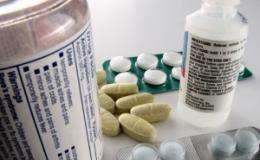
(Medical Xpress)—With the perspective of a scientist trained in acupuncture, Alison Adams is well positioned to explain why placebos may be misunderstood—and why they should be understood in the first place.
"The placebo is a very powerful tool and the vast majority of people know absolutely nothing about it," said Adams, associate professor of biology at Northern Arizona University. "People think it's just trickery of the brain."
Dispelling the popular notion of a useless sugar pill, Adams said that a placebo "could potentially be an effective agent in its own right."
Adams arrived at an interest in the topic after a four-year foray into alternative medicine. Postdoctoral work at MIT and Genentech had taken her deep into yeast genetics and cell biology. But in 2000, Adams "took a break from science" to study acupuncture in England.
"At the time, I was ready for something different," Adams said. "I was open to whatever direction I was going in."
That openness extended to a collaboration with George Lewith, a professor of health research at the University of Southampton and a longtime researcher into alternative and complementary medicines.
But Adams hadn't left science very far behind.
"I realized there's a lot of biology behind placebos," Adams said. "It turns out that when you're given a placebo pill, there's a whole series of steps that occur physiologically."
The fresh perspective remained with Adams when she returned to science, coming to NAU in 2004. Later she spent her sabbatical working on a project with Lewith studying how placebos are portrayed in the literature of drug trials. Their research, published in PLOS Clinical Trials, concluded that patients in such trials need better information about the benefits and side-effects of placebos.
Looking back to the lessons of acupuncture, Adams said, helps explain the origins of the "placebo response." In a word, it's all about context.
"The response is something that actually gets initiated by the context of medical procedures," Adams said. In Western medicine, seeing a doctor in a white coat helps the patient form an expectation that "the person is here to help them."
By that reasoning, "an increased exposure of the patient to contextual factors in the clinic may maximize the innate response," Adams said. In other words, "a doctor spending more time with the patient might be better than prescribing more pills."
The contextual relationship explains why alternative medicine is so popular and effective, Adams said.
In acupuncture, for example, an initial consultation often runs 90 minutes and includes a case history ranging from the details of the patient's birth to "different aches and pains throughout life. In Chinese medicine, a huge amount of attention is paid to little details."
Today Adams sees herself as an educator at the intersection of science and alternative medicine—an "unusual position," she said, but one that offers her an important role.
"Because I understand the world of science as well as alternative medicine, I can communicate with both groups," Adams said.
She's doing just that in a freshman seminar, Western and Alternative Medicine, that draws a diverse group of students.
"We examine studies that look at the efficacy of various forms of alterative medicine and Western medicine," Adams said. "It helps the students appreciate that the body has tremendous self-healing powers."
More information: www.plosone.org/article/info%3Adoi%2F10.1371%2Fjournal.pone.0039661


