Study of human specimen collections in the US offers first look at their huge diversity
January 28, 2013 in Genetics

Study of human specimen collections in the US offers first look at their huge diversity

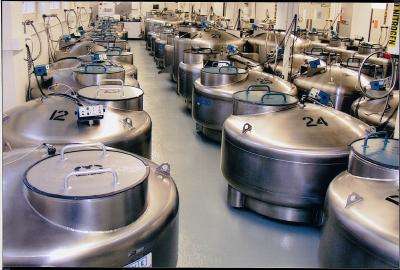
Photo shows specimen storage containers in a biobank facility. Credit: NIGMS/NIH

Biobanks are organizations that collect, store and share human specimens (e.g., blood, solid tissues, hair) for research purposes. The rise of the human genome project and of large-scale genetics studies have spurred a dramatic increase in the number of biobanks in the last decade, increasing their importance in biomedical research.

But until now, biobanks in the U.S. have never been studied systematically, leaving few clear details as to how they are run or the policies and practices they use in managing their work.

A new study from the University of North Carolina published January 25, 2013 in the journal Medicine reveals the huge diversity of U.S. biobanks and also raises questions about the best way to manage and govern them.

"Biobanks are increasingly important to , but our decentralized, fragmented research enterprise system in the U.S. has encouraged their development without necessarily providing them with the tools to survive," says study leader Gail Henderson, PhD, professor and chair of at the University of North Carolina. She also heads UNC's Center for Genomics and Society.

Henderson and colleagues from UNC decided to address this paucity of information by inviting more than 600 biobanks in the U.S. to participate in an . These included private and public, commercial and noncommercial, and many biobanks affiliated with hospitals and academia. Representatives of 456 U.S. biobanks (72 percent of the list invited) participated in the survey.

Among the main findings is their great diversity. "They get established for a variety of reasons; some accidental, some intentional. They vary in size, in when they were established, how formal they are as organizations, what kinds of specimens they hold, who pays for them, and where those specimens come from," Henderson notes.

In the survey, just over half (53 percent) listed research on a particular disease, such as cancer, as the most important reason for establishment. Twenty-nine percent listed research generally. Other reasons included response to a gift or grant, and "intent to centralize, integrate, or harmonize" older specimen collections.

The size of U.S. biobank collections varies, in number of specimens (from tens to millions) and in the types and where they come from – individuals, clinics, hospitals, public health programs, and research studies.

Henderson also points out that only a small minority are commercial businesses. "So, not surprisingly, most biobanks do not perceive being in a competitive market. But the majority are quite worried about funding, and many are concerned that the specimens they collect aren't being adequately utilized."

"Researchers and people whose specimens are being held need to be concerned that we don't have a system that is as efficient and effective as it could be," Henderson adds. "If you collect specimens but don't use them, this is a failure to deliver on the promise of advancing translational research, and thus an ethical as well as technical concern."

Biobanks, like the researchers who depend on their services and , need guidance informed by knowledge of their practices and challenges, the authors state. Required are policies "as nuanced as the biobanks themselves," whether these policies address issues of privacy or identity protection, or advancement of research goals.

"Given the diversity in biobank organizational characteristics identified in our survey, it's likely that management and governance policies will have to be tailored to fit the particular context. One-size policies will not fit all," says Henderson.

Journal reference: Genome Medicine search and more info website

Provided by University of North Carolina Health Care search and more info website

not rated yet  

Rank not rated yet
Relevant PhysicsForums posts

More news stories

Researchers identify new circadian clock component

Northwestern University scientists have shown a gene involved in neurodegenerative disease also plays a critical role in the proper function of the circadian clock.

Genetics created May 16, 2013 | popularity 3 / 5 (1) | comments 1 | with audio podcast

Returning genetic incidental findings without patient consent violates basic rights, experts say

Informed consent is the backbone of patient care. Genetic testing has long required patient consent and patients have had a "right not to know" the results. However, as 21st century medicine now begins to use the tools of ...

Genetics created May 16, 2013 | popularity 5 / 5 (1) | comments 3 | with audio podcast

Ethicists provide framework supporting new recommendations on reporting incidental findings in gene sequencing

In a paper published in Science Express, a group of experts led by bioethicists in the Center for Medical Ethics and Health Policy at Baylor College of Medicine provide a framework for the new American College of Medical Geneti ...

Genetics created May 16, 2013 | popularity not rated yet | comments 0

Experts urge caution over use of new genetic sequencing techniques

The use of genome-wide analysis (GWA), where the entirety of an individual's DNA is examined to look for the genomic mutations or variants which can cause health problems is a massively useful technology for diagnosing disease. ...

Genetics created May 16, 2013 | popularity not rated yet | comments 0

Collecting DNA for human rights: How to help while safeguarding privacy

DNA databases might help identify victims of crime and human trafficking, but how do we safeguard the personal privacy of innocent victims and family members? A new report online May 15 in the Cell Press journal Trends in ...

Genetics created May 15, 2013 | popularity not rated yet | comments 0


New study finds blind people have the potential to use their 'inner bat' to locate objects

New research from the University of Southampton has shown that blind and visually impaired people have the potential to use echolocation, similar to that used by bats and dolphins, to determine the location of an object.

Researchers find far-reaching, microvascular damage in uninjured side of brain after stroke

While the effects of acute stroke have been widely studied, brain damage during the subacute phase of stroke has been a neglected area of research. Now, a new study by the University of South Florida reports that within a ...

Breakup of physician, drug company relationship could improve health care, cut cost

A new report suggests that improved health care and significant reductions in drug costs might be attained by breaking up the age-old relationship between physicians and drug company representatives who promote the newest, ...

Food laboratory accuracy remains a concern

Food microbiology laboratories continue to submit false negative results and false positive results on a routine basis. A retrospective study of nearly 40,000 proficiency test results over the past 14 years, presented today ...

Study supports 'aggressive' treatment for posterior fossa hematoma in newborns

Posterior fossa subdural hematoma (PFSDH) is a serious and rare condition in newborns, generally occurring after difficult deliveries. But with appropriate treatment, there's an excellent chance of good long-term outcomes ...

Which women should be screened for high cholesterol?

National guidelines recommend that at-risk women be screened for elevated cholesterol levels to reduce their chances of developing cardiovascular disease. But who is 'at risk?' The results of a study by investigators ...