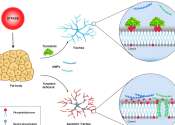
An antimicrobial is a substance that kills or inhibits the growth of microorganisms such as bacteria, fungi, or protozoans, as well as destroying viruses. Antimicrobial drugs either kill microbes (microbicidal) or prevent the growth of microbes (microbistatic). Disinfectants are antimicrobial substances used on non-living objects.
The history of antimicrobials begins with the observations of Pasteur and Joubert, who discovered that one type of bacteria could prevent the growth of another. They did not know at that time that the reason one bacterium failed to grow was that the other bacterium was producing an antibiotic. Technically, antibiotics are only those substances that are produced by one microorganism that kill, or prevent the growth, of another microorganism. Of course, in today's common usage, the term antibiotic is used to refer to almost any drug that cures a bacterial infection. Antimicrobials include not just antibiotics, but synthetically formed compounds as well.
The discovery of antimicrobials like penicillin and tetracycline paved the way for better health for millions around the world. Before 1941, the year penicillin was discovered, no true cure for gonorrhea, strep throat, or pneumonia existed. Patients with infected wounds often had to have a wounded limb removed, or face death from infection. Now, most of these infections can be cured easily with a short course of antimicrobials.
However, the future effectiveness of antimicrobial therapy is somewhat in doubt. Microorganisms, especially bacteria, are becoming resistant to more and more antimicrobial agents. Bacteria found in hospitals appear to be especially resilient, and are causing increasing difficulty for the sickest patients–those in the hospital. Currently, bacterial resistance is combated by the discovery of new drugs. However, microorganisms are becoming resistant more quickly than new drugs are being made available; thus, future research in antimicrobial therapy may focus on finding how to overcome resistance to antimicrobials, or how to treat infections with alternative means, such as species-specific phages.