Frontpage » Tag » cultures

News tagged with cultures

British MPs concerned about parliamentary boozing

One quarter of British lawmakers believe there is an "unhealthy" drinking culture in the Houses of Parliament, according to a survey published on Friday.

Health created May 17, 2013 | popularity not rated yet | comments 0

Promising treatment for progeria within reach

Pharmaceuticals that inhibit a specific enzyme may be useful in treating progeria, or accelerated aging in children. A new study performed at the Sahlgrenska Academy indicates that the development of progeria ...

Diseases, Conditions, Syndromes created May 16, 2013 | popularity 5 / 5 (4) | comments 0 | with audio podcast

Hospital rapid response teams need training

(HealthDay)—While hospital rapid response teams are effective in managing patients at risk or in crisis, team members need teamwork and good communication, according to a study published in the May issue ...

Other created May 11, 2013 | popularity not rated yet | comments 0

tPA: Clot buster and brain protector

(Medical Xpress)—Ever since its introduction in the 1990s, the "clot-busting" drug tPA has been considered a "double-edged sword" for people experiencing a stroke. It can help restore blood flow to the ...

Neuroscience created May 07, 2013 | popularity 5 / 5 (1) | comments 0 | with audio podcast

Researchers discover endogenous antibiotic in the brain

Scientists from the Luxembourg Centre for Systems Biomedicine (LCSB) of the University of Luxembourg have discovered that immune cells in the brain can produce a substance that prevents bacterial growth: namely itaconic acid. ...

Medical research created May 06, 2013 | popularity 5 / 5 (1) | comments 0 | with audio podcast

Genetic mutation linked with typical form of migraine

A research team led by a Howard Hughes Medical Institute investigator at the University of California, San Francisco has identified a genetic mutation that is strongly associated with a typical form of migraine.

Genetics created May 01, 2013 | popularity 4.5 / 5 (2) | comments 1 | with audio podcast

Researchers increase the success rate of tooth implants

Elderly or people with osteoporosis, smokers, diabetics or people who have had cancer are sometimes not eligible to receive dental implants as their bones are unable to correctly integrate the new prostheses which replace ...

Dentistry created Apr 29, 2013 | popularity not rated yet | comments 0

Structure that edits messenger RNA transcripts defective in two different forms of motor neuron diseases

Amyotrophic lateral sclerosis (ALS) and spinal muscular atrophy (SMA) are degenerative motor neuron diseases in which the key mutated genes are involved in RNA metabolism. This similarity suggests that a ...

Medical research created Apr 26, 2013 | popularity 5 / 5 (1) | comments 0

Blocking 'scaffold' protein inhibits cancer growth, study finds

(Medical Xpress)—Researchers at the Stanford University School of Medicine have devised an entirely novel way to block biological signaling pathways that, when overactive, lead to many types of cancers. They've done so ...

Cancer created Apr 22, 2013 | popularity 5 / 5 (3) | comments 0 | with audio podcast

Cross-cultural similarities in early adolescence

Acquiring self-esteem is an important part of a teenager's development. The way in which adolescents regard themselves can be instrumental in determining their achievement and social functioning. New research from Concordia ...

Psychology & Psychiatry created Apr 18, 2013 | popularity not rated yet | comments 0 | with audio podcast

Somalia: Female genital mutilation down

(AP)—Attitudes in Somalia toward a practice that critics decry as torture may be changing, as new data released by the U.N. children's agency on Tuesday showed that female genital mutilation among children in northern Somalia ...

Health created Apr 16, 2013 | popularity not rated yet | comments 0

Call for focus on Aboriginal strengths

Australia needs a new way to view the health and wellbeing of Aboriginal and Torres Strait Islander people, with a focus on their strengths, empowerment, resilience and achievements, a new study has proposed.

Health created Apr 15, 2013 | popularity not rated yet | comments 0

Genomics may help ID organisms in outbreaks of serious infectious disease

Researchers have been able to reconstruct the genome sequence of an outbreak strain of Shiga-toxigenic Escherichia coli (STEC) using metagenomics (the direct sequencing of DNA extracted from microbiologically complex sample ...

Genetics created Apr 09, 2013 | popularity not rated yet | comments 0 | with audio podcast

Cancers don't sleep: The Myc oncogene can disrupt circadian rhythm

The Myc oncogene can disrupt the 24-hour internal rhythm in cancer cells. Postdoctoral fellow Brian Altman, PhD, and graduate student Annie Hsieh, MD, both from the in the lab of Chi Van Dang, MD, PhD, director of the Abramson ...

Cancer created Apr 09, 2013 | popularity 3 / 5 (2) | comments 0 | with audio podcast

Researchers help find new therapeutic target for treating traumatic brain injury

(Medical Xpress)—A research team including members of the Department of Bioengineering in the University of Pennsylvania School of Engineering and Applied Science has discovered that drug intervention to reduce intercellular ...

Neuroscience created Apr 09, 2013 | popularity not rated yet | comments 0

Culture

Culture (Latin: cultura, lit. "cultivation") is a term that has many different inter-related meanings. For example, in 1952, Alfred Kroeber and Clyde Kluckhohn compiled a list of 164 definitions of "culture" in Culture: A Critical Review of Concepts and Definitions. However, the word "culture" is most commonly used in three basic senses:

When the concept first emerged in eighteenth- and nineteenth-century Europe, it connoted a process of cultivation or improvement, as in agriculture or horticulture. In the nineteenth century, it came to refer first to the betterment or refinement of the individual, especially through education, and then to the fulfillment of national aspirations or ideals. In the mid-nineteenth century, some scientists used the term "culture" to refer to a universal human capacity. For the German nonpositivist sociologist Georg Simmel, culture referred to "the cultivation of individuals through the agency of external forms which have been objectified in the course of history".

In the twentieth century, "culture" emerged as a concept central to anthropology, encompassing all human phenomena that are not purely results of human genetics. Specifically, the term "culture" in American anthropology had two meanings: (1) the evolved human capacity to classify and represent experiences with symbols, and to act imaginatively and creatively; and (2) the distinct ways that people living in different parts of the world classified and represented their experiences, and acted creatively. Following World War II, the term became important, albeit with different meanings, in other disciplines such as cultural studies, organizational psychology and management studies.[citation needed]
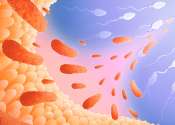
For more information about Culture, read the full article at Wikipedia.
This text uses material from Wikipedia and is available under the GNU Free Documentation License.