News tagged with microorganisms

Discarded immune cells induce the relocation of stem cells

Spanish researchers have discovered that the daily clearance of neutrophils from the body stimulates the release of hematopoietic stem cells from the bone marrow into the bloodstream, according to a report published today ...

Medical research created 14 hours ago | popularity 5 / 5 (2) | comments 0

Novel mechanism allows Legionella to hide in body

(Medical Xpress)—The feared Legionella pneumophila is responsible for legionellosis, an infectious disease that can lead to pneumonia. To infect humans, this pathogen has developed a complex method that allows it to camouflage ...

Diseases, Conditions, Syndromes created May 20, 2013 | popularity not rated yet | comments 0

Wnt5a protein critical to gut lining repair

Scientists at Washington University School of Medicine in St. Louis have identified a protein essential to repairing the intestine's inner lining.

Medical research created Sep 06, 2012 | popularity 4 / 5 (3) | comments 0 | with audio podcast

Gut microbe networks differ from norm in obese people, systems biology approach reveals

For the first time, researchers have analyzed the multitude of microorganisms residing in the human gut as a complex, integrated biological system, rather than a set of separate species. Their approach has ...

Medical research created Jan 10, 2012 | popularity 5 / 5 (10) | comments 0 | with audio podcast

From shape-shifting to therapy

(Medical Xpress)—The latest research into the intricate processes that let substances into and out of cells will help to lay the foundations for the next generation of therapies for major diseases.

Medical research created Mar 12, 2013 | popularity 5 / 5 (1) | comments 0 | with audio podcast

Researchers undertake massive study of gut bacteria differences between people in different countries

(Medical Xpress) -- One area of human biology that is still a major mystery is the nature of the relationship between microorganisms (microbiomes) that exist in the gut and the health of the human host. Crohn's ...

Medical research created May 10, 2012 | popularity 5 / 5 (3) | comments 0 | with audio podcast report

Researchers find peptide produced by giant panda fights fungi and bacteria

(Medical Xpress)—Researchers working at the Life Sciences College of Nanjing Agricultural University in China have found that giant pandas naturally produce a peptide that can kill fungi and bacteria. In ...

Medical research created Jan 03, 2013 | popularity not rated yet | comments 0 | with audio podcast report

New way to learn about, potentially block traits in harmful pathogens

Researchers at Duke University Medical Center have developed a new way to identify the genes of harmful microbes, particularly those that have been difficult to study in the laboratory.

Diseases, Conditions, Syndromes created Jan 09, 2012 | popularity not rated yet | comments 0 | with audio podcast

Gut microbes might reflect health, diet of older adults

(HealthDay) -- The health of elderly people appears closely linked with their diet and the type of microorganisms living in their gut, suggesting that what you eat may affect how well you age, according to ...

Medical research created Jul 13, 2012 | popularity 5 / 5 (6) | comments 0 | with audio podcast

Possible link between bacterium, colon cancer found

For the first time, a specific microorganism has been found to be associated with human colorectal cancer. In two studies published online today in Genome Research, independent research teams have identified Fusobacterium in col ...

Cancer created Oct 17, 2011 | popularity 5 / 5 (5) | comments 0 | with audio podcast

Researcher creates neurons that light up as they fire

In a scientific first that potentially could shed new light on how signals travel in the brain, how learning alters neural pathways, and might lead to speedier drug development, scientists at Harvard have created genetically-altered ...

Neuroscience created Nov 29, 2011 | popularity 4.8 / 5 (5) | comments 0 | with audio podcast

Bacteria in the gut of autistic children different from non-autistic children

The underlying reason autism is often associated with gastrointestinal problems is an unknown, but new results to be published in the online journal mBio on January 10 reveal that the guts of autistic children differ from o ...

Autism spectrum disorders created Jan 09, 2012 | popularity 3.5 / 5 (13) | comments 8

New technique identifies first events in tumor development

A novel technique that enables scientists to measure and document tumor-inducing changes in DNA is providing new insight into the earliest events involved in the formation of leukemias, lymphomas and sarcomas, and could potentially ...

Cancer created Sep 29, 2011 | popularity 3 / 5 (1) | comments 0 | with audio podcast

Hydrogen peroxide provides clues to immunity, wound healing and tumor biology

Hydrogen peroxide isn't just that bottled colorless liquid in the back of the medicine cabinet that's used occasionally for cleaning scraped knees and cut fingers.

Medical research created Nov 21, 2011 | popularity 4.4 / 5 (9) | comments 1 | with audio podcast

Computer program identifies rare mutations harbored within diverse populations of cancer cells and microorganisms

A tumor is not a uniform mass of identical cells. However, teasing apart genetic heterogeneity within a biopsied tumor can be difficult. Researchers often fail to tell the difference between a rare variant ...

Cancer created Apr 24, 2013 | popularity not rated yet | comments 0

Microorganism

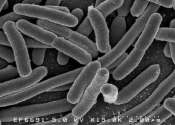
A microorganism (from the Greek: μικρός, mikrós, "small" and ὀργανισμός, organismós, "organism"; also spelled micro organism or micro-organism) or microbe is an organism that is microscopic (usually too small to be seen by the naked human eye). The study of microorganisms is called microbiology, a subject that began with Anton van Leeuwenhoek's discovery of microorganisms in 1675, using a microscope of his own design.

Microorganisms are very diverse; they include bacteria, fungi, archaea, and protists; microscopic plants (called green algae); and animals such as plankton, the planarian and the amoeba. Some microbiologists also include viruses, but others consider these as non-living. Most microorganisms are unicellular (single-celled), but this is not universal, since some multicellular organisms are microscopic, while some unicellular protists and bacteria, like Thiomargarita namibiensis, are macroscopic and visible to the naked eye.

Microorganisms live in all parts of the biosphere where there is liquid water, including soil, hot springs, on the ocean floor, high in the atmosphere and deep inside rocks within the Earth's crust. Microorganisms are critical to nutrient recycling in ecosystems as they act as decomposers. As some microorganisms can fix nitrogen, they are a vital part of the nitrogen cycle, and recent studies indicate that airborne microbes may play a role in precipitation and weather.

Microbes are also exploited by people in biotechnology, both in traditional food and beverage preparation, and in modern technologies based on genetic engineering. However, pathogenic microbes are harmful, since they invade and grow within other organisms, causing diseases that kill millions of people, other animals, and plants.

For more information about Microorganism, read the full article at Wikipedia.
This text uses material from Wikipedia and is available under the GNU Free Documentation License.