News tagged with nerve cells

Ketamine shows significant therapeutic benefit in people with treatment-resistant depression

Patients with treatment-resistant major depression saw dramatic improvement in their illness after treatment with ketamine, an anesthetic, according to the largest ketamine clinical trial to-date led by researchers from the ...

Psychology & Psychiatry created 19 hours ago | popularity 4.8 / 5 (4) | comments 0 | with audio podcast

Study identifies new approach to improving treatment for MS and other conditions

(Medical Xpress)—Working with lab mice models of multiple sclerosis (MS), UC Davis scientists have detected a novel molecular target for the design of drugs that could be safer and more effective than current FDA-approved ...

Alzheimer's disease & dementia created May 17, 2013 | popularity 5 / 5 (2) | comments 0 | with audio podcast

SUMO wrestling cells reveal new protective mechanism target for stroke

Scientists investigating the interaction of a group of proteins in the brain responsible for protecting nerve cells from damage have identified a new target that could increase cell survival.

Medical research created May 17, 2013 | popularity 5 / 5 (1) | comments 0

Researchers cure epilepsy in mice using brain cells

UCSF scientists controlled seizures in epileptic mice with a one-time transplantation of medial ganglionic eminence (MGE) cells, which inhibit signaling in overactive nerve circuits, into the hippocampus, a brain region associated ...

Neuroscience created May 05, 2013 | popularity 4.5 / 5 (14) | comments 2 | with audio podcast

Fish oil may stall effects of junk food on brain

Data from more than 180 research papers suggests fish oils could minimise the effects that junk food can have on the brain, a review by researchers at the University of Liverpool has shown.

Health created May 14, 2013 | popularity 5 / 5 (2) | comments 0

New drug enhances radiation treatment for brain cancer in preclinical studies

A novel drug may help increase the effectiveness of radiation therapy for the most deadly form of brain cancer, report scientists at Virginia Commonwealth University Massey Cancer Center. In mouse models of human glioblastoma ...

Cancer created May 14, 2013 | popularity 5 / 5 (2) | comments 0

Researchers discover dynamic behavior of progenitor cells in brain

By monitoring the behavior of a class of cells in the brains of living mice, neuroscientists at Johns Hopkins discovered that these cells remain highly dynamic in the adult brain, where they transform into ...

Neuroscience created May 09, 2013 | popularity 5 / 5 (2) | comments 0 | with audio podcast

Unleashing the watchdog protein

McGill University researchers have unlocked a new door to developing drugs to slow the progression of Parkinson's disease. Collaborating teams led by Dr. Edward A. Fon at the Montreal Neurological Institute and Hospital -The ...

Parkinson's & Movement disorders created May 09, 2013 | popularity 5 / 5 (1) | comments 0 | with audio podcast

Human brain cells developed in lab, grow in mice

A key type of human brain cell developed in the laboratory grows seamlessly when transplanted into the brains of mice, UC San Francisco researchers have discovered, raising hope that these cells might one day be used to treat ...

Medical research created May 08, 2013 | popularity 5 / 5 (2) | comments 0 | with audio podcast

Scientists show how nerve wiring self-destructs

Many medical issues affect nerves, from injuries in car accidents and side effects of chemotherapy to glaucoma and multiple sclerosis. The common theme in these scenarios is destruction of nerve axons, the ...

Neuroscience created May 09, 2013 | popularity 5 / 5 (1) | comments 0 | with audio podcast

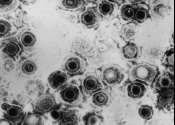
Immune cells that suppress genital herpes infections identified

Fred Hutchinson Cancer Research Center and University of Washington scientists have identified a class of immune cells that reside long-term in the genital skin and mucosa and are believed to be responsible for suppressing ...

Immunology created May 08, 2013 | popularity 5 / 5 (4) | comments 2 | with audio podcast

A tangle of talents untangles neurons

(Medical Xpress)—Two wrongs don't make a right, they say, but here's how one tangle can straighten out another.

Medical research created May 06, 2013 | popularity 5 / 5 (2) | comments 0 | with audio podcast

Discovery may help prevent chemotherapy-induced anemia

Cancer chemotherapy can cause peripheral neuropathy—nerve damage often resulting in pain and muscle weakness in the arms and legs. Now, researchers at Albert Einstein College of Medicine of Yeshiva University have discovered ...

Medical research created May 05, 2013 | popularity 3 / 5 (1) | comments 0 | with audio podcast

Cocaine vaccine passes key testing hurdle

Researchers at Weill Cornell Medical College have successfully tested their novel anti-cocaine vaccine in primates, bringing them closer to launching human clinical trials. Their study, published online by the journal Neuropsychopharmacology, used a ...

Psychology & Psychiatry created May 10, 2013 | popularity 5 / 5 (2) | comments 0 | with audio podcast

Embryonic stem cell transplant restores memory, learning in mice

For the first time, human embryonic stem cells have been transformed into nerve cells that helped mice regain the ability to learn and remember. A study at the University of Wisconsin-Madison is the first ...

Medical research created Apr 21, 2013 | popularity 4.3 / 5 (7) | comments 6 | with audio podcast

Neuron

A neuron (pronounced /ˈnjʊərɒn/ N(Y)OOR-on, also known as a neurone or nerve cell) is an excitable cell in the nervous system that processes and transmits information by electrochemical signalling. Neurons are the core components of the brain, the vertebrate spinal cord, the invertebrate ventral nerve cord, and the peripheral nerves. A number of specialized types of neurons exist: sensory neurons respond to touch, sound, light and numerous other stimuli affecting cells of the sensory organs that then send signals to the spinal cord and brain. Motor neurons receive signals from the brain and spinal cord and cause muscle contractions and affect glands. Interneurons connect neurons to other neurons within the same region of the brain or spinal cord. Neurons respond to stimuli, and communicate the presence of stimuli to the central nervous system, which processes that information and sends responses to other parts of the body for action. Neurons do not go through mitosis, and usually cannot be replaced after being destroyed, although astrocytes have been observed to turn into neurons as they are sometimes pluripotent.

For more information about Neuron, read the full article at Wikipedia.
This text uses material from Wikipedia and is available under the GNU Free Documentation License.