News tagged with receptors
Related topics: cells , protein , brain , molecules , nerve cells
Receptor (biochemistry)
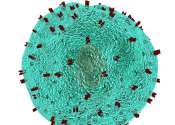
In biochemistry, a receptor is a protein molecule, embedded in either the plasma membrane or cytoplasm of a cell, to which a mobile signaling (or "signal") molecule may attach. A molecule which binds to a receptor is called a "ligand," and may be a peptide (such as a neurotransmitter), a hormone, a pharmaceutical drug, or a toxin, and when such binding occurs, the receptor undergoes a conformational change which ordinarily initiates a cellular response. However, some ligands merely block receptors without inducing any response (e.g. antagonists). Ligand-induced changes in receptors result in physiological changes which constitute the biological activity of the ligands.
This text uses material from Wikipedia and is available under the GNU Free Documentation License.
Researcher identifies breast cancer fighting hormone
Transformative research from Western University has identified new hormones in the body which may suppress breast cancer and stimulate the regression of breast tumors.
Cancer
May 24, 2013 |
5 / 5 (2) |
0
When oxygen is short, EGFR prevents maturation of cancer-fighting miRNAs
Even while being dragged to its destruction inside a cell, a cancer-promoting growth factor receptor fires away, sending signals that thwart the development of tumor-suppressing microRNAs (miRNAs) before it's dissolved, researchers ...
Cancer
May 23, 2013 |
not rated yet |
0
|
Study reveals new mechanism for estrogen suppression of liver lipid synthesis
By discovering the new mechanism by which estrogen suppresses lipid synthesis in the liver, UC Irvine endocrinologists have revealed a potential new approach toward treating certain liver diseases.
Medical research
May 23, 2013 |
5 / 5 (1) |
0
|
Pay attention: How we focus and concentrate
Scientists at Newcastle University have shed new light on how the brain tunes in to relevant information.
Neuroscience
May 23, 2013 |
5 / 5 (2) |
0
|
Scientists uncover molecular roots of cocaine addiction in the brain
Researchers at Johns Hopkins have unraveled the molecular foundations of cocaine's effects on the brain, and identified a compound that blocks cravings for the drug in cocaine-addicted mice. The compound, already proven safe ...
Neuroscience
May 22, 2013 |
not rated yet |
0
|
Registry questions superiority of bivalirudin over heparin
Results from a large observational study reported at EuroPCR 2013 today question whether bivalirudin is superior to heparin in the absence of GPIIb/IIIa blockade, showing similar 30-day mortality in patients with non-ST segment ...
Cardiology
May 22, 2013 |
5 / 5 (1) |
0