A new model—and possible treatment—for staph bone infections
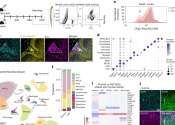
Osteomyelitis – a debilitating bone infection most frequently caused by Staphylococcus aureus ("staph") bacteria – is particularly challenging to treat.
Scientists at the Gladstone Institutes have discovered that a certain type of DNA damage long thought to be particularly detrimental to brain cells can actually be part of a regular, non-harmful process. The team further ...
The human gut is loaded with commensal bacteria – "good" microbes that, among other functions, help the body digest food. The gastrointestinal tract contains literally trillions of such cells, and yet the ...
Scientists at the University of Leeds have found a way to target and destroy a key protein associated with the development of cervical and other cancers.
Researchers at the University of Calgary's Hotchkiss Brain Institute have discovered that stress circuits in the brain undergo profound learning early in life. Using a number of cutting edge approaches, including ...
(Medical Xpress) -- To study spinal cord injuries, researchers have had to conduct exploratory surgeries on mice to determine how nerves and other cells respond after trauma. But these approaches have only ...
In a finding that may challenge popular notions of body fat and health, researchers at Beth Israel Deaconess Medical Center (BIDMC) have shown how fat cells can protect the body against diabetes. The results may lead to a ...
A devastating neurodegenerative disease that first appears in toddlers just as they are beginning to walk has been traced to defects in mitochondria, the 'batteries' or energy-producing power plants of cells.
Getting rid of a protein increases the birth of new nerve cells and shortens the time it takes for antidepressants to take effect, according to an animal study in the March 7 issue of The Journal of Neuroscience. The protei ...
More effective treatments for one of the deadliest forms of cancer are one step closer thanks to groundbreaking research from an international collaborative study.
Researchers from the RIKEN Center for Integrative Medical Sciences in Japan report today that they have identified a compound that could be used as a new treatment to prevent relapse in acute myeloid leukemia patients.
(Medical Xpress)—Scientists' picture of how a gene strongly linked to Alzheimer's disease harms the brain may have to be revised, researchers at Washington University School of Medicine in St. Louis have found.
Protein interactions outside breast cancer cells can send signals to the cancer cells to permanently stop proliferating, a new study showed in the School of Medicine at The University of Texas Health Science Center San Antonio.
Cedars-Sinai Heart Institute researchers have found in an initial clinical trial that a drug typically prescribed for erectile dysfunction or pulmonary hypertension restores blood flow to oxygen-starved muscles in patients ...
Scientists have discovered a new function for a protein that protects cells during injury and could eventually translate into treatment for conditions ranging from cardiovascular disease to Alzheimer's.