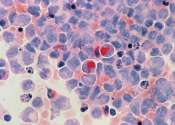
Acute Myeloid Leukemia

Genomics to reshape endometrial cancer treatment

The most in-depth look yet at endometrial cancer shows that adding genomics-based testing to the standard diagnostic workup could change the recommended course of treatment for some women.

May 01, 2013
popularity not rated yet | comments 0 | with audio podcast

Computer algorithms help find cancer connections

Powerful data-sifting algorithms developed by computer scientists at Brown University are helping to untangle the profoundly complex genetics of cancer. In a study reported today in the New England Journal of Medicine, resear ...

May 01, 2013
popularity not rated yet | comments 0 | with audio podcast

Acute myeloid leukemia (AML), also known as acute myelogenous leukemia, is a cancer of the myeloid line of blood cells, characterized by the rapid growth of abnormal white blood cells that accumulate in the bone marrow and interfere with the production of normal blood cells. AML is the most common acute leukemia affecting adults, and its incidence increases with age. Although AML is a relatively rare disease, accounting for approximately 1.2% of cancer deaths in the United States, its incidence is expected to increase as the population ages.

The symptoms of AML are caused by replacement of normal bone marrow with leukemic cells, which causes a drop in red blood cells, platelets, and normal white blood cells. These symptoms include fatigue, shortness of breath, easy bruising and bleeding, and increased risk of infection. Several risk factors and chromosomal abnormalities have been identified, but the specific cause is not clear. As an acute leukemia, AML progresses rapidly and is typically fatal within weeks or months if left untreated.

AML has several subtypes; treatment and prognosis varies among subtypes. Five-year survival varies from 15–70%, and relapse rate varies from 33-78%, depending on subtype. AML is treated initially with chemotherapy aimed at inducing a remission; patients may go on to receive additional chemotherapy or a hematopoietic stem cell transplant. Recent research into the genetics of AML has resulted in the availability of tests that can predict which drug or drugs may work best for a particular patient, as well as how long that patient is likely to survive.

This text uses material from Wikipedia licensed under CC BY-SA

Latest Spotlight News

Estrogen a new weapon against urinary tract infection in menopause

(Medical Xpress)—Estrogen stimulates the production of the body's own antibiotic and strengthens the cells in the urinary tract, according to a new study from Karolinska Institutet. The results, which are published in the ...

Antibiotics increase eczema risk in children, study reveals

(Medical Xpress)—Use of antibiotics in early life may increase the risk of developing eczema by up to 40 per cent, according to a new study led by King's College London researchers, published today in the ...

Animal study shows promising path to prevent epilepsy

Duke Medicine researchers have identified a receptor in the nervous system that may be key to preventing epilepsy following a prolonged period of seizures.

Efficient signal transmission at sensory system synapses

(Medical Xpress)—Neurophysiologist like to think of neurons as communicating with spikes. If that were the whole story, it might be possible to imagine spike codes which could then be used to estimate the ...

A shot in the arm for old antibiotics: Silver boosts antibiotics

Slipping bacteria some silver could give old antibiotics new life, scientists at the Wyss Institute for Biologically Inspired Engineering at Harvard University reported June 19 in Science Translational Me ...

Fate of the heart: Researchers track cellular events leading to cardiac regeneration

In a study published in the June 19 online edition of the journal Nature, a scientific team led by researchers from the University of California, San Diego School of Medicine visually monitored the dynami ...

Scientists create way to see structures that store memories in living brain

Oscar Wilde called memory "the diary that we all carry about with us." Now a team of scientists has developed a way to see where and how that diary is written.

Validating maps of the brain's resting state

Kick back and shut your eyes. Now stop thinking. You have just put your brain into what neuroscientists call its resting state. What the brain is doing when an individual is not focused on the outside world ...

Mindfulness can increase wellbeing and reduce stress in school children

Mindfulness – a mental training that develops sustained attention that can change the ways people think, act and feel – could reduce symptoms of stress and depression and promote wellbeing among school children, according ...

New MERS virus spreads easily, deadlier than SARS, researchers show

A mysterious new respiratory virus that originated in the Middle East spreads easily between people and appears more deadly than SARS, doctors reported Wednesday after investigating the biggest outbreak in ...