Acute Myeloid Leukemia

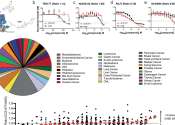
Computational tool translates complex data into simplified 2-dimensional images

In their quest to learn more about the variability of cells between and within tissues, biomedical scientists have devised tools capable of simultaneously measuring dozens of characteristics of individual ...

Medical research created May 19, 2013 | popularity 5 / 5 (4) | comments 0 | with audio podcast


Acute myeloid leukemia (AML), also known as acute myelogenous leukemia, is a cancer of the myeloid line of blood cells, characterized by the rapid growth of abnormal white blood cells that accumulate in the bone marrow and interfere with the production of normal blood cells. AML is the most common acute leukemia affecting adults, and its incidence increases with age. Although AML is a relatively rare disease, accounting for approximately 1.2% of cancer deaths in the United States, its incidence is expected to increase as the population ages.

The symptoms of AML are caused by replacement of normal bone marrow with leukemic cells, which causes a drop in red blood cells, platelets, and normal white blood cells. These symptoms include fatigue, shortness of breath, easy bruising and bleeding, and increased risk of infection. Several risk factors and chromosomal abnormalities have been identified, but the specific cause is not clear. As an acute leukemia, AML progresses rapidly and is typically fatal within weeks or months if left untreated.

AML has several subtypes; treatment and prognosis varies among subtypes. Five-year survival varies from 15–70%, and relapse rate varies from 33-78%, depending on subtype. AML is treated initially with chemotherapy aimed at inducing a remission; patients may go on to receive additional chemotherapy or a hematopoietic stem cell transplant. Recent research into the genetics of AML has resulted in the availability of tests that can predict which drug or drugs may work best for a particular patient, as well as how long that patient is likely to survive.
This text uses material from Wikipedia and is available under the GNU Free Documentation License.

Latest Spotlight News

Early-life traffic-related air pollution exposure linked to hyperactivity

Early-life exposure to traffic-related air pollution was significantly associated with higher hyperactivity scores at age 7, according to new research from the University of Cincinnati (UC) and Cincinnati Children's Hospital ...

New immune system discovered

(Medical Xpress)—A research team, led by Jeremy Barr, a biology post-doctoral fellow, unveils a new immune system that protects humans and animals from infection.

The compound in the Mediterranean diet that makes cancer cells 'mortal'

New research suggests that a compound abundant in the Mediterranean diet takes away cancer cells' "superpower" to escape death. By altering a very specific step in gene regulation, this compound essentially re-educates cancer ...

Scientists identify molecular trigger for Alzheimer's disease

Researchers have pinpointed a catalytic trigger for the onset of Alzheimer's disease – when the fundamental structure of a protein molecule changes to cause a chain reaction that leads to the death of neurons ...

Do salamanders hold the solution to regeneration?

Salamanders' immune systems are key to their remarkable ability to regrow limbs, and could also underpin their ability to regenerate spinal cords, brain tissue and even parts of their hearts, scientists have ...

Practice makes perfect? Not so much

Turns out, that old "practice makes perfect" adage may be overblown. New research led by Michigan State University's Zach Hambrick finds that a copious amount of practice is not enough to explain why people ...

Older prostate cancer patients should think twice before undergoing treatment

Older prostate cancer patients with other underlying health conditions should think twice before committing to surgery or radiation therapy for their cancer, according to a multicenter study led by researchers in the UCLA ...

Neurons that can multitask greatly enhance the brain's computational power, study finds

Over the past few decades, neuroscientists have made much progress in mapping the brain by deciphering the functions of individual neurons that perform very specific tasks, such as recognizing the location ...

New test better detects elephantiasis worm infection

A new diagnostic test for a worm infection that can lead to severe enlargement and deformities of the legs and genitals is far more sensitive than the currently used test, according to results of a field ...

Researchers develop model for better testing, targeting of malignant peripheral nerve sheath tumors

University of Minnesota Medical School researchers from the Masonic Cancer Center, University of Minnesota, in partnership with the University's Brain Tumor Program, have developed a new mouse model of malignant peripheral ...