Anemia
Heart failure patients living longer, but long-term survival still low
People hospitalized for acute heart failure are likely to survive longer compared to the prior decade, according to a new study in the Journal of the American Heart Association and presented at the American Heart Association's ...
Cardiology
May 16, 2013 |
not rated yet |
0
PARP inhibitor shows activity in pancreatic, prostate cancers among patients carrying BRCA mutations
In the largest clinical trial to date to examine the efficacy of PARP inhibitor therapy in BRCA 1/2 carriers with diseases other than breast and ovarian cancer, the oral drug olaparib was found to be effective against advanced ...
Cancer
May 15, 2013 |
not rated yet |
0
Single, high-dose erythropoietin given two days pre-op reduces need for transfused blood
Anemia increases operative mortality and morbidity in non-cardiac and cardiac surgical procedures. Anemic surgical patients may require more blood transfusions, raising the risk of transfusion-related complications and increasing ...
Surgery
May 06, 2013 |
5 / 5 (2) |
0
Injecting insulin through clothes may contribute to infection
(HealthDay)—Insulin injections have been associated with non-tuberculous mycobacteria cutaneous infections and cutaneous mycobacteria may have a prolonged incubation period, according to a literature review ...
Diabetes
May 05, 2013 |
not rated yet |
0
Discovery may help prevent chemotherapy-induced anemia
Cancer chemotherapy can cause peripheral neuropathy—nerve damage often resulting in pain and muscle weakness in the arms and legs. Now, researchers at Albert Einstein College of Medicine of Yeshiva University have discovered ...
Medical research
May 05, 2013 |
3 / 5 (1) |
0
|
Pregnant women with high celiac disease antibodies are at risk for low birth weight babies
Pregnant women with mid to high levels of antibodies common in patients with celiac disease are at risk for having babies with reduced fetal weight and birth weight, according to a new study in Gastroenterology, the offici ...
Diseases, Conditions, Syndromes
Apr 29, 2013 |
not rated yet |
0
Vets and medical doctors should team up to tackle diseases transmitted from animals to humans, study suggests
A new study at the Institute of Tropical Medicine (ITM) in Antwerp analyses the impact of animal brucellosis and bovine tuberculosis (BTB) on animals and people in urban, peri-urban and rural Niger. The World Health Organization ...
Diseases, Conditions, Syndromes
Apr 23, 2013 |
not rated yet |
0
Longer breastfeeding duration boosts risk of iron deficiency
(HealthDay)—Longer breastfeeding duration is associated with increased odds of iron deficiency in healthy children, according to a study published online April 15 in Pediatrics.
Pediatrics
Apr 17, 2013 |
not rated yet |
0
Study shows a quarter of patients discharged from hospitals return to ERs within 30 days
A study led by researchers at the Perelman School of Medicine at the University of Pennsylvania and Boston University School of Medicine has found that nearly one quarter of patients may return to the emergency department ...
Health
Apr 16, 2013 |
not rated yet |
0
Combo therapy helps knock out fungal meningitis
(HealthDay)— A drug regimen containing two powerful antifungal medicines—amphotericin B and flucytosine—reduced the risk of dying from cryptococcal meningitis by 40 percent compared to treatment with ...
Diseases, Conditions, Syndromes
Apr 03, 2013 |
5 / 5 (1) |
1
|
Progress, puzzles in halting malaria: Hidden parasites pose challenge to eradication, speakers say
The prevalence of malaria in the population on the Tanzanian island of Zanzibar has fallen to just 2 percent from 70 percent over the last century. Much of the progress came in just the last 10 years, leading ...
Diseases, Conditions, Syndromes
Apr 02, 2013 |
not rated yet |
0
Kidney sparing surgery underutilized for patients who need it most
Researchers at the University of California, San Diego School of Medicine have released study results that show national treatment trends in the surgical management of patients with kidney disease. The study found that partial ...
Surgery
Mar 25, 2013 |
not rated yet |
0
Researchers decode biology of blood and iron disorders mapping out novel future therapies
Two studies led by investigators at Weill Cornell Medical College shed light on the molecular biology of three blood disorders, leading to novel strategies to treat these diseases.
Medical research
Mar 25, 2013 |
4.5 / 5 (2) |
0
|
Low-cost 'cooling cure' would avert brain damage in oxygen-starved babies
When babies are deprived of oxygen before birth, brain damage and disorders such as cerebral palsy can occur. Extended cooling can prevent brain injuries, but this treatment is not always available in developing ...
Medical research
Mar 21, 2013 |
5 / 5 (1) |
0
Discovery could increase efficacy of promising cystic fibrosis drug
(Medical Xpress)—A little more than a year after the FDA approved Kalydeco (Vx-770), the first drug of its kind to treat the underlying cause of cystic fibrosis, University of Missouri researchers believe ...
Medical research
Mar 21, 2013 |
4.5 / 5 (2) |
0
|
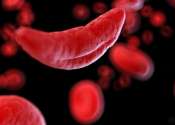
Anemia (/əˈniːmiə/; also spelled anaemia and anæmia; from Greek ἀναιμία anaimia, meaning lack of blood) is a decrease in number of red blood cells (RBCs) or less than the normal quantity of hemoglobin in the blood. However, it can include decreased oxygen-binding ability of each hemoglobin molecule due to deformity or lack in numerical development as in some other types of hemoglobin deficiency.
Because hemoglobin (found inside RBCs) normally carries oxygen from the lungs to the tissues, anemia leads to hypoxia (lack of oxygen) in organs. Since all human cells depend on oxygen for survival, varying degrees of anemia can have a wide range of clinical consequences.
Anemia is the most common disorder of the blood. There are several kinds of anemia, produced by a variety of underlying causes. Anemia can be classified in a variety of ways, based on the morphology of RBCs, underlying etiologic mechanisms, and discernible clinical spectra, to mention a few. The three main classes of anemia include excessive blood loss (acutely such as a hemorrhage or chronically through low-volume loss), excessive blood cell destruction (hemolysis) or deficient red blood cell production (ineffective hematopoiesis).
There are two major approaches: the "kinetic" approach which involves evaluating production, destruction and loss, and the "morphologic" approach which groups anemia by red blood cell size. The morphologic approach uses a quickly available and low cost lab test as its starting point (the MCV). On the other hand, focusing early on the question of production may allow the clinician to expose cases more rapidly where multiple causes of anemia coexist.
This text uses material from Wikipedia and is available under the GNU Free Documentation License.
Latest Spotlight News
If you can remember it, you can remember it wrong
(Medical Xpress)—Native peoples in regions where cameras are uncommon sometimes react with caution when their picture is taken. The fear that something must have been stolen from them to create the photo ...
B vitamins could delay dementia
(Medical Xpress)—Despite spending billions of dollars on research and development, drug companies have been unable to come up with effective treatments for dementia and Alzheimer's Disease (AD). Now, A. ...
Insight into the dazzling impact of insulin in cells
Australian scientists have charted the path of insulin action in cells in precise detail like never before. This provides a comprehensive blueprint for understanding what goes wrong in diabetes.
New sleeping pill poised to hit US markets
An experimental sleeping pill from US drug company Merck is effective at helping people fall and stay asleep, according to reviewers at the US Food and Drug Administration, which could soon approve the new drug.
Reducing caloric intake delays nerve cell loss
Activating an enzyme known to play a role in the anti-aging benefits of calorie restriction delays the loss of brain cells and preserves cognitive function in mice, according to a study published in the May ...
Antidepressant reduces stress-induced heart condition
A drug commonly used to treat depression and anxiety may improve a stress-related heart condition in people with stable coronary heart disease, according to researchers at Duke Medicine.
Drugs found to both prevent and treat Alzheimer's disease in mice
Researchers at USC have found that a class of pharmaceuticals can both prevent and treat Alzheimer's Disease in mice.
Enrichment therapy effective among children with autism, study finds
Children with autism showed significant improvement after six months of simple sensory exercises at home using everyday items such as scents, spoons and sponges, according to UC Irvine neurobiologists.
Study finds vitamin C can kill drug-resistant TB (w/ video)
In a striking, unexpected discovery, researchers at Albert Einstein College of Medicine of Yeshiva University have determined that vitamin C kills drug-resistant tuberculosis (TB) bacteria in laboratory culture. The finding ...
Common food supplement fights degenerative brain disorders
Widely available in pharmacies and health stores, phosphatidylserine is a natural food supplement produced from beef, oysters, and soy. Proven to improve cognition and slow memory loss, it's a popular treatment for older ...