Glaucoma

Glaucoma drug can cause droopy eyelids

Prostaglandin analogues (PGAs), drugs which lower intraocular pressure, are often the first line of treatment for people with glaucoma, but their use is not without risks. PGAs have long been associated with blurred vision, ...

Ophthalmology created May 21, 2013 | popularity not rated yet | comments 0

Eyes on the sun: Child sunshine exposure and eye development

(Medical Xpress)—Exposure to sunshine as a small child is crucial to the development of a healthy eye according to results of long-term myopia study conducted by University of Sydney researchers.

Ophthalmology created May 21, 2013 | popularity 5 / 5 (1) | comments 0

New study pinpoints biochemical mechanism underlying fibrosis following glaucoma surgery

The most common cause of failure after glaucoma surgery is scarring at the surgical site, so researchers are actively looking for ways to minimize or prevent scar formation. Previous work had suggested that vascular endothelial ...

Ophthalmology created May 17, 2013 | popularity not rated yet | comments 0 | with audio podcast

Early screenings key to diagnosing glaucoma

New research is emphasizing the importance of regular screenings for glaucoma, a disease that deteriorates the optic nerve over time and is a leading cause of irreversible blindness worldwide. The onset of glaucoma is associated ...

Ophthalmology created May 17, 2013 | popularity not rated yet | comments 0 | with audio podcast

Same musicians: Brand new tune

A small ensemble of musicians can produce an infinite number of melodies, harmonies and rhythms. So too, do a handful of workhorse signaling pathways that interact to construct multiple structures that comprise ...

Medical research created May 14, 2013 | popularity 5 / 5 (2) | comments 0 | with audio podcast

Scientists show how nerve wiring self-destructs

Many medical issues affect nerves, from injuries in car accidents and side effects of chemotherapy to glaucoma and multiple sclerosis. The common theme in these scenarios is destruction of nerve axons, the ...

Neuroscience created May 09, 2013 | popularity 5 / 5 (1) | comments 0 | with audio podcast

Discovery of gene mutation causing Sturge-Weber syndrome, port-wine stain birthmarks offers new hope

In new findings published on May 8, 2013 in the New England Journal of Medicine (Epub ahead of print), researchers from the Kennedy Krieger Institute reveal the discovery of the cause – a genetic mutation that occurs before ...

Genetics created May 08, 2013 | popularity 5 / 5 (1) | comments 0

Court: California cities can ban pot shops

(AP)—The California Supreme Court ruled Monday that cities and counties can ban medical marijuana dispensaries, a ruling likely to further diminish the state's once-extravagant network of storefront pot shops and fuel efforts ...

Health created May 06, 2013 | popularity not rated yet | comments 0

Research identifies gene mutations associated with nearsightedness

People have long taken for granted that glasses and contact lenses improve vision for nearsightedness, but the genetic factors behind the common condition have remained blurry. Now researchers at Duke Medicine ...

Genetics created May 02, 2013 | popularity 5 / 5 (2) | comments 2 | with audio podcast

Outdoor recess time can reduce the risk of nearsightedness in children

Two new studies add to the growing evidence that spending time outdoors may help prevent or minimize nearsightedness in children. A study conducted in Taiwan, which is the first to use an educational policy as a public vision ...

Ophthalmology created May 01, 2013 | popularity not rated yet | comments 0

Identification of specific genetic variants associated with common eye disorders could improve treatment and prevention

The eye is covered by a clear and protective layer called the cornea, and abnormal thickness of the cornea can result in eye disease. An international research team including Chiea Chuen Khor of the A*STAR ...

Genetics created Apr 24, 2013 | popularity not rated yet | comments 0

The gene therapy renaissance: How experimental technique overcame a troubled legacy and is now helping the blind to see

(Medical Xpress)—In 1999, researchers at the University of Pennsylvania injected 19 people with a virus carrying a gene designed to correct a rare metabolic disease. Early results appeared promising: Among ...

Genetics created Apr 19, 2013 | popularity 5 / 5 (2) | comments 0 | with audio podcast

Hallucinations of musical notation

Professor of neurology, physician, and author Oliver Sacks M.D. has outlined case studies of hallucinations of musical notation, and commented on the neural basis of such hallucinations, in a new paper for the neurology journal ...

Neuroscience created Apr 04, 2013 | popularity not rated yet | comments 1

New view of origins of eye diseases

Using new technology and new approaches, researchers at Lund University in Sweden hope to be able to explain why people suffer vision loss in eye diseases such as retinal detachment and glaucoma.

Ophthalmology created Apr 03, 2013 | popularity 5 / 5 (1) | comments 0

A 'micro-tap' for treating glaucoma

A tiny, EPFL-designed implantable device that can be positioned within the eye and controlled remotely may well revolutionize the treatment of glaucoma. The device should be through testing this year and ...

Ophthalmology created Mar 25, 2013 | popularity not rated yet | comments 0 | with audio podcast


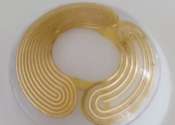
Glaucoma is an eye disease in which the optic nerve is damaged in a characteristic pattern. This can permanently damage vision in the affected eye(s) and lead to blindness if left untreated. It is normally associated with increased fluid pressure in the eye (aqueous humour). The term 'ocular hypertension' is used for people with consistently raised intraocular pressure (IOP) without any associated optic nerve damage. Conversely, the term 'normal tension' or 'low tension' glaucoma is used for those with optic nerve damage and associated visual field loss but normal or low IOP.

The nerve damage involves loss of retinal ganglion cells in a characteristic pattern. There are many different subtypes of glaucoma, but they can all be considered to be a type of optic neuropathy. Raised intraocular pressure (above 21 mmHg or 2.8 kPa) is the most important and only modifiable risk factor for glaucoma. However, some may have high eye pressure for years and never develop damage, while others can develop nerve damage at a relatively low pressure. Untreated glaucoma can lead to permanent damage of the optic nerve and resultant visual field loss, which over time can progress to blindness.

Glaucoma can be roughly divided into two main categories, "open angle" and "closed angle" (or "angle closure") glaucoma. The angle refers to the area between the iris and cornea, through which fluid must flow to escape via the trabecular meshwork. Closed angle glaucoma can appear suddenly and is often painful; visual loss can progress quickly, but the discomfort often leads patients to seek medical attention before permanent damage occurs. Open angle, chronic glaucoma tends to progress at a slower rate and patients may not notice they have lost vision until the disease has progressed significantly.

Glaucoma has been called the "silent thief of sight" because the loss of vision often occurs gradually over a long period of time, and symptoms only occur when the disease is quite advanced. Once lost, vision can not normally be recovered and so treatment is aimed at preventing further loss. Worldwide, glaucoma is the second leading cause of blindness after cataracts. It is also the leading cause of blindness among African Americans. Glaucoma affects one in 200 people aged fifty and younger, and one in 10 over the age of eighty. If the condition is detected early enough, it is possible to arrest the development or slow the progression with medical and surgical means.

The word "glaucoma" comes from the Greek γλαύκωμα, "opacity of the crystalline lens." (Cataracts and glaucoma were not distinguished until c.1705).
This text uses material from Wikipedia and is available under the GNU Free Documentation License.

Latest Spotlight News

Novel approach for influenza vaccination shows promise in early animal testing

A new approach for immunizing against influenza elicited a more potent immune response and broader protection than the currently licensed seasonal influenza vaccines when tested in mice and ferrets. The vaccine ...

Researchers complete largest genetic sequencing study of human disease

Researchers from Queen Mary, University of London have led the largest sequencing study of human disease to date, investigating the genetic basis of six autoimmune diseases.

Slowing the aging process—only with antibiotics

Swiss scientists reveal the mechanism responsible for aging hidden deep within mitochondria—and dramatically slow it down in worms by administering antibiotics to the young.

Enzyme-activating antibodies revealed as marker for most severe form of rheumatoid arthritis

In a series of lab experiments designed to unravel the workings of a key enzyme widely considered a possible trigger of rheumatoid arthritis, researchers at Johns Hopkins have found that in the most severe ...

Taming suspect gene reverses schizophrenia-like abnormalities in mice

Scientists have reversed behavioral and brain abnormalities in adult mice that resemble some features of schizophrenia by restoring normal expression to a suspect gene that is over-expressed in humans with ...

Research offers promising new approach to treatment of lung cancer

Researchers have developed a new drug delivery system that allows inhalation of chemotherapeutic drugs to help treat lung cancer, and in laboratory and animal tests it appears to reduce the systemic damage ...

Overeating learned in infancy, study suggests

In the long run, encouraging a baby to finish the last ounce in their bottle might be doing more harm than good.

Scientists uncover molecular roots of cocaine addiction in the brain

Researchers at Johns Hopkins have unraveled the molecular foundations of cocaine's effects on the brain, and identified a compound that blocks cravings for the drug in cocaine-addicted mice. The compound, already proven safe ...

Researchers analyse hunting behaviour of fish larvae in virtual reality

Moving objects attract greater attention – a fact exploited by video screens in public spaces and animated advertising banners on the Internet. For most animal species, moving objects also play a major ...

Study details genes that control whether tumors adapt or die when faced with p53 activating drugs

When turned on, the gene p53 turns off cancer. However, when existing drugs boost p53, only a few tumors die – the rest resist the challenge. A study published in the journal Cell Reports shows how: tumors that live even i ...