Hiv Infection
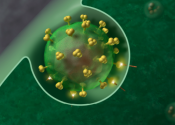
Nanoparticles loaded with bee venom kill HIV
(Medical Xpress)—Nanoparticles carrying a toxin found in bee venom can destroy human immunodeficiency virus (HIV) while leaving surrounding cells unharmed, researchers at Washington University School of ...
HIV & AIDS
Mar 08, 2013 |
5 / 5 (29) |
3
|
Australian study turns HIV against itself (Update)
An Australian scientist said Wednesday he had discovered a way to turn the HIV virus against itself in human cells in the laboratory, in an important advance in the quest for an AIDS cure.
HIV & AIDS
Jan 16, 2013 |
4.9 / 5 (15) |
22
Researchers describe first 'functional HIV cure' in an infant
A team of researchers from Johns Hopkins Children's Center, the University of Mississippi Medical Center and the University of Massachusetts Medical School describe the first case of a so-called "functional cure" in an HIV-infected ...
HIV & AIDS
Mar 03, 2013 |
5 / 5 (9) |
1
|
Researchers show how cells' DNA repair machinery can destroy viruses
A team of researchers based at Johns Hopkins has decoded a system that makes certain types of immune cells impervious to HIV infection. The system's two vital components are high levels of a molecule that ...
Medical research
Jan 21, 2013 |
4.3 / 5 (6) |
0
|
Revolutionary techniques could help harness patients' own immune cells to fight disease
The human body contains immune cells programmed to fight cancer and viral infections, but they often have short lifespans and are not numerous enough to overcome attacks by particularly aggressive malignancies ...
Medical research
Jan 03, 2013 |
5 / 5 (4) |
0
|
Immune cells engineered in lab to resist HIV infection
Researchers at the Stanford University School of Medicine have found a novel way to engineer key cells of the immune system so they remain resistant to infection with HIV, the virus that causes AIDS.
HIV & AIDS
Jan 22, 2013 |
5 / 5 (4) |
0
|
Immune cells that suppress genital herpes infections identified
Fred Hutchinson Cancer Research Center and University of Washington scientists have identified a class of immune cells that reside long-term in the genital skin and mucosa and are believed to be responsible for suppressing ...
Immunology
May 08, 2013 |
5 / 5 (4) |
2
|
New research helps explain why AIDS vaccine has been so difficult to develop
For decades, a successful HIV vaccine has been the Holy Grail for researchers around the globe. Yet despite years of research and millions of dollars of investment, that goal has still yet to be achieved. Recent research ...
HIV & AIDS
Sep 09, 2012 |
4.8 / 5 (4) |
0
|
Circumcision alters penis microbiome, could explain HIV protection
Circumcision drastically alters the microbiome of the penis, changes that could explain why circumcision offers protection against HIV and other viral infections. In a study to be published on April 16 in mBio, the online ...
HIV & AIDS
Apr 16, 2013 |
3.4 / 5 (5) |
4
|
Biologists deliver neutralizing antibodies that protect against HIV infection in mice
Over the past year, researchers at the California Institute of Technology, and around the world, have been studying a group of potent antibodies that have the ability to neutralize HIV in the lab; their hope ...
HIV & AIDS
Nov 30, 2011 |
5 / 5 (3) |
0
|
Pioneering research shows drug can purge dormant HIV
Researchers from the University of North Carolina at Chapel Hill have published pioneering research showing that a drug used to treat certain types of lymphoma was able to dislodge hidden virus in patients receiving treatment ...
HIV & AIDS
Jul 25, 2012 |
5 / 5 (3) |
0
|
People merge supernatural and scientific beliefs when reasoning with the unknown, study shows
(Medical Xpress)—Reliance on supernatural explanations for major life events, such as death and illness, often increases rather than declines with age, according to a new psychology study from The University of Texas at ...
Psychology & Psychiatry
Aug 30, 2012 |
5 / 5 (3) |
0
|
Test developed to detect early-stage diseases with naked eye
Scientists have developed a prototype ultra-sensitive sensor that would enable doctors to detect the early stages of diseases and viruses with the naked eye, according to research published today in the journal Nature Na ...
Cancer
Oct 28, 2012 |
5 / 5 (3) |
0
|
Scientists discover how HIV virus gains access to carrier immune cells to spread infection
Scientists from the AIDS Research Institute IrsiCaixa have identified how HIV, the virus that causes AIDS, enters the cells of the immune system enabling it to be dispersed throughout an organism. The new ...
HIV & AIDS
Dec 18, 2012 |
5 / 5 (3) |
0
|
Team develops mathematical model to measure hidden HIV
(Medical Xpress)—Scientists have long believed that measuring the amount of HIV in a person's blood is an indicator of whether the virus is actively reproducing. A University of Delaware-led research team ...
HIV & AIDS
May 08, 2013 |
5 / 5 (3) |
0
|
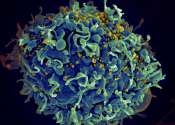
Human immunodeficiency virus (HIV) is a lentivirus (a member of the retrovirus family) that causes acquired immunodeficiency syndrome (AIDS), a condition in humans in which progressive failure of the immune system allows life-threatening opportunistic infections and cancers to thrive. Infection with HIV occurs by the transfer of blood, semen, vaginal fluid, pre-ejaculate, or breast milk. Within these bodily fluids, HIV is present as both free virus particles and virus within infected immune cells. The four major routes of transmission are unsafe sex, contaminated needles, breast milk, and transmission from an infected mother to her baby at birth (perinatal transmission). Screening of blood products for HIV has largely eliminated transmission through blood transfusions or infected blood products in the developed world.
HIV infection in humans is considered pandemic by the World Health Organization (WHO). Nevertheless, complacency about HIV may play a key role in HIV risk. From its discovery in 1981 to 2006, AIDS killed more than 25 million people. HIV infects about 0.6% of the world's population. In 2009, AIDS claimed an estimated 1.8 million lives, down from a global peak of 2.1 million in 2004. Approximately 260,000 children died of AIDS in 2009. A disproportionate number of AIDS deaths occur in Sub-Saharan Africa, retarding economic growth and exacerbating the burden of poverty. An estimated 22.5 million people (68% of the global total) live with HIV in sub-Saharan Africa, which is also home to 90% of the world's 16.6 million children orphaned by HIV. Treatment with antiretroviral drugs reduces both the mortality and the morbidity of HIV infection. Although antiretroviral medication is still not universally available, expansion of antiretroviral therapy programs since 2004 has helped to turn the tide of AIDS deaths and new infections in many parts of the world. Intensified awareness and preventive measures, as well as the natural course of the epidemic, have also played a role. Nevertheless, an estimated 2.6 million people were newly infected in 2009.
HIV infects vital cells in the human immune system such as helper T cells (specifically CD4+ T cells), macrophages, and dendritic cells. HIV infection leads to low levels of CD4+ T cells through three main mechanisms: First, direct viral killing of infected cells; second, increased rates of apoptosis in infected cells; and third, killing of infected CD4+ T cells by CD8 cytotoxic lymphocytes that recognize infected cells. When CD4+ T cell numbers decline below a critical level, cell-mediated immunity is lost, and the body becomes progressively more susceptible to opportunistic infections.
Most untreated people infected with HIV-1 eventually develop AIDS. These individuals mostly die from opportunistic infections or malignancies associated with the progressive failure of the immune system. HIV progresses to AIDS at a variable rate affected by viral, host, and environmental factors; most will progress to AIDS within 10 years of HIV infection: some will have progressed much sooner, and some will take much longer. Treatment with anti-retrovirals increases the life expectancy of people infected with HIV. Even after HIV has progressed to diagnosable AIDS, the average survival time with antiretroviral therapy was estimated to be more than 5 years as of 2005[update]. Without antiretroviral therapy, someone who has AIDS typically dies within a year.
This text uses material from Wikipedia and is available under the GNU Free Documentation License.
Latest Spotlight News
Slowing the aging process—only with antibiotics
Swiss scientists reveal the mechanism responsible for aging hidden deep within mitochondria—and dramatically slow it down in worms by administering antibiotics to the young.
Researchers complete largest genetic sequencing study of human disease
Researchers from Queen Mary, University of London have led the largest sequencing study of human disease to date, investigating the genetic basis of six autoimmune diseases.
Brain can be trained in compassion, study shows
Until now, little was scientifically known about the human potential to cultivate compassion—the emotional state of caring for people who are suffering in a way that motivates altruistic behavior.
Having both migraines, depression may mean smaller brain
(HealthDay)—Migraines and depression can each cause a great deal of suffering, but new research indicates the combination of the two may be linked to something else entirely—a smaller brain.
Novel approach for influenza vaccination shows promise in early animal testing
A new approach for immunizing against influenza elicited a more potent immune response and broader protection than the currently licensed seasonal influenza vaccines when tested in mice and ferrets. The vaccine ...
Enzyme-activating antibodies revealed as marker for most severe form of rheumatoid arthritis
In a series of lab experiments designed to unravel the workings of a key enzyme widely considered a possible trigger of rheumatoid arthritis, researchers at Johns Hopkins have found that in the most severe ...
Research offers promising new approach to treatment of lung cancer
Researchers have developed a new drug delivery system that allows inhalation of chemotherapeutic drugs to help treat lung cancer, and in laboratory and animal tests it appears to reduce the systemic damage ...
Research shows how immune system peacefully co-exists with 'good' bacteria
The human gut is loaded with commensal bacteria – "good" microbes that, among other functions, help the body digest food. The gastrointestinal tract contains literally trillions of such cells, and yet the ...
Study details genes that control whether tumors adapt or die when faced with p53 activating drugs
When turned on, the gene p53 turns off cancer. However, when existing drugs boost p53, only a few tumors die – the rest resist the challenge. A study published in the journal Cell Reports shows how: tumors that live even i ...
Overeating learned in infancy, study suggests
In the long run, encouraging a baby to finish the last ounce in their bottle might be doing more harm than good.