Molecular Cell
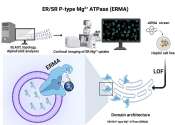
Protein preps cells to survive stress of cancer growth and chemotherapy
Scientists have uncovered a survival mechanism that occurs in breast cells that have just turned premalignant-cells on the cusp between normalcy and cancers-which may lead to new methods of stopping tumors.
Cancer
May 23, 2013 |
not rated yet |
0
|
Research identifies a way to make cancer cells more responsive to chemotherapy
Breast cancer characterized as "triple negative" carries a poor prognosis, with limited treatment options. In some cases, chemotherapy doesn't kill the cancer cells the way it's supposed to. New research from Western University ...
Cancer
May 23, 2013 |
5 / 5 (3) |
0
Faulty energy production in brain cells leads to disorders ranging from Parkinson's to intellectual disability
Neuroscientist Patrik Verstreken of VIB (Flanders Institute for Biotechnology) and KU Leuven has shown for the first time that dysfunctional mitochondria in brain cells can lead to learning disabilities. The link between ...
Parkinson's & Movement disorders
May 17, 2013 |
4 / 5 (2) |
0
Binding sites for LIN28 protein found in thousands of human genes
A study led by researchers at the UC San Diego Stem Cell Research program and funded by the California Institute for Regenerative Medicine (CIRM) looks at an important RNA binding protein called LIN28, which ...
Genetics
Sep 04, 2012 |
4.3 / 5 (6) |
0
|
Scientists link excess sugar to cancer
Sugars are needed to provide us with energy and in moderate amounts contribute to our well-being. Sustained high levels of sugars, as is found in diabetics, damages our cells and now is shown that can also ...
Medical research
Feb 01, 2013 |
4.7 / 5 (19) |
12
|
Uncovering the genome's regulatory code
Since the sequencing of the human genome in 2001, all our genes – around 20,000 in total – have been identified. But much is still unknown – for instance where and when each is active. Next to each ...
Genetics
Sep 10, 2012 |
5 / 5 (1) |
1
|
Cell death discovery suggests new ways to protect female fertility
Melbourne researchers have identified a new way of protecting female fertility, offering hope to women whose fertility may be compromised by the side-effects of cancer therapy or by premature menopause.
Medical research
Sep 22, 2012 |
5 / 5 (1) |
0
|
Target for obesity drugs comes into focus
(Medical Xpress)—Researchers at the University of Michigan have determined how the hormone leptin, an important regulator of metabolism and body weight, interacts with a key receptor in the brain.
Medical research
Oct 11, 2012 |
5 / 5 (2) |
0
|
Team uncovers new insight into cell development and cancer
Long-standing research efforts have been focused on understanding how stem cells, cells capable of transforming into any type of cell in the body, are capable of being programmed down a defined path to contribute ...
Cancer
Dec 27, 2012 |
5 / 5 (2) |
0
|
Researchers reveal crucial immune fighter role of the STING protein
Researchers at Weill Cornell Medical College have unlocked the structure of a key protein that, when sensing certain viruses and bacteria, triggers the body's immediate immune response.
Medical research
Jun 18, 2012 |
5 / 5 (4) |
0
|
Does presence of oxidants early in life help determine life span?
Why do we age, and what makes some of us live longer than others? For decades, researchers have been trying to answer these questions by elucidating the molecular causes of aging.
Medical research
Jul 19, 2012 |
5 / 5 (2) |
0
|
Scientists create roadmap to metabolic reprogramming for aging
In efforts to understand what influences life span, cancer and aging, scientists are building roadmaps to navigate and learn about cells at the molecular level.
Medical research
Nov 29, 2012 |
5 / 5 (8) |
0
|
Researchers ID gene that turns carbs into fat: Discovery could help development of treatment for fatty liver, diabetes
A gene that helps the body convert that big plate of holiday cookies you just polished off into fat could provide a new target for potential treatments for fatty liver disease, diabetes and obesity.
Genetics
Dec 06, 2012 |
5 / 5 (3) |
1
|
Methylome modifications offer new measure of our 'biological' age
Women live longer than men. Individuals can appear or feel years younger – or older – than their chronological age. Diseases can affect our aging process. When it comes to biology, our clocks clearly tick differently.
Medical research
Nov 21, 2012 |
5 / 5 (5) |
0
|
Inhibiting enzymes in the cell may lead to development and proliferation of cancer cells
Blocking certain enzymes in the cell may prevent cancer cell division and growth, according to new findings from researchers at the Graduate School of Biomedical Sciences at the Icahn School of Medicine at Mount Sinai. The ...
Cancer
Apr 25, 2013 |
5 / 5 (1) |
1