Warning about keeping and storing medicines
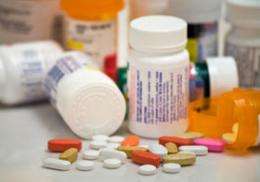
(Medical Xpress) -- Many people keep their medicines in places that may be too hot and humid, or too cold, to keep them safe to use, new University of Otago research suggests.
Professor Pauline Norris from the School of Pharmacy says undergraduate researchers on summer studentships used data from a previous nationwide study to identify where people kept medicines.
They then placed small devices that take regular readings of temperature and humidity in those places.
Many people reported keeping medicines in handbags and backpacks for ease of access but Pharmacy student Chong Chi Shen found that bags left in the sun can get very hot quickly and remain hot for long periods of time. In Dunedin on a warm day, the front compartment of one backpack left in the sun reached more than 60 Degrees Celsius.
These temperatures, particularly those observed in the backpack, will accelerate chemical and physical degradation of many medicines, says one of the lead researchers Dr. Clare Strachan.
Of particular concern are proteins such as insulin, which is regularly carried round in backpacks and is likely to degrade within hours at temperatures above 60 °C.
This can be dangerous. For example, insulin that has been heated too much does not work to lower blood sugar levels in people who need to control their diabetes, she says.
Temperatures in cars in the sun where medicines were kept were also high - over 50 °C. The study authors are also recommending that people try to avoid leaving their medicines in cars for long periods of time.
Surprisingly to the researchers, the study also found that cargo holds in planes can dip below freezing point on long haul flights, and in this study the temperature fell to -4°C.
This could also be damaging to a range of medicines, such as emulsions, solutions and proteins. Therefore, the study authors recommend that people carry their medicines, particularly liquid and protein medicines such as insulin, with them in the cabin of the plane on long flights, instead of keeping them in checked luggage.
Professor Norris said Pharmacy student Campbell Hewson also found that kitchens and bathrooms were the most commonly reported rooms for storing medicines; in one bathroom 100% humidity was reached, while a kitchen reached 85% humidity.
Dr. Strachan says excess humidity could potentially cause chemical degradation or physical changes, which may affect the efficacy, safety or appearance of the medicine.
Provided by University of Otago
-
Risks of increased access to over-the-counter medicines may outweigh benefits
Mar 28, 2008 |
not rated yet |
0
-
Chinese herbal medicines for preventing diabetes in high risk people
Oct 07, 2009 |
not rated yet |
0
-
Alternative medicines need to be considered in diabetes management
Jul 04, 2007 |
not rated yet |
0
-
Researchers still searching for ways to help patients take their meds
May 13, 2011 |
not rated yet |
0
-
Millions of teens abusing cold medicines
Jan 11, 2008 |
not rated yet |
0
-
Motion perception revisited: High Phi effect challenges established motion perception assumptions
Apr 23, 2013 |
3 / 5 (2) |
2
-
Anything you can do I can do better: Neuromolecular foundations of the superiority illusion (Update)
Apr 02, 2013 |
4.5 / 5 (11) |
5
-
The visual system as economist: Neural resource allocation in visual adaptation
Mar 30, 2013 |
5 / 5 (2) |
9
-
Separate lives: Neuronal and organismal lifespans decoupled
Mar 27, 2013 |
4.9 / 5 (8) |
0
-
Sizing things up: The evolutionary neurobiology of scale invariance
Feb 28, 2013 |
4.8 / 5 (10) |
14
-
Pressure-volume curve: Elastic Recoil Pressure don't make sense
May 18, 2013
-
If you became brain-dead, would you want them to pull the plug?
May 17, 2013
-
MRI bill question
May 15, 2013
-
Ratio of Hydrogen of Oxygen in Dessicated Animal Protein
May 13, 2013
-
Alcohol and acetaminophen
May 13, 2013
-
Marie Curie's leukemia
May 13, 2013
- More from Physics Forums - Medical Sciences
More news stories
Acne pill benefits outweigh blood clot risk: EU agency
Europe's medicines watchdog said Friday the benefits of acne drug Diane-35, also widely used as a contraceptive, outweigh the risk of developing blood clots in the veins—when correctly prescribed.
Medications
May 17, 2013 |
not rated yet |
0
First influenza vaccine brought to clinical testing
Singapore's Agency for Science, Technology and Research (A*STAR) and Switzerland's Cytos Biotechnology AG today announced that the first healthy volunteer has been dosed in a Phase 1 clinical trial with their ...
Medications
May 17, 2013 |
5 / 5 (1) |
0
Aspirin not always best treatment for many individuals
(Medical Xpress)—An aspirin a day may not always keep heart disease away, say two University of Florida cardiologists. But a new algorithm they have developed outlines factors physicians should weigh as ...
Medications
May 16, 2013 |
3.5 / 5 (2) |
0
|
FDA: lower ambien's dose to prevent drowsy driving
(HealthDay)—The U.S. Food and Drug Administration has approved new, lower-dose labeling for the popular sleep drug Ambien (zolpidem) in an effort to cut down on daytime drowsiness that could be a hazard ...
Medications
May 15, 2013 |
not rated yet |
0
Simponi approved for ulcerative colitis
(HealthDay)—Simponi (golimumab) injection has been approved by the U.S. Food and Drug Administration to treat adults with moderate-to-severe ulcerative colitis.
Medications
May 15, 2013 |
not rated yet |
0
Researchers identify a potential new risk for sleep apnea: Asthma
Researchers at the University of Wisconsin have identified a potential new risk factor for obstructive sleep apnea: asthma. Using data from the National Institutes of Health (Heart, Lung, and Blood Institute)-funded Wisconsin ...
Study finds that sleep apnea and Alzheimer's are linked
A new study looking at sleep-disordered breathing (SDB) and markers for Alzheimer's disease (AD) risk in cerebrospinal fluid (CSF) and neuroimaging adds to the growing body of research linking the two.
Computational tool translates complex data into simplified 2-dimensional images
In their quest to learn more about the variability of cells between and within tissues, biomedical scientists have devised tools capable of simultaneously measuring dozens of characteristics of individual ...
New theory on genesis of osteoarthritis comes with successful therapy in mice
Scientists at Johns Hopkins have turned their view of osteoarthritis (OA) inside out. Literally. Instead of seeing the painful degenerative disease as a problem primarily of the cartilage that cushions joints, ...
Ginger compounds may be effective in treating asthma symptoms
Gourmands and foodies everywhere have long recognized ginger as a great way to add a little peppery zing to both sweet and savory dishes; now, a study from researchers at Columbia University shows purified components of the ...
'Gap' for HIV vaccine efforts after latest setback
The hunt for an HIV vaccine has gobbled up $8 billion in the past decade, and the failure of the most recent efficacy trial has delivered yet another setback to 26 years of efforts.