Boy or girl? A simple test raises ethical concerns
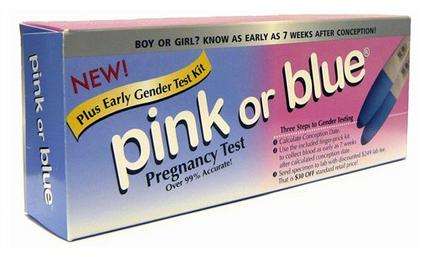
(AP) -- Boy or girl? A simple blood test in mothers-to-be can answer that question with surprising accuracy at about seven weeks, a research analysis has found.
Though not widely offered by U.S. doctors, gender-detecting blood tests have been sold online to consumers for the past few years. Their promises of early and accurate results prompted genetics researchers to take a closer look.
They analyzed 57 published studies of gender testing done in rigorous research or academic settings - though not necessarily the same methods or conditions used by direct-to-consumer firms.
The authors say the results suggest blood tests like those studied could be a breakthrough for women at risk of having babies with certain diseases, who could avoid invasive procedures if they learned their fetus was a gender not affected by those illnesses. But the study raises concerns about couples using such tests for gender selection and abortion.
Couples who buy tests from marketers should be questioned about how they plan to use the results, the study authors said.
The analyzed test can detect fetal DNA in mothers' blood. It's about 95 percent accurate at identifying gender when women are at least seven weeks' pregnant - more than one month before conventional methods. Accuracy of the testing increases as pregnancy advances, the researchers concluded.
Conventional procedures, typically done for medical reasons, can detect gender starting at about 10 weeks.
The new analysis, published in Wednesday's Journal of the American Medical Association, involved more than 6,000 pregnancies. The testing used a lab procedure called PCR that detects genetic material - in this case, the male Y chromosome. If present in the mother's blood, she's carrying a boy, but if absent, it's a girl.
Tests that companies sell directly to consumers were not examined in the analysis. Sex-detection tests using mothers' urine or blood before seven weeks of pregnancy were not accurate, the researchers said.
Senior author Dr. Diana Bianchi, a reproductive geneticist and executive director of the Mother Infant Research Institute at Tufts Medical Center in Boston, called the results impressive. She noted that doctors in Great Britain are already using such testing for couples at risk of having children with hemophilia or other sex-linked diseases, partly to help guide treatment decisions.
The research indicates that many laboratories have had success with the test, but the results can't be generalized to all labs because testing conditions can vary substantially, said Dr. Joe Leigh Simpson, a genetics professor at Florida International University. He was not involved in the study.
Simpson noted that using gender-detection blood testing for medical or other reasons has not been endorsed by guideline-setting medical groups and some experts consider it experimental.
Dr. Lee Shulman, chief of clinical genetics at Northwestern Memorial Hospital in Chicago, said the testing "isn't ready for prime time."
He said his hospital doesn't provide the blood tests, and doesn't offer more conventional techniques, including amniocentesis, to women who have no medical reason for wanting to know their baby's gender.
"I would have a lot of difficulties offering such a test just for gender identification. Gender is not an abnormality," Shulman said. "My concern is this is ultimately going to be available in malls or shopping centers," similar to companies offering "cute" prenatal ultrasound images.
Recent research found that increasing numbers of women in India who already have daughters are having abortions when prenatal tests show another girl, suggesting that an Indian ban on such gender testing has been ineffective. The expense of marrying off girls has contributed to a cultural preference there for boys.
Evidence also suggests that China's limits on one child per couple and traditional preference for male heirs has contributed to abortions and an increasingly large gender imbalance.
There's very little data on reasons for U.S. abortions or whether gender preferences or gender-detection methods play a role, said Susannah Baruch, a policy consultant for the Generations Ahead, an advocacy group that studies genetic techniques and gender issues.
Consumer Genetics Inc. a Santa Clara, Calif.-based company sells an "early gender" blood test called "Pink or Blue" online for $25 plus $265 or more for laboratory testing. It boasts of 95 percent accuracy, using a lab technique its scientists developed from the type of testing evaluated in the new analysis, said Terry Carmichael, the company's executive vice president.
Carmichael said the company sells more than 1,000 kits a year. He said the company won't test blood samples unless women sign a consent form agreeing not to use the results for gender selection.
The company also won't sell kits to customers in China or India because of fears of gender selection, he said.
Medical techniques that can detect gender include amniocentesis, usually done at around 16 weeks, using a needle to withdraw fluid surrounding the fetus to identify abnormalities; chorionic villus sampling, done at around the 10th week to detect abnormalities by examining placenta tissue; and ultrasound, most accurate at around 13 weeks. The first two methods can slightly increase risks for miscarriages.+
©2011 The Associated Press. All rights reserved. This material may not be published, broadcast, rewritten or redistributed.


