August 30, 2011 report
Research indicates certain probiotics may influence brain functioning
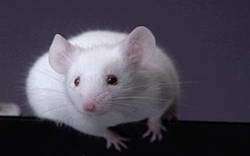
(Medical Xpress) -- It was just last year that a certain company selling a special probiotic enhanced yogurt was ordered by a U.S. court to stop suggesting in its advertisements that it's product had health benefits that went beyond the norm. Now, new evidence by Javier Bravo and colleagues at University College Cork, suggests the company may have been on to something. In their paper, published in the Proceedings of the National Academy of Science, the team describes how mice given the prbiotic Lactobacillus rhamnosus, showed signs of being less anxious and depressed and even had lowered levels of stress hormones.
Building on recent research that suggests there may be more of a gut-mind link than scientists have realized (such as depression and anxiety linked to bowel problems) Bravo and his team decided to look into probiotics and their possible impact on mood. In their research, they focused on Lactobacillus rhamnosus, a probiotic bacterium normally found in the gut, and which is also commonly found in various kinds of yogurt and other types of dairy products.
To find out if ingesting L. rhamnosus did indeed have any impact beyond normal nutritional value, the team fed half of a group of mice a broth heavily laden with the bacterium for a period of time; the other half were given the same broth without the probiotic. Afterwards, the mice were tested to see if any discernible behavioral changes resulted.
Bravo et al found that the mice that had been given the probiotic demonstrated less anxious type behaviors, such as more of a willingness to traverse narrow walkways or to venture out into wide open spaces, activities that are known to cause stress in mice. They also found that the mice that had eaten the probiotic were less likely give in to the sensation of drowning when put in water, a sign that normally indicates depressive behavior. And finally, they found that the treated mice also had lower levels of stress hormones in their blood.
To find more proof of the connection, the team then severed the vagus nerve in the test mice and found the behaviors and hormone levels reverted back to their norms. The Vagus nerve transmits information from the gut and other organs to the brain, thus having it severed removes any means of communication between the two.
The team also found that the brain neurotransmitter gamma-aminobutyric acid (GABA) was also changed in the mice that had been fed the probiotic, with higher levels found in some areas of the brain associated with depression and lower levels in some areas associated with anxiety.
All in all the team feels confident that they’ve found a clear link between probiotics and mood and behavioral changes in mice; the next step of course will be to find out if the same is true for people.
More information: Ingestion of Lactobacillus strain regulates emotional behavior and central GABA receptor expression in a mouse via the vagus nerve, PNAS, Published online before print August 29, 2011, doi: 10.1073/pnas.1102999108
Abstract
There is increasing, but largely indirect, evidence pointing to an effect of commensal gut microbiota on the central nervous system (CNS). However, it is unknown whether lactic acid bacteria such as Lactobacillus rhamnosus could have a direct effect on neurotransmitter receptors in the CNS in normal, healthy animals. GABA is the main CNS inhibitory neurotransmitter and is significantly involved in regulating many physiological and psychological processes. Alterations in central GABA receptor expression are implicated in the pathogenesis of anxiety and depression, which are highly comorbid with functional bowel disorders. In this work, we show that chronic treatment with L. rhamnosus (JB-1) induced region-dependent alterations in GABAB1b mRNA in the brain with increases in cortical regions (cingulate and prelimbic) and concomitant reductions in expression in the hippocampus, amygdala, and locus coeruleus, in comparison with control-fed mice. In addition, L. rhamnosus (JB-1) reduced GABAAα2 mRNA expression in the prefrontal cortex and amygdala, but increased GABAAα2 in the hippocampus. Importantly, L. rhamnosus (JB-1) reduced stress-induced corticosterone and anxiety- and depression-related behavior. Moreover, the neurochemical and behavioral effects were not found in vagotomized mice, identifying the vagus as a major modulatory constitutive communication pathway between the bacteria exposed to the gut and the brain. Together, these findings highlight the important role of bacteria in the bidirectional communication of the gut–brain axis and suggest that certain organisms may prove to be useful therapeutic adjuncts in stress-related disorders such as anxiety and depression.
© 2011 PhysOrg.com


