Study finds promising drug treatment for improving language, social function in people with autism
September 29, 2011 in Psychology & Psychiatry
Study finds promising drug treatment for improving language, social function in people with autism

Enlarge

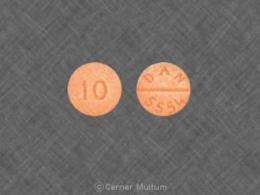
University of Missouri researchers are examining the use of propranolol (a drug used to treat high blood pressure and control heart rate as well as to reduce test anxiety) to improve the primary traits associated with autism -- difficulty with normal social skills, language and repetitive behaviors. MU researchers say the drug is a promising new avenue for improving language and social function. Credit: National Library of Medicine

Most drug therapy interventions for people with autism have targeted psychiatric problems, including aggression, anxiety and obsessive behavior. Now, University of Missouri researchers are examining the use of propranolol (a drug used to treat high blood pressure and control heart rate as well as to reduce test anxiety) to improve the primary traits associated with autism – difficulty with normal social skills, language and repetitive behaviors. MU researchers say the drug is a promising new avenue for improving language and social function.

"We can clearly say that propranolol has the potential to benefit language and may help people with function appropriately in social situations, including making eye contact with others," said David Beversdorf, associate professor and Thompson Endowed Chair at the MU Thompson Center for Autism and Neurodevelopmental Disorders. "Enhancing both language and social function is significant because those are two of the three main features of autism. Clinical trials will assess the drug's effect on all three features, including repetitive behaviors."

Propranolol has been used for decades with minimal side effects reported in healthy individuals. The MU researchers are the first to study the benefits of the drug in autism in a controlled manner. The next step is to conduct clinical trials to determine if the benefits are sustained over time and if the benefits outweigh other effects.

Propranolol acts by reducing the effect of norepinephrine brought on by stress in order to allow the brain to function as if there is no stress. This is beneficial for persons who have trouble with test taking. In people with autism, the brain is hardwired in a different way, making processing more rigid in terms of social function and language. The researchers think that the drug acts on these hardwired processes and therefore, improves tasks and functioning in these areas.

"When healthy persons are under stress their neurons fire in an expedited manner, to respond quickly to the stressor, that does not allow input from remote sources," Beversdorf said. "Unfortunately when trying to solve difficult problems, we need information from remote sources. For example, if we come in contact with a tiger, we are programmed to respond quickly and run away. However, this fight or flight response isn't as helpful in today's society because instead of facing a tiger, we are taking an exam or giving a speech. Evidence suggests that individuals with autism have a similar difficulty accessing input from remote sources regardless of the presence of stress when using language and communicating."

In previous studies, the researchers found that propranolol helped people with autism solve simple anagrams, word unscrambling tasks. It also increased semantic word fluency, which requires understanding the definition of words and connectivity among different brain regions. It did not help with letter fluency, which involves identifying words that start with specific letters and requires less distributed connectivity among brain regions.

"We are interested to see if we can predict who will or will not respond to this drug among those with autism," Beversdorf said. "In the follow-up study, we're looking at markers of increased stress reactivity. If we find that those with higher stress reactivity are more sensitive to the effects of propranolol, it might help to identify who will benefit most from the drug."

Beversdorf is a physician and faculty member at MU in the departments of Radiology, Neurology and Psychological Sciences. The study, "Effect of on Word Fluency in Autism," was published in Cognitive and Behavior Neurology.

Provided by University of Missouri-Columbia search and more info website

5 /5 (1 vote)  

Rank 5 /5 (1 vote)
Relevant PhysicsForums posts
  • A question about drug tolerance
    createdMay 23, 2012
  • Poor nutrition leading to overeating?
    createdMay 23, 2012
  • Math and dyslexia?
    createdMay 21, 2012
  • portable metabolism meter?
    createdMay 21, 2012
  • Rare medical conditions on 20/20 tonight
    createdMay 18, 2012
  • "Good" Cholesterol in Doubt
    createdMay 17, 2012
  • More from Physics Forums - Medical Sciences

More news stories

More mental health care urged for kids who self-harm

(HealthDay) -- Doctors have long known that some kids suffering severe emotional turmoil find relief in physical pain -- cutting or burning or sticking themselves with pins to achieve a form of release.

Psychology & Psychiatry created 18 hours ago | popularity not rated yet | comments 0

Questionable research practices surprisingly common

(Medical Xpress) -- Not all scientific misconduct is flat-out fraud. Much falls into the murkier realm of “questionable research practices.” A new study finds that in one field, psychology, these practices are surprisingly ...

Psychology & Psychiatry created 21 hours ago | popularity not rated yet | comments 0 | with audio podcast

Feeling strong emotions makes peoples' brains 'tick together'

Experiencing strong emotions synchronises brain activity across individuals, research team at Aalto University and Turku PET Centre in Finland has revealed.

Psychology & Psychiatry created May 24, 2012 | popularity 5 / 5 (1) | comments 0

Formal recognition of PMDD will lift stigma for women

A decision to recognise premenstrual dysphoric disorder as a genuine psychiatric condition will finally provide “validation for this awful and poorly understood” syndrome and alleviate the stigma ...

Psychology & Psychiatry created May 24, 2012 | popularity 2 / 5 (1) | comments 1

Long-term meditation leads to different brain organization

(Medical Xpress) -- People who practice mindfulness meditation learn to accept their feelings, emotions, and states of mind without judging or resisting them. They simply live in the moment.

Psychology & Psychiatry created May 24, 2012 | popularity 5 / 5 (5) | comments 0 | with audio podcast


Of mice and mental models: Neuroscientific implications of risk-optimized behavior in the mouse

(Medical Xpress) -- Regardless of an organism’s biological complexity, every encephalized animal continuously makes under-informed behavioral choices that can have serious consequences. Despite its ubiquity, ...

Tongue analysis software uses ancient Chinese medicine to warn of disease

For 5,000 years, the Chinese have used a system of medicine based on the flow and balance of positive and negative energies in the body. In this system, the appearance of the tongue is one of the measures used to classify ...

Cancer may require simpler genetic mutations than previously thought

Chromosomal deletions in DNA often involve just one of two gene copies inherited from either parent. But scientists haven't known how a deletion in one gene from one parent, called a "hemizygous" deletion, can contribute ...

Inherited DNA change explains overactive leukemia gene

A small inherited change in DNA is largely responsible for overactivating a gene linked to poor treatment response in people with acute leukemia.

Skp2 activates cancer-promoting, glucose-processing Akt

HER2 and its epidermal growth factor receptor cousins mobilize a specialized protein to activate a major player in cancer development and sugar metabolism, scientists report in the May 25 issue of Cell.

Early physical therapist treatment associated with reduced risk of healthcare utilization and reduced overall healthcare

A new study published in Spine shows that early treatment by a physical therapist for low back pain (LBP), as compared to delayed treatment, was associated with reduced risk of subsequent healthcare utilization and lower ...