How cancer cells get by on a starvation diet
Cancer cells usually live in an environment with limited supplies of the nutrients they need to proliferate — most notably, oxygen and glucose. However, they are still able to divide uncontrollably, producing new cancer cells.
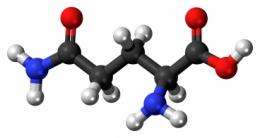
A new study from researchers at MIT and the Massachusetts General Hospital (MGH) Cancer Center helps to explain how this is possible. The researchers found that when deprived of oxygen, cancer cells (and many other mammalian cells) can engage an alternate metabolic pathway that allows them to use glutamine, a plentiful amino acid, as the starting material for synthesizing fatty molecules known as lipids. These lipids are essential components of many cell structures, including cell membranes.
The finding, reported in the Nov. 20 online edition of Nature, challenges the long-held belief that cells synthesize most of their lipids from glucose, and raises the possibility of developing drugs that starve tumor cells by cutting off this alternate pathway.
Lead author of the paper is Christian Metallo, a former postdoc in the lab of Gregory Stephanopoulos, the William Henry Dow Professor of Chemical Engineering and Biotechnology at MIT and a corresponding author of the paper. Othon Iliopoulos, an assistant professor of medicine at Harvard Medical School and MGH, is the paper’s other corresponding author.
Alternate pathways
Much of the body’s supply of oxygen and glucose is carried in the bloodstream, but blood vessels often do not penetrate far into the body of tumors, so most cancer cells are deficient in those nutrients. This means they can’t produce fatty acids using the normal lipid-synthesis pathway that depends mostly on glucose.
In prior work, Stephanopoulos’ lab identified a metabolic pathway that uses glutamine instead of glucose to produce lipids; the new paper shows that this alternate pathway is much more commonly used than originally thought. The researchers found that in both normal and cancerous cells, lack of oxygen — a state known as hypoxia — provokes a switch to the alternate pathway.
In a normal oxygen environment, 80 percent of a cell’s new lipids come from glucose, and 20 percent from glutamine. That ratio is reversed in a hypoxic environment, Stephanopoulos says.
“We saw, for the first time, cancer cells using substrates other than glucose to produce lipids, which they need very much for their rapid growth,” Iliopoulos explains. “This is the first step to answering the question of how new cell mass is synthesized during hypoxia, which is a hallmark of human malignancies.”
The glutamine may come from within the cell or from neighboring cells, or the extracellular fluid that surrounds cells.
“There’s protein everywhere,” says Matthew Vander Heiden, the Howard S. and Linda B. Stern Career Development Assistant Professor of Biology at MIT and a co-author of the Nature paper. “The new pathway allows cells to conserve what glucose they do have, perhaps to make RNA and DNA, and then co-opt the new pathway to make lipids so they can grow under low oxygen.”
The switch from glucose to glutamine is triggered by low oxygen and allows cancer cells to thrive and proliferate in an environment with minimal glucose, though it is not clear how this is done. “Elucidating the molecular mechanism regulating this switch would be important in understanding regulation of cancer metabolism,” Stephanopoulos says. “This could be important not only for cancer cells but also other cells growing in hypoxic environments, such as stem cells, placenta and during embryonic development.”
New insights into old models
The researchers are now looking into what other unexpected sources might be diverted into lipid-synthesis pathways under low oxygen. “We had to revise models of metabolism that had been established over the past 50 years. This opens up the possibility for more exciting discoveries in this field that may impact strategies of therapy,” Metallo says.
A better understanding of metabolic pathways and their regulation raises the possibility of developing new drugs that could selectively disrupt key metabolic pathways for cancer cell survival and growth. One possible target is the enzyme isocitrate dehydrogenase, which performs a critical step in the transformation of glutamine to acetyl CoA, a lipid precursor.
“While this target is not new, our findings point to a new function and, hence, generate new ideas for drug development,” Iliopoulos says. “The better we understand the molecular basis of these phenomena, the more optimistic we can be about efforts to translate these basic results into effective treatments of cancer.”
“We’ve been looking, as a field, for almost 90 years for a metabolic pathway that could truly be used to differentiate malignant tumors from normal tissues,” says Ralph DeBerardinis, an assistant professor of pediatrics and genetics at the University of Texas Southwestern Medical Center, who was not involved in this research. He adds that more study is needed, but “if this could be exploited, that could have significant therapeutic potential.”
This story is republished courtesy of MIT News (web.mit.edu/newsoffice/), a popular site that covers news about MIT research, innovation and teaching.


