Dental X-rays can predict fractures
December 6, 2011 in Diseases, Conditions, Syndromes
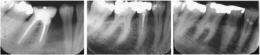
It is now possible to use dental X-rays to predict who is at risk of fractures. Credit: Photo: University of Gothenburg
It is now possible to use dental X-rays to predict who is at risk of fractures, reveals a new study from researchers at the Sahlgrenska Academy reported in the journal Nature Reviews Endocrinology.
In a previous study, researchers from the University of Gothenburg's Sahlgrenska Academy and Region Västra Götaland demonstrated that a sparse bone structure in the trabecular bone in the lower jaw is linked to a greater chance of having previously had fractures in other parts of the body.
X-rays investigates bone structure
The Gothenburg researchers have now taken this a step further with a new study that shows that it is possible to use dental X-rays to investigate the bone structure in the lower jaw, and so predict who is at greater risk of fractures in the future. Published in the journal Bone, the results were also mentioned in both Nature Reviews Endocrinology and the Wall Street Journal.
Linked to risk of fractures
"We've seen that sparse bone structure in the lower jaw in mid-life is directly linked to the risk of fractures in other parts of the body, later in life,"says Lauren Lissner, a researcher at the Institute of Medicine at the Sahlgrenska Academy.
Study started 1968
The study draws on data from the Prospective Population Study of Women in Gothenburg started in 1968. Given that this has now been running for over 40 years, the material is globally unique. The study included 731 women, who have been examined on several occasions since 1968, when they were 38-60 years old. X-ray images of their jaw bone were analysed in 1968 and 1980 and the results related to the incidence of subsequent fractures.
For the first 12 years fractures were self-reported during followup examinations. It is only since the 1980s that it has been possible to use medical registers to identify fractures. A total of 222 fractures were identified during the whole observation period.
One out of five in higher risk
The study shows that the bone structure of the jaw was sparse in around 20% of the women aged 38-54 when the first examination was carried out, and that these women were at significantly greater risk of fractures.
The study also shows that the older the person, the stronger the link between sparse bone structure in the jaw and fractures in other parts of the body.
Applies for both sexes
Although the study was carried out on women, the researchers believe that the link also applies for men.
"Dental X-rays contain lots of information on bone structure," says Grethe Jonasson, the researcher at the Research Centre of the Public Dental Service in Västra Götaland who initiated the fractures study. "By analysing these images, dentists can identify people who are at greater risk of fractures long before the first fracture occurs."
More information: The article "A prospective study of mandibular trabecular bone to predict fracture incidence in women: A low-cost screening tool in the dental clinic" was published in Bone in October.
Provided by
University of Gothenburg
-
Young women with rheumatoid arthritis at more risk for broken bones
Nov 06, 2011 |
not rated yet |
0
-
Grandpa's broken hip may mean weaker bones for his grandsons
Jan 29, 2010 |
not rated yet |
0
-
Study examines loop diuretic use and fractures in postmenopausal women
Jan 26, 2009 |
not rated yet |
0
-
A single bone mineral density test predicts 'silent' spinal fractures years later
Dec 18, 2007 |
not rated yet |
0
-
HIV patients at greater risk for bone fractures
Aug 28, 2008 |
not rated yet |
0
-
Of mice and mental models: Neuroscientific implications of risk-optimized behavior in the mouse
May 25, 2012 |
not rated yet |
0
-
Limits to growth: Scientists identify key metastasis-enabling enzyme
May 22, 2012 |
5 / 5 (4) |
0
-
Seeing is as seeing does: Spatially-structured retinal input in early development of cortical maps
Apr 26, 2012 |
5 / 5 (4) |
1
-
Dreamless nights: Brain activity during nonrapid eye movement sleep
Apr 09, 2012 |
4.4 / 5 (12) |
0
-
Take your time: Neurobiology sheds light on the superiority of spaced vs. massed learning
Mar 28, 2012 |
4.5 / 5 (21) |
3
-
Classical and Quantum Mechanics via Lie algebras
Apr 15, 2011
- More from Physics Forums - Independent Research
More news stories
Flesh-Eating bacteria no cause for panic, experts say
(HealthDay) -- Despite scary headlines by the score, most people don't have to fear that they'll be the next victim of the so-called flesh-eating bacteria disease, experts say.
Diseases, Conditions, Syndromes
May 25, 2012 |
not rated yet |
0
World Health Assembly endorses new plan to increase global access to vaccines
Ministers of Health from 194 countries at the Sixty-fifth World Health Assembly today endorsed a landmark Global Vaccine Action Plan (GVAP), a roadmap to prevent millions of deaths by 2020 through more equitable access to ...
Diseases, Conditions, Syndromes
May 25, 2012 |
not rated yet |
0
Physicians definitively links irritable bowel syndrome and bacteria in gut
An overgrowth of bacteria in the gut has been definitively linked to Irritable Bowel Syndrome in the results of a new Cedars-Sinai study which used cultures from the small intestine. This is the first study to use this "gold ...
Diseases, Conditions, Syndromes
May 25, 2012 |
not rated yet |
0
|
Study provides compelling evidence for an effective new treatment for tinnitus
According to new research, a multidisciplinary approach to treating tinnitus that combines cognitive behaviour therapy with sound-based tinnitus retraining therapy is significantly more effective than currently available ...
Diseases, Conditions, Syndromes
May 24, 2012 |
not rated yet |
0
Infections may be deadly for many dialysis patients
An infection called peritonitis commonly arises in the weeks before many dialysis patients die, according to a study appearing in an upcoming issue of the Journal of the American Society of Nephrology (JASN). The findings sugges ...
Diseases, Conditions, Syndromes
May 24, 2012 |
not rated yet |
0
Keep food safety in mind this memorial day weekend
(HealthDay) -- Picnics, parades and cookouts are as much a part of Memorial Day weekend as tributes to the United States' war veterans.
Travel to high altitudes tied to Crohn's, colitis flare-ups
(HealthDay) -- People with inflammatory bowel disease, which includes Crohn's disease and colitis, may be at increased risk for flare-ups when they fly or travel to high altitudes for skiing or mountain climbing, ...
Family history of Alzheimer's affects functional connectivity
(HealthDay) -- Cognitively normal individuals with a family history of late-onset Alzheimer's disease (AD) may display lower resting state functional connectivity in the default mode network (DMN) of the brain, ...
Transvaginal mesh op restores pelvic organ prolapse at price
(HealthDay) -- Transvaginal mesh (TVM) procedures are effective for anatomical restoration of pelvic organ prolapse (POP), but patients report a worsening of sexual function following surgery, according to ...
Of mice and mental models: Neuroscientific implications of risk-optimized behavior in the mouse
(Medical Xpress) -- Regardless of an organism’s biological complexity, every encephalized animal continuously makes under-informed behavioral choices that can have serious consequences. Despite its ubiquity, ...
Weight struggles? Blame new neurons in your hypothalamus
New nerve cells formed in a select part of the brain could hold considerable sway over how much you eat and consequently weigh, new animal research by Johns Hopkins scientists suggests in a study published in the May issue ...