Kenya HIV families torn between health or food
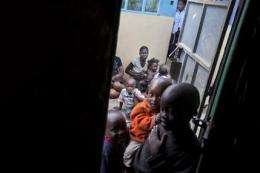
(AP) -- Rosalia Adhiambo won't take the free anti-HIV drugs that would prolong her life. The spiraling price of food in Kenya means she can't afford to feed both her grandniece and herself.
So she feeds 5-year-old Emily and doesn't take her own medicine, fearing that the nausea she would get from taking the drugs without adequate food will make her too weak to look for work.
Prices for staple foods this year are almost twice as high as in 2009, the U.N.'s Food and Agriculture Organization says. The rising prices and a dwindling of funds for HIV programs mean countless poor families must decide whether to focus on the health of an HIV-positive adult or on a child's hunger.
Valerian Kamito, a nurse at the clinic that gives Adhiambo her food, says some patients are refusing to start treatment for HIV and around a quarter of his 1,555 patients on anti-HIV drugs are now skipping their medication.
"They say they cannot take them on an empty stomach," Kamito said. Before prices rose, he said, "it was very rare."
HIV-positive adults need 10 percent more calories than other people just to maintain their body weight. Children with HIV need between 30 percent to 50 percent more calories than other children. They will lose weight and be vulnerable to infections without those calories, said nutritionist Kate Greenaway from the aid agency Catholic Relief Services.
Annual inflation in Kenya is around 20 percent, but wages haven't kept pace. Around half of Kenyans live on less than $2 a day, including 52-year-old Adhiambo, who makes $1 each day she does housework.
"When there is nothing to eat, we go to bed hungry. I tell Emily it is because God did not send us food today," said Adhiambo, motioning to a cardboard picture of Jesus on the wall of their corrugated iron shack.
"Emily stands before that picture and prays, 'God, please remember to send us food tomorrow,'" said Adhiambo.
She had work for two weeks last month, but the younger women get most of the jobs. Adhiambo relies on her daily free meal of rice, beans and vegetables from a clinic run by Catholic Relief Services in the Mathare slum, though she sometimes misses that if she is searching for work. The staff there are trying to persuade her to take her anti-HIV drugs.
But Adhiambo carries the food home and gives most of it to Emily, who isn't signed up for the CRS program, though workers there are trying to get her into it. The bright-eyed little girl in the torn blue dress is almost all that's left of Adhiambo's family. Adhiambo's brother, two sisters and husband are all dead. Emily's mother is alive, but ill. She refuses to be tested. Emily has been tested and is HIV positive.
Adhiambo needs to take drugs called anti-retrovirals, or ARVs, and so will Emily. Taken regularly, the medicine can prolong life by years, possibly decades. But if taken sporadically, the medicine will lose its effectiveness.
Patients say the medicine can cause nausea, fatigue, and diarrhea at first, especially if there is no food to go with it, said Greenaway. The drugs also cause a ravenous hunger as the body starts to recover. Adhiambo, afraid that the side effects will prevent her from working, refuses to take the pills.
The clinic gives 400 of its patients, Adhiambo among them, "prescribed food" to eat with their medicines so they'll continue the treatment. But most take the meals home to share with their families, said Kamito. The program has a long waiting list. The financial crisis means there is no money to expand it.
Globally, there has been around a 10 percent decline in HIV/AIDS funding, said Michel Sidibe, the UNAIDS executive director. The world's top funder of public health programs - the Global Fund to Fight AIDS, Tuberculosis and Malaria - has disbursed $15 billion since 2002, but it cannot afford to pay for any new or expanded programs until 2014.
Poverty, meanwhile, continues to eat at the gains made by modern medicine in fighting HIV, the virus that causes AIDS.
Twenty to 30 percent of HIV-positive patients in the developing world drop out in the first two years of treatment, said Nils Grede, the deputy chief of the World Food Program's nutrition and HIV/AIDS unit.
"Barriers to continue the treatment ... are often related to poverty. You don't have the money to pay for the bus, you don't have enough food, so you spend your time on trying to make sure that your family eats," Grede told The Associated Press in Addis Ababa, Ethiopia.
"People adhere much better to drug regimens when there is food," said Greenaway. "But in poor families, that might mean mothers who want to stay strong have to decide whether to take something from their children's plates."
Adhiambo's neighbor Ishmael Abongo, a 35-year-old father of four, must do just that. He and his wife Mary are both HIV positive, as is one of their sons. The whole family shares the clinic's food. When he has found work, Abongo takes a bit of porridge from dinner and saves it for the morning so he isn't too dizzy for a two-hour bus journey.
"I know it is important to take the drugs," he said.
He recounted knowing four people who did not take the pills because they had no food. They are now all dead, Abongo said.
A clinic social worker visited Adhiambo in her tiny shack in December, trying to persuade her to take her medication or risk dying, and leaving Emily with no family to care for her. But Adhiambo was more worried about their present situation.
"What will happen to her if I take these drugs and I get sick?" Adhiambo asked, adding that if she can't work or even walk because of side effects from the medicine they won't have any food.
Eventually, Adhiambo stood up. She needed to find some clothes or a floor that needed washing. She was two months behind with the rent - $15 a month - and could be evicted.
The white-winged Jesus that Emily prays to was shown in the picture walking through a garden, nothing like the smelly alley outside the shack.
Words below picture said: "May my prayers come before you, that you heal me according to your will."
©2011 The Associated Press. All rights reserved. This material may not be published, broadcast, rewritten or redistributed.


