Treating sleep problems may be important in schizophrenia
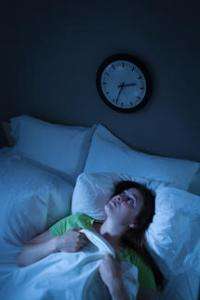
(Medical Xpress) -- A study of schizophrenia patients has found profound disruptions in their sleep patterns, with half also having irregular body clocks that are out of synch with the pattern of night and day.
The Oxford researchers argue that the extent and severe nature of these long-term sleep problems should be considered for treatment along with the other symptoms of schizophrenia, as they have such a strong impact on mood, social function, mental abilities and quality of life.
"The people in our study were stable in mood, taking medication and yet they still experienced enormous sleep problems," says first author Dr. Katharina Wulff of the Nuffield Department of Clinical Neurosciences at the University of Oxford.
"Clinicians may need to start thinking about treating their patients' sleep problems as well, or refer them to sleep specialists," she suggests.
The Oxford University-led study, with colleagues from UCL and the University of Surrey, is published online by the British Journal of Psychiatry. It was funded by European Commission, the Wellcome Trust, Oxford Biomedical Research Center, and the UCLH/UCL Biomedical Research Center.
The researchers found severe disruption in the sleep patterns of all 20 patients with schizophrenia in the study, despite their mood being stable and each being on a regular drug regime.
All those with schizophrenia took longer to fall asleep, spent longer in bed, slept longer and had much more variable sleep patterns, compared with a control group of 21 healthy unemployed people.
The variable sleep patterns are unlikely to be simply due to those with schizophrenia having unstructured days without any routine, since those in the control group may also not have a pattern to their daily lives.
The sleep problems also appear to be unrelated to the different drugs those with schizophrenia are taking.
Ten of the patients also had disrupted body clocks. Their internal 24 hour rhythm was delayed compared with all the others, or longer than 24 hours. They often ended up sleeping at times other than night time, either only getting to sleep after 4am and getting up in the afternoon or having ‘free-running’ sleep patterns unrelated to the 24 hour day.
Although the researchers have provided strong evidence of a correlation between schizophrenia and severely disrupted sleep patterns in these patients, they have not demonstrated a causal link between the two.
They are using animal models of schizophrenia to examine if there are alterations in biological pathways known to be involved with regulating the body clock. And it may be possible for future studies to follow people at risk of schizophrenia with sleep problems to see if this can be a factor in developing the condition.
Schizophrenia can cause a range of different symptoms including hallucinations, delusions, muddled thoughts, and changes in behaviour. The cause of schizophrenia is unknown, but may be down to a combination of genetic and environmental factors. Up to around 1 in 100 people are estimated to experience schizophrenia in their lives.
Sleep disturbances are thought to be common in many mental health conditions, including schizophrenia. But this is one of the first studies to provide hard evidence as well as look for body clock abnormalities.
Professor Russell Foster of Oxford University, who headed the research group, says: ‘Patients often complain of being so tired they can’t concentrate, can’t work, that dealing with their sleep problems would make life so much better. There are also lots of anecdotal stories from psychiatrists of patients being unable to settle to sleep and running around all night, or not turning up to consultations organized for mornings.
"We now know many of the patients are also essentially suffering persistent jetlag with their body clocks out of synch with day and night. This immediately opens up a lot of new avenues for research in understanding the links between sleep problems and mental illhealth. But regardless of whether or not there is a mechanistic link between the body clock and psychiatric conditions, it is clear that treating sleep problems could improve the lives of many patients."


